TEC, BECIL sign MoU to advance D2M, 5G Broadcast and convergence standards
Synopsis
India's telecom and broadcast arms have formally joined forces. The TEC-BECIL MoU puts D2M broadcasting, 5G Broadcast, and AI-enabled cable networks on a shared standards roadmap — a quiet but consequential step toward making India a rule-setter, not just a rule-taker, in global broadcast standardisation.
Key Takeaways
TEC and BECIL signed an MoU on 8 July in New Delhi to collaborate on broadcasting and convergence technology standards.
Key focus areas include Direct-to-Mobile (D2M) broadcasting , 5G Broadcast , IPTV DRM , and AI-enabled broadband cable networks .
The partnership will develop India-specific standards and testing frameworks while contributing to global bodies including ITU-T , ITU-R , and 3GPP .
Both organisations will advise the Ministry of Information and Broadcasting , DoT , and TRAI on emerging technology and policy matters.
The collaboration supports the government's Digital India and Aatmanirbhar Bharat initiatives.
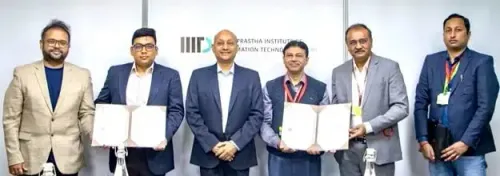
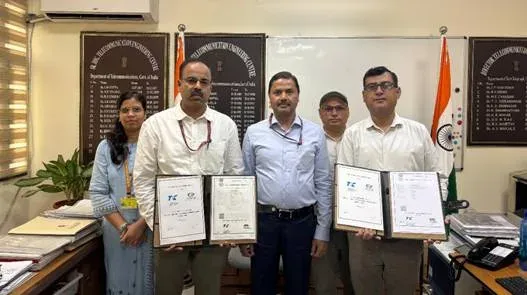
The Telecommunication Engineering Centre (TEC), the technical arm of the Department of Telecommunications (DoT), on Wednesday, 8 July signed a Memorandum of Understanding (MoU) with Broadcast Engineering Consultants India Limited (BECIL) in New Delhi, formalising a partnership to jointly develop standards, conduct technical studies, and drive innovation in broadcasting and convergence technologies. The agreement positions both organisations as collaborative anchors for India's push toward next-generation broadcast infrastructure.
What the MoU Covers
Under the agreement, TEC and BECIL will co-develop India-specific standards and testing frameworks, study international benchmarks, and contribute to global standardisation bodies. A central focus will be technologies such as Direct-to-Mobile (D2M) broadcasting and 5G Broadcast, which are designed to deliver multimedia content directly to mobile devices without requiring an active internet connection.
The collaboration also extends to Digital Rights Management (DRM) systems for IPTV and other content distribution platforms, Digital Sound Broadcasting (DSB), and Conditional Access Systems (CAS) alongside Subscriber Management Systems (SMS) used by television service providers.
Emerging Technologies in Scope
The MoU covers research into future broadcast and network technologies, including Further evolved Multimedia Broadcast Multicast Service (FeMBMS), application accessibility for digital inclusion, intelligent user interfaces for broadcasting services, and artificial intelligence-enabled capabilities over integrated broadband cable networks. These areas reflect a deliberate effort to future-proof India's broadcasting ecosystem as the line between telecom and broadcast continues to blur.
Who Signed and Who Was Present
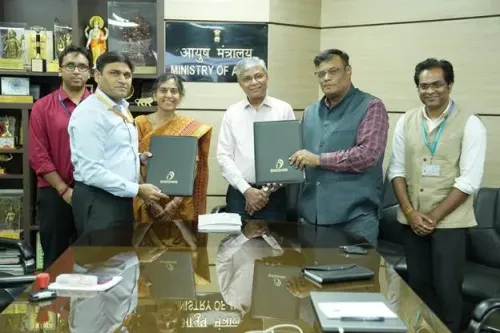
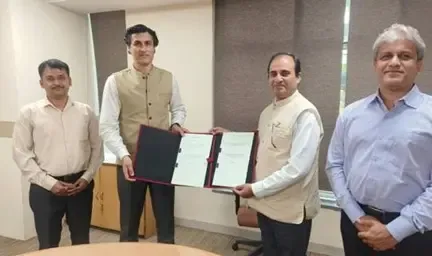
The MoU was signed by Devendra Singh, Deputy Director General, TEC, and Ramit Lala, Deputy General Manager (Projects), BECIL. The signing took place in the presence of Syed Tausif Abbas, Senior Deputy Director General and Head of TEC.
India's Global Standardisation Push
Beyond domestic objectives, the partnership is expected to strengthen India's voice in international standardisation forums. TEC and BECIL will jointly contribute to bodies including the International Telecommunication Union's Telecommunication Standardization Sector (ITU-T), the Radiocommunication Sector (ITU-R), and the 3rd Generation Partnership Project (3GPP). The two organisations will also provide need-based technical consultations on matters referred by the Ministry of Information and Broadcasting, the DoT, and the Telecom Regulatory Authority of India (TRAI).
This collaboration aligns with the government's flagship programmes — Digital India and Aatmanirbhar Bharat — and marks a structured step toward consolidating India's indigenous capabilities in an increasingly converged media and telecom landscape.
Point of View
If it scales, could redefine last-mile content delivery in a country where mobile penetration far outpaces broadband. The real test is execution — past inter-agency frameworks in India's tech policy space have often produced joint studies without producing deployable standards. Whether this MoU generates ITU-T contributions that carry weight, or quietly lapses into committee work, will depend on resourcing and political follow-through from DoT and MIB alike.
NationPress
7 Oct 2026
Frequently Asked Questions
What is the TEC-BECIL MoU about?
The MoU signed on 8 July formalises a partnership between the Telecommunication Engineering Centre (TEC) and Broadcast Engineering Consultants India Limited (BECIL) to jointly develop India-specific standards, testing frameworks, and technical contributions in broadcasting and convergence technologies. Key areas include D2M broadcasting, 5G Broadcast, IPTV DRM, and AI-enabled broadband cable networks.
What is Direct-to-Mobile (D2M) broadcasting and why does it matter?
D2M broadcasting enables multimedia content to be delivered directly to mobile devices without requiring an active internet connection, using broadcast spectrum. For India, where mobile penetration is high but broadband access remains uneven, D2M could significantly expand reach for news, emergency alerts, and entertainment content.
Which global standardisation bodies will TEC and BECIL contribute to?
Under the MoU, TEC and BECIL will jointly contribute to the International Telecommunication Union's Telecommunication Standardization Sector (ITU-T), the Radiocommunication Sector (ITU-R), and the 3rd Generation Partnership Project (3GPP), strengthening India's participation in setting global telecom and broadcast standards.
Which government ministries and regulators are involved?
TEC and BECIL will provide technical consultations on matters referred by the Ministry of Information and Broadcasting, the Department of Telecommunications (DoT), and the Telecom Regulatory Authority of India (TRAI), covering emerging technologies and related policy questions.
How does this MoU connect to Digital India and Aatmanirbhar Bharat?
The collaboration is designed to build indigenous capabilities in broadcasting and convergence technology standardisation, directly supporting the government's Digital India and Aatmanirbhar Bharat programmes by reducing dependence on foreign standards and fostering homegrown innovation in the telecom-broadcast ecosystem.