Tripura draws ₹35,140 crore investment via Ease of Doing Business reforms
Synopsis
Tripura has quietly outpaced every Indian state on regulatory reform — becoming the first to complete all 51 deregulation priority areas across both national phases. With ₹35,140 crore in proposed investments and ₹5,352 crore already grounded, the northeastern state is turning bureaucratic simplification into a measurable economic story.
Key Takeaways
Tripura has attracted ₹35,140 crore in proposed investments through 394 MoUs signed over recent years.
94 projects (23.8%) have transitioned into grounded investments worth ₹5,352 crore .
Tripura is the first state in India to complete all 51 Priority Areas under both Deregulation Phase-I and Phase-II of the national Compliance Reduction initiative.
Deregulation Phase-II , initiated in January 2026 , covered 28 Priority Areas across nine sectors including Labour, Health, and Digital Governance.
Key reforms include the SWAGAAT Portal strengthening, collaboration with NLU Tripura for legal review, and an impact study by IIM Calcutta .
Citizen-facing reforms simplified homestay regulations in tourism and enabled seamless interstate registration for medical professionals .
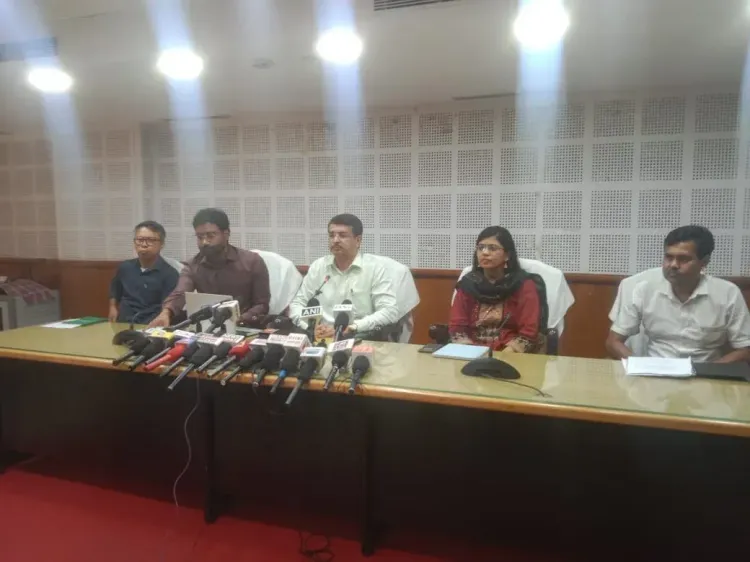
Tripura has attracted proposed investments worth ₹35,140 crore through 394 Memorandums of Understanding (MoUs) signed over the past few years, driven by sustained Ease of Doing Business (EoDB) reforms including simplified approvals, self-certification mechanisms, and the digitisation of government services, officials said on Thursday, 14 May 2025. The northeastern state has simultaneously emerged as the first in India to complete all priority areas under both phases of the national Compliance Reduction and Deregulation initiative.
Grounded Investments and Key Sectors
Tripura Industry and Commerce Department Secretary Kiran Gitte said that streamlined regulatory processes and faster clearances have enabled effective project execution, with 94 projects — accounting for 23.8% of the total MoUs — transitioning into grounded investments worth ₹5,352 crore. Major investment activity has been reported across healthcare, tourism, logistics, and infrastructure sectors.
Historic Deregulation Milestone
Tripura has become the first state in India to complete all 51 Priority Areas under both Deregulation Phase-I (covering 23 Priority Areas) and Deregulation Phase-II (covering 28 Priority Areas) of the national Compliance Reduction and Deregulation initiative led by the Union Cabinet Secretariat. Deregulation Phase-II, initiated in January 2026, spanned sectors including Revenue, Urban Development, Industries, Labour, Environment, Tourism, Health, Education, and Digital Governance.
According to Gitte, the reforms focused on reducing compliance burdens, eliminating redundant procedures, digitising approvals, and creating a more transparent and investor-friendly regulatory ecosystem. The state also rationalised fire safety norms in line with global best practices and strengthened its Single Window System through the SWAGAAT Portal to enhance transparency and accessibility for businesses and citizens.
Institutional Partnerships and Legal Reforms
The state government collaborated with the National Law University, Tripura campus, for a principle-based review of state Acts, rules, and government orders aimed at regulatory simplification. A centralised digital repository of state laws and regulations has also been created through the e-Gazette system. To assess the impact of reforms under Deregulation Phase-I, the state empanelled the Indian Institute of Management (IIM), Calcutta, to conduct a ground-level impact assessment study.
Citizen-Centric Reforms Across Social Sectors
Beyond business facilitation, citizen-centric reforms were introduced across multiple social sectors. In education, minimum land and endowment requirements for establishing institutions were rationalised. In the health sector, seamless interstate registration and practice for medical professionals were enabled through a single nodal mechanism. In tourism, homestay regulations were simplified by removing multiple No Objection Certificate (NOC) requirements and introducing online self-renewal systems to promote local entrepreneurship.
What Comes Next
Officials believe the cumulative effect of these reforms will significantly improve investor confidence, reduce compliance costs, and accelerate service delivery across the state. Tripura's completion of all deregulation priority areas positions it as a benchmark model for facilitative governance among India's northeastern states, with the IIM Calcutta impact study expected to provide a data-driven assessment of on-ground outcomes.
Point of View
Not ceremonial. Completing all 51 priority areas ahead of larger, better-resourced states signals that reform velocity is a function of political will and administrative coordination, not just fiscal capacity. The harder question is conversion: only 23.8% of MoUs have translated into grounded investment — a ratio that mirrors the national pattern where signed intent routinely outpaces execution. The IIM Calcutta impact study will be the real test of whether simplified compliance has moved the needle on actual employment and output, or merely improved ranking metrics. For India's northeast, the benchmark matters — if Tripura's model is replicable, it offers a template that geography and connectivity constraints alone cannot explain away.
NationPress
25 Sept 2026
Frequently Asked Questions
How much investment has Tripura attracted through Ease of Doing Business reforms?
Tripura has attracted proposed investments worth ₹35,140 crore through 394 MoUs signed over the past few years, driven by regulatory simplification, self-certification, and digitisation of services. Of these, 94 projects worth ₹5,352 crore have transitioned into grounded investments.
What is the significance of Tripura completing all 51 deregulation priority areas?
Tripura has become the first state in India to complete all 51 Priority Areas under both Deregulation Phase-I (23 areas) and Phase-II (28 areas) of the national Compliance Reduction and Deregulation initiative led by the Union Cabinet Secretariat. This positions the state as a national frontrunner in regulatory reform and investor-friendly governance.
What sectors have seen major investments in Tripura?
Major investments have been reported across healthcare, tourism, logistics, and infrastructure sectors. Citizen-centric reforms have also targeted education, health, and tourism to reduce compliance barriers for businesses and individuals.
What is the SWAGAAT Portal and how does it help businesses?
The SWAGAAT Portal is Tripura's strengthened Single Window System designed to enhance transparency and ease of access for businesses and citizens. It is part of the state's broader push to digitise approvals and streamline regulatory interactions under its Ease of Doing Business framework.
Who is assessing the impact of Tripura's deregulation reforms?
The Indian Institute of Management (IIM), Calcutta, has been empanelled by the Tripura state government to conduct a ground-level impact assessment study of reforms implemented under Deregulation Phase-I. The findings are expected to provide a data-driven evaluation of real-world outcomes.