Uber invests in ONDC, deepening India's digital public infrastructure push
Synopsis
A global ride-hailing giant just placed a long-term bet on India's open commerce network. Uber's strategic investment in ONDC — one of the first by any global tech firm — goes beyond partnership optics: with metro ticketing live in five cities and 10 million rides already on the network, Uber is quietly repositioning itself as an open-network mobility platform, not just a cab-booking app.
Key Takeaways
Uber announced a strategic investment in ONDC on 2 June , one of the earliest by a global technology company in India's open digital commerce network.
Metro ticketing through Uber is live across five cities , with more than 10 million metro rides booked via ONDC.
The expanded collaboration will cover multimodal transportation , public transit integrations, and logistics for businesses and independent earners.
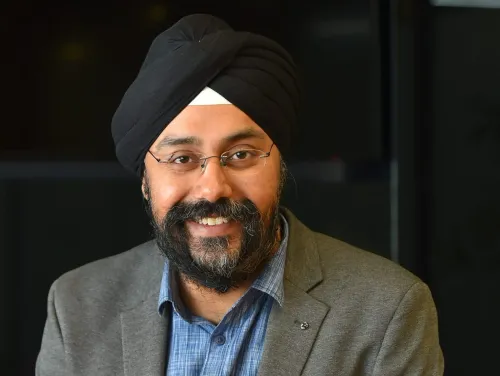
Prabhjeet Singh , President of Uber India and South Asia, said the investment places Uber 'at the heart' of India's digital infrastructure innovation journey.
Adil Zainulbhai , Independent Director at ONDC, called it a 'strong endorsement' of India's DPI potential.
Ride-hailing giant Uber on Tuesday, 2 June announced a strategic investment in the Open Network for Digital Commerce (ONDC), making it one of the earliest global technology companies to back India's open digital commerce network. The move signals a deepening of Uber's long-term commitment to India's Digital Public Infrastructure (DPI) ecosystem.
What the Investment Covers
Uber said the investment builds on its existing partnership and earlier technical integration with ONDC. Under the expanded collaboration, the company will work with ONDC to scale multimodal transportation solutions — including public transit integrations — and strengthen logistics capabilities for businesses and independent earners on the network.
Notably, metro ticketing services through Uber are already live across five cities, with more than 10 million metro rides booked via the ONDC network to date.
What the Companies Said
Prabhjeet Singh, President of Uber India and South Asia, said India has emerged as a global leader in building inclusive and scalable digital public infrastructure. 'Our ongoing partnership with ONDC and now this investment puts us at the heart of that innovation journey. By investing in this network, we're helping more people move, more businesses grow, and more earners thrive by harnessing the power of the ONDC network,' Singh said.
Adil Zainulbhai, Independent Director at ONDC, described the move as a strong endorsement of India's DPI ambitions. 'Uber's investment is a strong endorsement of India's Digital Public Infrastructure and its potential to drive innovation, efficiency and inclusive growth,' he said.
Why This Matters for India's Open Network
ONDC was conceived as an interoperability layer to democratise digital commerce, breaking the dominance of closed platform ecosystems. Uber's entry as an investor — rather than merely a buyer-side participant — represents a structural vote of confidence in the network's long-term viability. This comes amid growing international interest in India's DPI stack, which includes UPI, Aadhaar, and DigiLocker alongside ONDC.
The investment also underscores Uber's pivot in India beyond ride-hailing toward a broader mobility and logistics platform strategy, leveraging open networks rather than proprietary infrastructure.
What Happens Next
According to Uber, this investment represents a long-term bet on open networks as the foundation for future mobility and logistics services in India. Expansion of multimodal transit integrations and deeper logistics capabilities for network participants are expected to follow as the collaboration matures.
Point of View
But the more consequential question is what it changes structurally. ONDC has struggled with buyer-side adoption and thin transaction volumes outside a few categories — Uber's metro ticketing numbers (10 million rides) are one of the network's more credible proof points to date. The real test is whether this capital and credibility unlocks other global platforms to follow, or whether Uber remains an outlier in a network still searching for its flywheel. India's DPI stack is globally admired; ONDC's commercial sustainability is a separate, unresolved question.
NationPress
16 Oct 2026
Frequently Asked Questions
What is Uber's investment in ONDC?
Uber has made a strategic financial investment in the Open Network for Digital Commerce (ONDC), announced on 2 June. It is one of the earliest investments by a global technology company in India's open digital commerce network, and builds on Uber's existing technical partnership with ONDC.
What is ONDC and why does it matter?
ONDC is India's government-backed open interoperability network designed to democratise digital commerce by allowing any buyer or seller app to transact across a shared infrastructure. It is part of India's broader Digital Public Infrastructure stack, alongside UPI and Aadhaar.
How is Uber already using the ONDC network?
Uber has integrated metro ticketing services through ONDC, which are live across five cities. More than 10 million metro rides have already been booked via the network, making it one of ONDC's higher-volume use cases.
What will Uber and ONDC work on next?
The expanded collaboration will focus on scaling multimodal transportation solutions, including deeper public transit integrations, and strengthening logistics capabilities for businesses and independent earners operating on the ONDC network.
Who are the key figures behind this deal?
Prabhjeet Singh, President of Uber India and South Asia, and Adil Zainulbhai, Independent Director at ONDC, are the primary spokespersons for the investment. Both cited inclusive growth and open-network innovation as the driving rationale.