Qayamat Se Qayamat Tak: No distributor wanted to buy Aamir Khan's debut film

Synopsis
Every distributor called the music of 'Qayamat Se Qayamat Tak' too weak to sell — so producer Nasir Hussain released it himself in Mumbai. The film went on to run housefull for twelve weeks and launch the careers of Aamir Khan and Juhi Chawla. Anand–Milind's 'Indian Idol' revelation is a masterclass in how badly the industry can misread a classic.
Key Takeaways
Anand–Milind disclosed on 'Indian Idol' that no distributor agreed to buy 'Qayamat Se Qayamat Tak' after its trial screening.
Distributors called the music 'very weak, very mellow' — at a time when loud, energetic music was considered the only formula for success.
Producer Nasir Hussain was forced to release the film himself in Mumbai .
The film ran housefull at Gaiety-Galaxy theatre in Bandra through its twelfth week , with college students returning specifically to watch the songs.
Composer Anand cited his father Chitragupt and 1960s Hindi film music as primary inspirations; director Mansoor Khan 's musical knowledge also eased the creative process.
The 1988 film marked the debut of both Aamir Khan and Juhi Chawla as lead actors.
Veteran composer duo Anand–Milind have revealed that Aamir Khan and Juhi Chawla's landmark debut film 'Qayamat Se Qayamat Tak' was nearly shelved before release — because every distributor who saw it rejected the music as too soft to sell. The disclosure, made on the music reality show 'Indian Idol', sheds new light on the unlikely backstory of one of 1988's biggest Bollywood blockbusters.
How Distributors Dismissed the Film
Composer Anand recalled the bleak atmosphere at the film's trial screening for distributors. 'After the film was completed, a trial show was held for distributors so that they could buy it. But nobody wanted to purchase the film. Every distributor said the music was very weak, very mellow, and wouldn't work. At that time, everyone believed that only loud and energetic music could become successful,' he said. With no takers, producer Nasir Hussain was left with no choice but to release the film himself in Mumbai.
Housefull Runs and College Students Who Timed the Songs
The gamble paid off spectacularly. Anand described personally visiting Gaiety-Galaxy theatre in Bandra to gauge audience response after the film opened. 'Even in the second, third, fourth, fifth and twelfth weeks, the shows were running housefull. I noticed that many college students would come only to watch the songs and leave after that. They knew exactly when each song would play,' he shared. The anecdote captures how the film's soundtrack — dismissed before release — became the very reason audiences kept returning.
The Inspirations Behind the Music
Judge and rapper Badshah asked Anand about the creative sources behind the duo's enduring melodies. Anand credited his father, veteran music composer Chitragupt, as his primary influence, alongside the golden era of 1960s Hindi film music. 'Composers like S. D. Burman, Madan Mohan and many others created extraordinary music,' he said. He also highlighted the role of director Mansoor Khan — himself a drummer and pianist — in easing the compositional process. 'When a director understands music, it makes a huge difference,' Anand noted.
The Film That Launched Careers
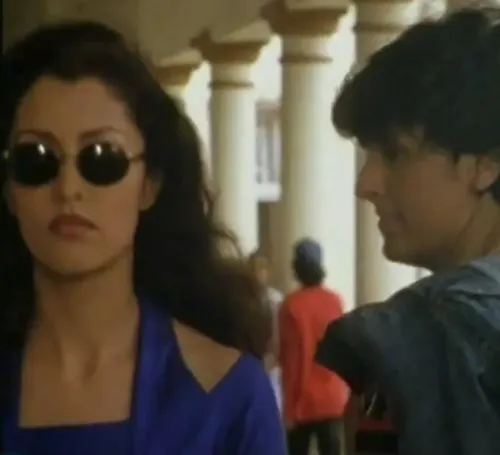
Directed by Mansoor Khan and produced by Nasir Hussain, 'Qayamat Se Qayamat Tak' marked the debut of both Aamir Khan and Juhi Chawla as lead actors. The film emerged as one of the biggest commercial successes of 1988, and its soundtrack — featuring classics such as 'Papa Kehte Hain', 'Ae Mere Humsafar', and 'Gazab Ka Hai Din' — has continued to chart across generations. The revelation on 'Indian Idol' came after contestants Anshika Chonker and Tanishk Shukla performed one of the film's songs, prompting Anand–Milind to revisit the journey. Nearly four decades on, the film's legacy only deepens.
Point of View
The industry's consensus was that mellow music could not sell — a consensus that 'Qayamat Se Qayamat Tak' demolished within weeks of release. The fact that Nasir Hussain had to self-distribute what became one of the decade's defining films points to a structural problem: gatekeepers optimising for formula rather than feeling. Decades later, the same tension resurfaces every time a quiet, unconventional film is passed over by multiplex buyers.
NationPress
8 Oct 2026
Frequently Asked Questions
Why did distributors reject 'Qayamat Se Qayamat Tak' before its release?
Distributors who attended the trial screening called the film's music 'very weak' and 'very mellow,' believing it would not connect with audiences at a time when loud, energetic soundtracks were considered the only bankable formula. As a result, no distributor agreed to buy the film initially.
How did 'Qayamat Se Qayamat Tak' eventually get released?
With no distributor willing to pick it up, producer Nasir Hussain released the film himself in Mumbai. It went on to become one of the biggest hits of 1988.
What did Anand say about audience response at Gaiety-Galaxy theatre?
Anand recalled that even in the twelfth week of its run, shows at Gaiety-Galaxy theatre in Bandra were housefull. He also noted that college students would come specifically to watch the songs and leave immediately after, knowing precisely when each song would appear.
Who were the inspirations behind Anand–Milind's music for the film?
Anand credited his father, veteran composer Chitragupt, as his first inspiration, along with the broader golden era of 1960s Hindi film music, citing composers such as S. D. Burman and Madan Mohan. He also highlighted director Mansoor Khan's personal musical ability — as a drummer and pianist — as a key factor in making the compositional process smoother.
What is the legacy of 'Qayamat Se Qayamat Tak'?
'Qayamat Se Qayamat Tak' (1988) marked the acting debut of both Aamir Khan and Juhi Chawla and was directed by Mansoor Khan. Its soundtrack, including 'Papa Kehte Hain,' 'Ae Mere Humsafar,' and 'Gazab Ka Hai Din,' remains among the most recognised in Hindi film history.