Prakash Jha Reflects on Disha’s Journey into Filmmaking
Synopsis
In a heartfelt revelation, acclaimed filmmaker Prakash Jha describes his surprise at his daughter Disha's evolution into a filmmaking professional, sharing insights on her journey and the essence of storytelling.
Key Takeaways
Prakash Jha is surprised by his daughter Disha's growth in filmmaking.
Disha began as a costume assistant in 'Raajneeti' .
She produced the OTT series 'Sankalp' .
Revolution occurs when oppression reaches a breaking point.
Storytelling should be sensitive and engaging.
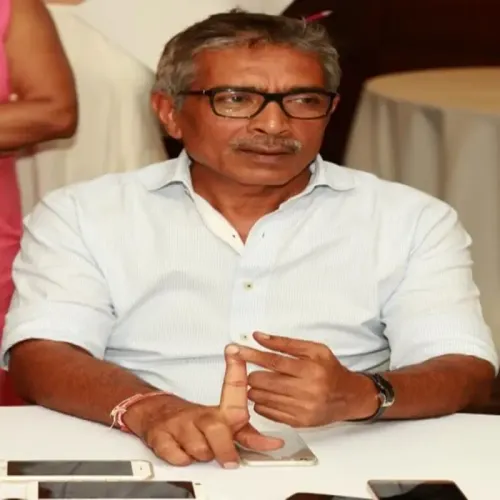
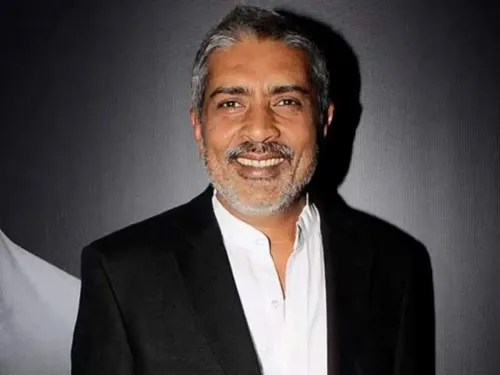
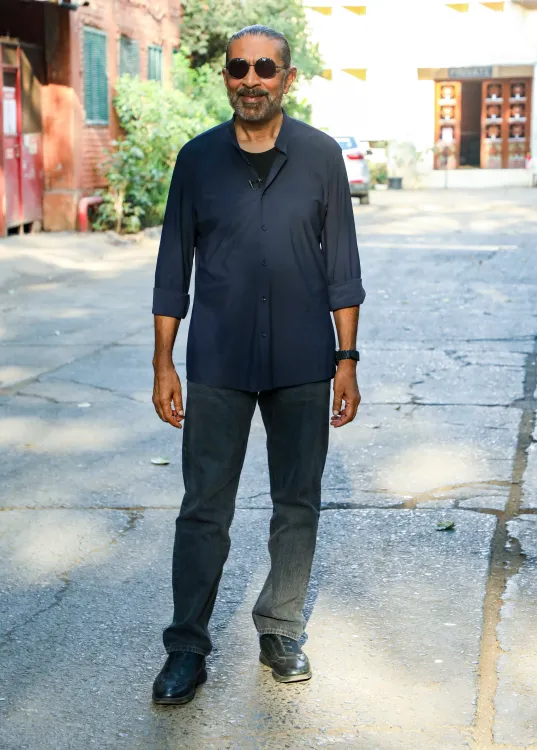
Mumbai, March 15 (NationPress) Renowned filmmaker Prakash Jha, who has received the National Award, expressed his surprise at not noticing when his daughter, Disha, matured into a filmmaking talent. It was only when she approached him with a story idea that he realized her growth.
Speaking with IANS in his office located in Andheri West, Mumbai, Jha revealed it was a delightful revelation for him to witness his daughter evolve into a professional in the film industry.
Disha's journey in cinema began as a costume assistant on the film ‘Raajneeti’, directed by her father. She has also taken on the role of producer for the OTT series ‘Sankalp’, which was directed by him.
Jha stated, “I didn't even notice her growing up. I never formally guided her. The moment I realized she had matured was when she approached me with a subject. It feels wonderful to see her progress, and we all learn. She is learning too.”
“She is excelling in her learning because everyone on set and in the industry speaks highly of her, which is essential. As a producer, effective communication and understanding the needs of everyone involved are crucial. Additionally, managing the entire workflow, including timing, scheduling, and budgeting, is vital. The most important aspect is maintaining a good rapport with everyone,” he added.
Previously, the National Award-winning director shared his thoughts on the connection between society and revolution. He explained that when oppression reaches a tipping point, revolution becomes unavoidable, impacting existing systems dramatically.
He remarked, “Revolution is a natural occurrence. Just like a volcano can erupt, when oppression becomes excessive, it builds up until it explodes. This is a natural cycle. We don’t simply wake up; revolutions simmer quietly until the oppression becomes unbearable, leading to an eruption. Time is a profound teacher that imparts valuable lessons.”
When asked about his responsibilities towards cinema and society, he responded, “It is vital to grasp the sensitivity behind every dialogue, every image, and every narrative we present. The goal is to entertain, engage, and evoke emotions. If there's a message to convey, it should be done sensitively, without alienating people or causing instability. The objective is to communicate constructively while keeping it engaging and interesting.”
Point of View
It is clear that Prakash Jha's reflections on his daughter Disha's emergence as a filmmaker highlight the personal and professional dynamics in the film industry. His insights resonate with the broader narrative of growth and the importance of nurturing talent in creative fields.
NationPress
16 Oct 2026
Frequently Asked Questions
How did Disha start her career in filmmaking?
Disha began her career as a costume assistant on the film 'Raajneeti', directed by her father, Prakash Jha.
What series did Disha produce?
Disha produced the OTT series 'Sankalp', which was also directed by Prakash Jha.
What did Prakash Jha say about revolution?
He stated that when oppression exceeds a certain limit, revolution becomes inevitable, similar to how a volcano erupts.
What is Prakash Jha's perspective on storytelling?
He believes it is essential to convey messages sensitively while engaging and entertaining the audience.
How does Prakash Jha feel about Disha's growth?
He expressed joy and surprise at her growth, noting that he did not consciously teach her but recognized her development when she approached him with her own story.