Sharmila Tagore on Vande Mataram: First two stanzas suit all faiths
Synopsis
Sharmila Tagore has stepped into India's sharpest cultural flashpoint — the Vande Mataram debate — arguing that the song's later stanzas, which invoke multiple Hindu deities, cannot reasonably be expected of monotheistic citizens. Her remarks arrive just as the BJP and Congress are at open loggerheads over the full Red Fort rendition on Independence Day, making this one of the most politically charged iterations of a controversy that has never truly been settled.
Key Takeaways
Sharmila Tagore said the first two stanzas of Vande Mataram are appropriate for all faiths, while the full song conflicts with monotheistic beliefs.
The row intensified after the full rendition of Vande Mataram at the Red Fort on 15 August 2025 — reportedly a first in Independence Day history.
Congress has maintained a practice of singing only the first two stanzas since 1937 ; BJP has accused it of disrespecting the national song.
Mukesh Khanna separately claimed Jana Gana Mana was a tribute to the British Crown — a claim historians dispute.
Vande Mataram holds the status of national song, not national anthem; the Supreme Court has ruled that no citizen can be compelled to sing it.
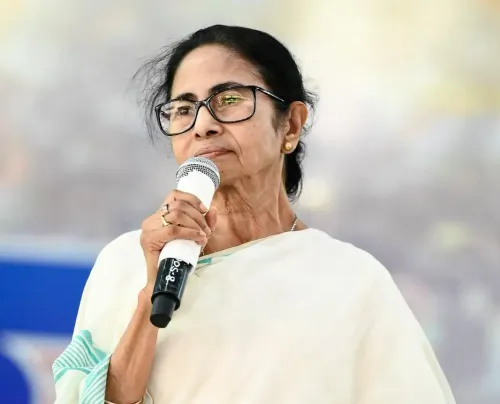
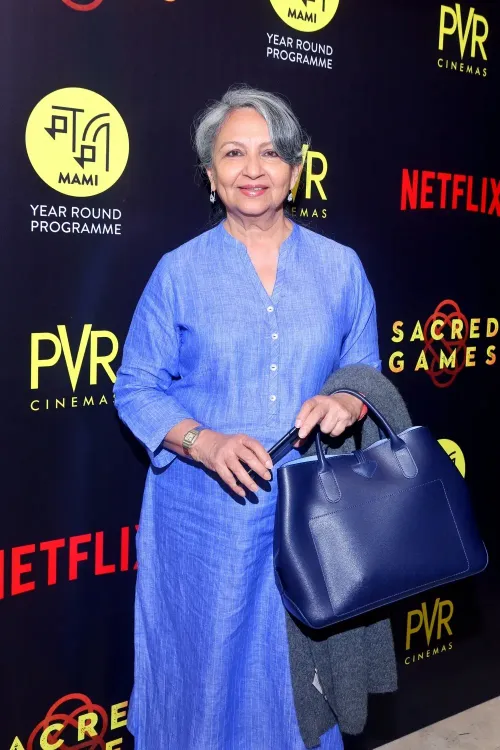
Veteran actress Sharmila Tagore has said that India should limit the singing of the national song 'Vande Mataram' to its first two stanzas, arguing that the later verses reference multiple deities and may conflict with the religious convictions of monotheistic communities across the country. Her remarks came amid a renewed national debate over the song's rendition that has drawn in political parties, public figures, and religious groups.
What Sharmila Tagore Said
'My point of view is that there are many religious people who believe in one single God, not many Gods. In Vande Mataram, there is a stanza which says that many Gods are mentioned,' she said. She added, 'It is difficult for those who believe in one religion to say, Vande Kali, Vande Durga. Therefore, if we take all the religious people in India together, the first two stanzas are very good.'
Tagore's remarks reflect a position long held by several religious communities — particularly Muslims and Christians — who have historically expressed discomfort with the full rendition of the song on grounds of monotheistic faith.
The Political Row Behind the Debate
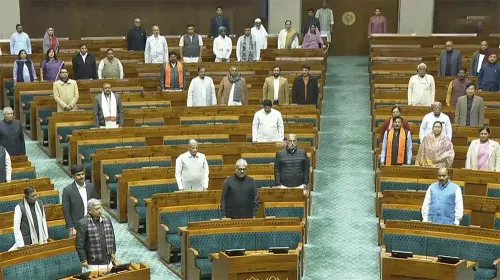
The controversy intensified following India's 80th Independence Day celebrations on 15 August 2025, when the full rendition of Vande Mataram was performed at the Red Fort — reportedly a first in Independence Day history. The development reignited a long-standing dispute between the country's two principal national parties.
The Indian National Congress (INC) reaffirmed its practice of singing only the first two stanzas at party events, a position it has maintained since 1937. Congress president Mallikarjun Kharge defended the stance, noting that the same version had been sung by national leaders throughout the independence movement.
The Bharatiya Janata Party (BJP), however, accused the Congress of disrespecting the national song, framing the party's selective rendition as a political concession to minority vote banks. The exchange underscored how Vande Mataram — composed by Bankim Chandra Chattopadhyay and first sung at the 1896 Indian National Congress session — continues to sit at the intersection of identity, religion, and electoral politics more than a century later.
Actor Mukesh Khanna's Separate Claim
Adding a more provocative dimension to the debate, actor Mukesh Khanna called for Vande Mataram to replace the national anthem 'Jana Gana Mana', claiming the latter was composed by Rabindranath Tagore as a tribute to the British Crown. 'Jana Gana Mana is not the national anthem of our country. It is a tribute to Queen Elizabeth. Rabindranath Tagore wrote a song in praise of her,' he said.
Historians and constitutional scholars have consistently disputed this claim, noting that Jana Gana Mana was adopted as India's national anthem by the Constituent Assembly on 24 January 1950. Khanna also said he had recorded a seven-minute version of Vande Mataram, calling it a work he hopes will become iconic.
Historical and Constitutional Context
The Supreme Court of India has previously held that no citizen can be compelled to sing Vande Mataram, and the song carries the status of national song — distinct from the national anthem. The 1937 Congress resolution that limited the party's rendition to the first two stanzas was itself a compromise brokered to accommodate the concerns of Muslim members of the independence movement, including those led by the All India Muslim League.
This is not the first time the debate has flared. Similar rows erupted in 2016 and 2022, each time triggered by political events or public statements. The current iteration, however, is notable for the full Red Fort rendition — which lends the controversy fresh institutional weight.
Point of View
And the 1937 Congress position was itself a carefully negotiated pluralist compromise. What is new is the institutional provocation: a full Red Fort rendition on Independence Day shifts the debate from party practice to state symbolism, and that is a harder line for any party to hold against. The BJP's framing of Congress's two-stanza position as minority appeasement is electorally potent but historically thin. The more serious question — whether the state should actively promote a version of the national song that excludes a portion of its own citizens — is one that neither party has answered with any rigour.
NationPress
5 Oct 2026
Frequently Asked Questions
Why does Sharmila Tagore say only the first two stanzas of Vande Mataram should be sung?
Sharmila Tagore argues that the later stanzas of Vande Mataram reference multiple Hindu deities — such as Kali and Durga — which makes it difficult for monotheistic communities, including Muslims and Christians, to recite them in good conscience. She said the first two stanzas are inclusive and suitable for all religious groups in India.
What is the BJP-Congress dispute over Vande Mataram about?
The dispute centres on whether the full song or only its first two stanzas should be sung at official and party events. Congress has maintained a two-stanza practice since 1937; BJP has accused it of disrespecting the national song. The row intensified after the full rendition at the Red Fort on 15 August 2025.
What did Mukesh Khanna say about Jana Gana Mana?
Actor Mukesh Khanna claimed that Jana Gana Mana was composed by Rabindranath Tagore as a tribute to Queen Elizabeth and is therefore not truly India's anthem. Historians and constitutional scholars have consistently rejected this claim; Jana Gana Mana was adopted as the national anthem by the Constituent Assembly on 24 January 1950.
What is the legal status of Vande Mataram in India?
Vande Mataram is India's national song, a status distinct from the national anthem Jana Gana Mana. The Supreme Court of India has held that no citizen can be compelled to sing Vande Mataram, making its recitation a matter of personal and religious choice.
When did the Congress first adopt the two-stanza position on Vande Mataram?
The Indian National Congress formally adopted the practice of singing only the first two stanzas of Vande Mataram in 1937, as a compromise to accommodate the concerns of Muslim members of the independence movement who objected to the song's later verses invoking Hindu deities.