Shekhar Kapur on microdramas: India's $1.5 bn market, AI, and scale
Synopsis
Shekhar Kapur has put a number on India's microdrama moment — $1.5 billion, matching the country's entire theatrical box office for 2026. But even as he acknowledges the format's explosive business logic, he is asking the harder question: can a medium built for scale ever produce a Sholay or a Masoom? His answer, for now, is 'time will tell.'
Key Takeaways
Shekhar Kapur posted on X on 28 June about the global microdrama boom, citing China's market at nearly $150 billion by end of 2026 .
The Indian microdrama market is valued at $1.5 billion — equal to India's theatrical box office for 2026 .
Kapur argues microdramas are a business of scale , driven by technology companies and platforms, not a vehicle for landmark cinema.
AI can improve production efficiency, but Kapur questions whether storytelling can truly scale without losing depth.
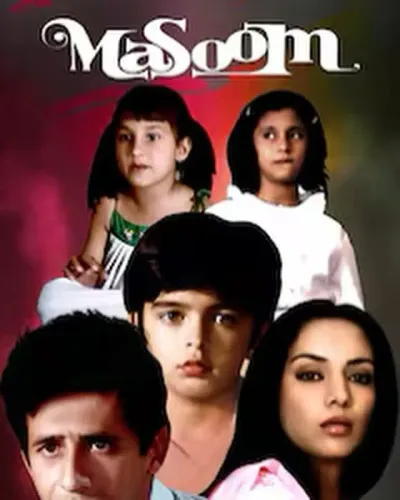
Kapur confirmed he is 'finally ready to shoot' Masoom: The Next Generation , with A R Rahman composing and co-producing.
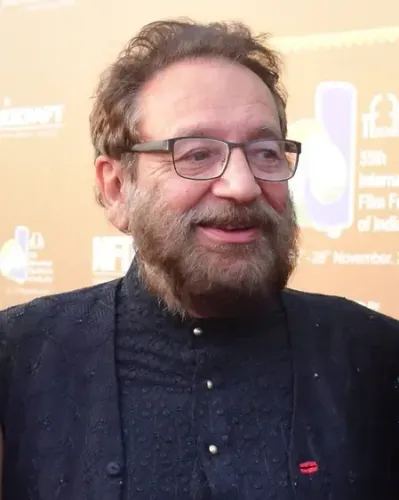
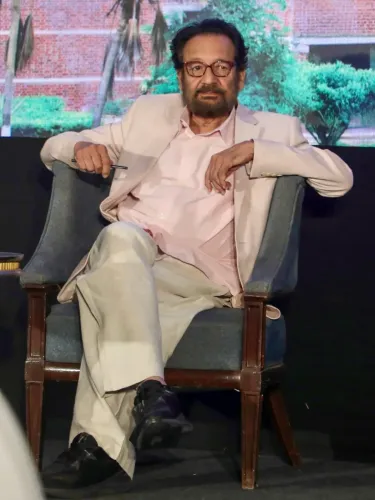
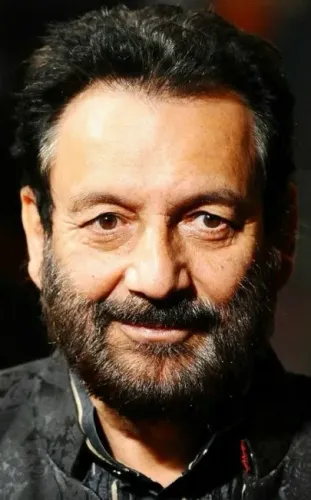
Filmmaker Shekhar Kapur has weighed in on the rapidly expanding global microdrama market, calling it a compelling business proposition driven by scale and artificial intelligence — while questioning whether the format can ever produce truly great storytelling. Kapur shared his thoughts in a detailed post on X (formerly Twitter) on Sunday, 28 June.
The Numbers Behind the Microdrama Boom
Kapur drew a striking comparison between microdramas and conventional cinema to make his case. 'The whole world suddenly is talking about microdramas. They should,' he wrote, noting that China's microdrama market is valued at nearly $150 billion by the end of 2026 — 'nearly twice the annual box office of their films at a fraction of the cost.'
Closer to home, the Indian microdrama market is currently valued at $1.5 billion, which, as Kapur pointedly observed, is exactly equal to India's theatrical box office for 2026. That parity underscores just how quickly the format has scaled in the country.
Scale Is the Business — Not Storytelling
Kapur was candid about what microdramas are and are not. 'Do not expect a Mughal-E-Azam, a Sholay, Mr. India, or a Masoom to arise from a MicroDrama,' he wrote. 'For that's not the business — MicroDrama is a business of scale.' He noted that this is precisely why technology companies and existing platforms are leading the rush to invest and capture market share.
This comes amid a broader global pivot toward short-form content, with platforms across Southeast Asia, the United States, and Europe experimenting with vertical, episodic microdramas — many running under five minutes per episode.
AI's Role: Efficiency vs. Artistry
Kapur acknowledged that AI offers significant opportunities for scaling microdrama production more efficiently and economically. However, he raised a pointed question about the limits of that efficiency: 'Scale plus AI may be a compelling business vision — but does storytelling lend itself to scale? That remains to be seen.'
The observation reflects a tension that has surfaced repeatedly in the broader conversation about AI in creative industries — that optimising for volume and speed may come at the cost of narrative depth and emotional resonance.
Masoom 2 and What Kapur Is Focused On
Kapur used his post to draw a clear line between the microdrama format and his own work. He revealed that he has been developing the script of Masoom 2 — officially titled Masoom: The Next Generation — for several years and is 'finally ready to shoot.' He was unambiguous: 'Masoom is no MicroDrama.'
Separately, Kapur had shared his excitement after Oscar-winning composer A R Rahman recorded a track for the film. In an X post accompanied by a photograph, Kapur captured Rahman and lyricist Sohaila Kapur at work in the recording studio, writing: 'Always exciting to watch him in a state of ecstasy as he is composing.' Notably, Rahman is also co-producing Masoom: The Next Generation.
The collaboration between Kapur and Rahman has a long history, spanning projects such as Elizabeth: The Golden Age and musical theatre productions including Bombay Dreams and Why? The Musical. Their partnership on Masoom: The Next Generation was formally announced in May.
What the Microdrama Debate Signals
Kapur's assessment — 'Is it a great business idea? Yes. Will great stories come out of it? Time will tell' — neatly encapsulates a debate the Indian entertainment industry has not yet resolved. As investment flows into the format, the question of whether microdramas can develop a distinct creative identity, rather than remaining a volume play, will define the next phase of their growth.
Point of View
He is implicitly defending the value of slow, craft-driven storytelling at a moment when the industry is chasing short-form revenue. The more interesting question his post raises is whether Indian platforms, flush with microdrama investment, will eventually try to blur that boundary — and whether audiences will let them. The $1.5 billion parity figure is the real provocation here: when microdramas match the theatrical box office in value, the conversation about what counts as 'real' cinema becomes harder to dismiss.
NationPress
28 Jun 2026
Frequently Asked Questions
What did Shekhar Kapur say about the microdrama market?
Kapur said the global microdrama market is booming, with China's segment valued at nearly $150 billion by end of 2026 and India's at $1.5 billion — equal to India's theatrical box office for the same year. He described microdramas as a business of scale, led by technology companies and platforms rather than traditional filmmakers.
How big is India's microdrama market in 2026?
India's microdrama market is valued at $1.5 billion in 2026, according to Kapur's post. He noted this is equal to India's theatrical box office for the same year, highlighting how quickly the format has grown.
What is Shekhar Kapur's view on AI and microdrama storytelling?
Kapur acknowledged that AI offers major opportunities for scaling microdrama production efficiently and economically. However, he questioned whether storytelling truly lends itself to scale, calling 'scale plus AI' a compelling business vision while leaving the creative question open.
What is Masoom: The Next Generation and who is involved?
Masoom: The Next Generation is Shekhar Kapur's long-in-development sequel to his 1983 film Masoom. Oscar-winning composer A R Rahman is both composing the music and co-producing the film. Kapur announced in his June 28 post that he is finally ready to shoot the project.
How long have Shekhar Kapur and A R Rahman worked together?
Kapur and Rahman have collaborated across multiple projects, including the film Elizabeth: The Golden Age and musical theatre productions Bombay Dreams and Why? The Musical. Their partnership on Masoom: The Next Generation was formally announced in May.