Shweta opens up on low fertility discovery: 'I wanted the choice to be mine'
Synopsis
Actress Shweta didn't frame her low fertility discovery as heartbreak over not having children — she framed it as a loss of agency. On Soha Ali Khan's podcast, she says she was 'really upset' not because she wanted a child then, but because she wanted the decision to be hers. It's a rare and honest take on reproductive autonomy from a Bollywood figure.
Key Takeaways
Shweta revealed on Soha Ali Khan's podcast All About Her that she discovered her fertility levels were low.
She said the news upset her primarily because she felt her right to choose was being removed, regardless of whether she wanted children at the time.
Shweta described motherhood as far more demanding than she had been led to believe, saying friends told her 'nobody spoke to us about this.' She married at 33 and says both her families have been supportive and never pressured her about having children — an experience she acknowledges is unusual.
All About Her streams on YouTube and covers changing attitudes among younger Indians towards marriage, parenthood, and relationships.
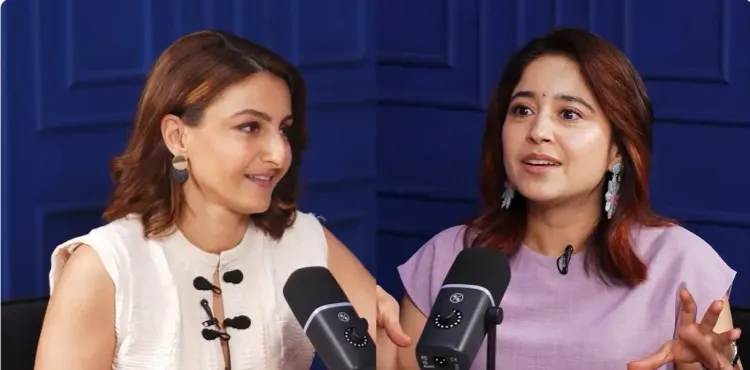
Bollywood actress Shweta has spoken candidly about the emotional toll of learning her fertility levels were low, saying the news upset her primarily because she felt her freedom of choice was being taken away — even at a time when she had not yet decided whether she wanted children at all. She made the revelation during an appearance on Soha Ali Khan's podcast All About Her, which streams on YouTube.
The Fertility Discovery and What It Meant
Shweta recalled the moment she received the news about her fertility levels, describing her reaction as one rooted in autonomy rather than a definitive desire for motherhood. 'I remember I was really upset because I was like, I wanted the choice to be mine. Like I don't want somebody else telling me that, oh, you can't have a child. Even if let's say that time I was thinking I don't know if I want to have a child or not,' she said.
Her account reflects a broader conversation that younger women are increasingly having — one where reproductive choices are framed not just as questions of biology, but of personal agency and self-determination.
On the Realities of Motherhood
Shweta also shared how her perception of motherhood has shifted over the years, shaped by watching close friends and her own sister-in-law navigate parenting. She described the experience as far removed from what is typically presented to women before they become mothers.
'First of all, I think once you become a mother, you become a superhuman because I have seen my friends, my own sister-in-law, and we live together. It's easy. It's the exact opposite of that,' she said. She went on to note that her peers, too, felt unprepared: 'Nobody spoke to us about this. That this is also what happens. And the list is long. So hats off to all the mothers because I think it takes a lot of courage and strength and sacrifice and it's very tough.'
Marriage, Parenthood Pressure and a 'Lucky' Exception
When podcast host Soha Ali Khan asked about the social expectations Shweta has faced around marriage and children, the actress acknowledged she has been comparatively fortunate. She married at 33, and while pre-marriage she fielded persistent questions about 'when she would settle down,' she says pressure around having children has been largely absent — something she credits to supportive families.
'Luckily, both my families have been very supportive. They obviously wanted to become grandparents and masi and everything, but they were never pushy. They never made me feel uncomfortable,' she said. She added, however, that she is aware this is not the norm, recounting how relatives quickly turned to her after her sister-in-law gave birth with questions about when she would share her own 'good news.'
The Podcast and Its Larger Context
The episode is part of All About Her, Soha Ali Khan's ongoing YouTube series that explores how younger generations in India are rethinking relationships, marriage, and parenthood against the backdrop of shifting social and economic realities. Conversations around fertility awareness, reproductive autonomy, and the unequal burdens placed on women in marriage have gained significant traction in recent years, with more public figures choosing to speak openly about experiences that were once considered private or taboo.
Shweta's account adds a personal dimension to a public discourse that is still evolving in India, where family pressure around childbearing remains common despite changing attitudes among urban, working women.
Point of View
But the framing: her distress was about autonomy, not longing. That distinction matters in a country where a woman's reproductive choices are still overwhelmingly narrated through family expectation rather than individual will. The episode is a reminder that 'awareness' conversations in Indian entertainment media often stop at the surface — Shweta goes a layer deeper by separating the desire for a child from the desire to have a choice. The fact that she describes her supportive family as an exception, not a norm, says more about where Indian society still stands than any statistic could.
NationPress
30 Oct 2026
Frequently Asked Questions
What did Shweta reveal about her fertility on Soha Ali Khan's podcast?
Shweta disclosed that she discovered her fertility levels were low, and that the news deeply upset her — not necessarily because she had decided she wanted children, but because she felt her ability to make that choice herself was being taken away. She made the revelation on Soha Ali Khan's YouTube podcast All About Her.
What is Soha Ali Khan's podcast All About Her?
All About Her is a YouTube podcast hosted by Soha Ali Khan that explores how younger generations in India are rethinking marriage, parenthood, and relationships in the context of evolving social and economic realities. The episode featuring Shweta covers topics including motherhood, fertility, and family pressure.
How did Shweta describe the experience of motherhood based on what she has observed?
Shweta described motherhood as the opposite of 'easy,' drawing on what she has seen in her friends and her sister-in-law, with whom she lives. She said mothers are 'superhumans' and that most women are not adequately prepared for how demanding parenthood is, with many of her peers saying 'nobody spoke to us about this.'
Has Shweta faced family pressure about marriage or having children?
Shweta said she faced social pressure about marriage before she wed at 33, though it did not come from her parents. On the question of children, she says she has been unusually fortunate — both her families were supportive and never made her feel uncomfortable, something she acknowledges is not the experience of most women.
Why is Shweta's fertility disclosure significant in a broader context?
Her account stands out because she frames the issue as one of personal agency rather than biological loss — she was upset at losing the right to decide, not at the prospect of being childless. This reflects a wider shift in how urban Indian women are beginning to discuss reproductive choices, separating personal desire from family expectation.