AIIMS Delhi fills 460 faculty posts using blockchain technology in recruitment first
Synopsis
AIIMS Delhi has declared results for over 460 faculty positions — its largest hiring drive in years — using blockchain technology to lock candidate marks with OTPs and generate merit lists algorithmically. With human intervention limited to tie-breaking alone, the process is being flagged as a potential transparency benchmark for central institution recruitment across India.
Key Takeaways
AIIMS New Delhi declared faculty recruitment results on 6 July , filling over 460 posts across 50+ disciplines .
Positions range from Assistant Professor to Professor at AIIMS New Delhi ( 265 posts ) and AIIMS-CAPFIMS, Maidan Garhi ( 199 posts ).
Over 3,200 applicants competed; the selection process spanned six months .
Blockchain technology was used to digitally lock marks via OTPs ; merit lists were generated algorithmically with human intervention limited to tie-breaking.
The model is expected to serve as a template for transparent recruitment in other central institutions.
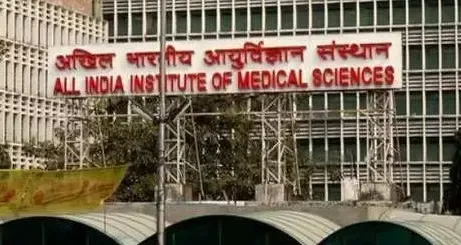
All India Institute of Medical Sciences (AIIMS), New Delhi, on Sunday, 6 July declared results of its largest faculty recruitment drive in recent years, filling over 460 vacant positions spanning Assistant Professor to Professor ranks across more than 50 disciplines. The exercise covered both the main AIIMS New Delhi campus and the newly established AIIMS-Central Armed Police Forces Institute of Medical Sciences (CAPFIMS) campus at Maidan Garhi.
Scale of the Recruitment Drive
The drive attracted over 3,200 applicants competing for 265 posts at AIIMS New Delhi and 199 posts at the AIIMS-CAPFIMS campus, totalling 464 positions. The selection process ran for six months, making it one of the most extensive hiring exercises the premier institution has undertaken.
How Blockchain Was Used
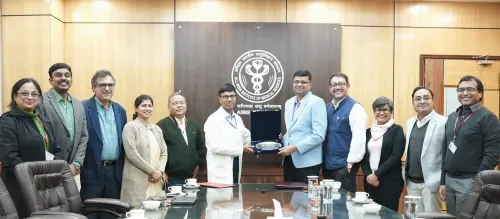
In what officials are describing as a pioneering move for public-sector recruitment in India, AIIMS deployed blockchain digital technology to secure the entire process. Candidates' marks were digitally locked using one-time passwords (OTPs), and a specially designed software generated the final merit list through pre-defined algorithms. Human intervention was restricted to resolving tied scores only, rendering the process largely automated and tamper-proof.
The approach simultaneously maintained candidate confidentiality and enabled the swift declaration of results — a combination that has historically proved difficult to achieve in large-scale public recruitment.
Impact on Medical Education and Patient Care
The induction of new faculty is expected to address longstanding gaps in teaching and clinical departments at both institutions. Officials say the appointments will improve the teacher-student ratio, expand specialised healthcare services, and strengthen AIIMS's capacity for advanced medical research and training programmes.
Notably, the AIIMS-CAPFIMS campus at Maidan Garhi is a relatively new addition to the AIIMS network, and this recruitment round marks a significant early staffing milestone for the facility.
A Potential Model for Central Institutions
The successful application of blockchain in a public recruitment of this scale is being closely watched by other central institutions. Observers note that if the model holds up to scrutiny, it could inform hiring practices across central universities and government bodies where transparency concerns have historically dogged large-scale selections.
With results now declared, the focus shifts to onboarding timelines and whether the expanded faculty strength translates into measurable improvements in AIIMS's academic and clinical output.
Point of View
But because its application to a high-stakes public hiring process at this scale is rare in India. The real test is replicability: AIIMS has the institutional weight to absorb implementation costs, but smaller central bodies may not. More importantly, blockchain secures the merit-list generation stage — it does not address upstream vulnerabilities such as interview scoring or shortlisting criteria, which remain human-driven. If AIIMS publishes a detailed process audit, it would give the model genuine credibility; without that transparency layer, the blockchain claim risks becoming a headline rather than a reform.
NationPress
5 Oct 2026
Frequently Asked Questions
What is the AIIMS Delhi faculty recruitment drive announced in July 2025?
AIIMS Delhi declared results for over 460 faculty positions on 6 July, covering posts from Assistant Professor to Professor across more than 50 disciplines at AIIMS New Delhi and the AIIMS-CAPFIMS campus at Maidan Garhi. It is one of the largest faculty hiring exercises the institution has conducted in recent years.
How was blockchain technology used in the AIIMS recruitment process?
Candidates' marks were digitally locked using one-time passwords (OTPs) on a blockchain platform, and a specially designed software generated the final merit list through pre-defined algorithms. Human intervention was permitted only to resolve tied scores, making the process largely automated and tamper-proof.
How many posts were filled at AIIMS New Delhi and AIIMS-CAPFIMS?
AIIMS New Delhi filled 265 posts, while the AIIMS-CAPFIMS campus at Maidan Garhi filled 199 posts, bringing the combined total to over 460 faculty positions across both institutions.
Why does this recruitment matter for medical education in India?
The new appointments are expected to reduce gaps in teaching and clinical departments, improve the teacher-student ratio, and expand specialised healthcare and research capacity at both campuses. AIIMS-CAPFIMS, being a newer facility, benefits particularly from this early large-scale staffing.
Could this blockchain recruitment model be adopted by other institutions?
Officials and observers suggest the model could serve as a template for future recruitment in other central institutions, given its demonstrated ability to maintain confidentiality and speed while limiting human intervention. Broader adoption would depend on cost feasibility and independent process audits.