Balaghat child deaths: 3,811 screened in tribal villages as Congress alleges toll cover-up
Synopsis
At least eight children have died in Balaghat's Baiga tribal villages, but the Opposition Congress claims the toll is 19 — and that the BJP-led Madhya Pradesh government is hiding the truth. With 3,811 people screened, 798 cases detected, and lab results still pending, the health crisis in one of India's most vulnerable tribal belts is far from resolved.
Key Takeaways
3,811 people screened across Kundeksa , Korka , and Bondari villages in Balaghat district as of 24 August .
798 cases detected, including 320 malaria , 155 diarrhoea , 146 fever with rashes , and 177 skin disease cases.
The Madhya Pradesh Health Department has officially confirmed 8 child deaths in the affected Baiga-dominated villages.
Leader of Opposition Umang Singhar alleged the toll is 19 , accusing the BJP government of concealing the true figure.
Blood and water samples have been sent for laboratory examination; the exact cause of illness remains unconfirmed .
28 patients remain hospitalised; all are reported to be in stable condition.
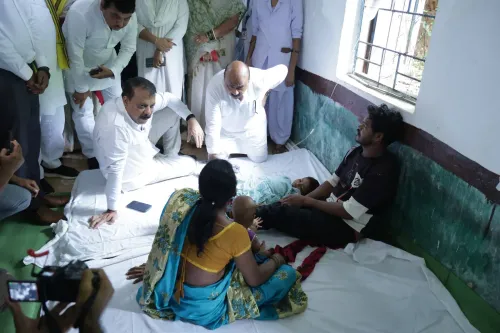
Madhya Pradesh's Health Department has screened 3,811 people across three tribal villages in Balaghat district after a cluster of child deaths triggered a political storm, with the Opposition alleging the state government is concealing the true toll. The door-to-door surveys, covering Kundeksa, Korka, and Bondari villages in Birsa block, detected 798 cases of malaria, diarrhoea, fever with rashes, and skin diseases as of 24 August.
Scale of the Health Crisis
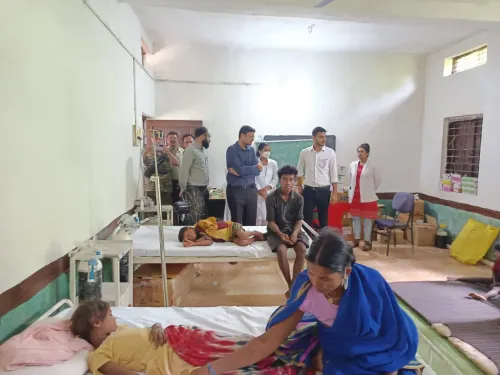
Of the 798 patients identified during the survey, 569 were treated at home while 229 were hospitalised. Among those admitted, 201 have since recovered and returned home, with 28 still under treatment. District authorities confirmed that 12 new patients were admitted on Sunday, while 5 were discharged after treatment.
According to the government's report, 320 people were found suffering from malaria, 155 from diarrhoea, 146 from fever with body rashes, and 177 from skin diseases. Officials stated that all hospitalised patients were admitted as a precautionary measure and their condition is described as stable and out of danger.
Child Deaths in Baiga-Dominated Villages
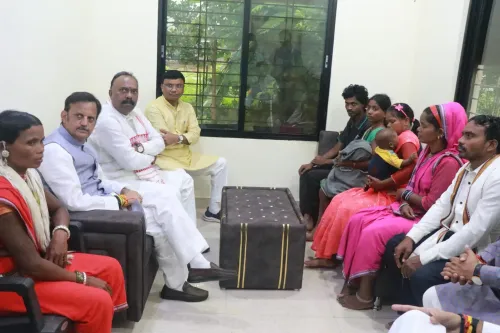
The health emergency centres on Baiga-dominated villages in Balaghat, a scheduled tribal belt in central Madhya Pradesh. The state Health Department has officially confirmed eight child deaths in the affected villages. The exact cause of the illnesses has not yet been conclusively established, with health officials reporting symptoms linked to multiple infections — including malaria-like fever and skin infections — alongside nutritional deficiencies. Blood and water samples have been sent for further laboratory examination.
Notably, the Baiga community is classified as a Particularly Vulnerable Tribal Group (PVTG), making access to healthcare and nutritional support a longstanding structural concern in the region.
Congress Alleges Cover-Up, Demands Accountability
The confirmed deaths have ignited a sharp political dispute. The Indian National Congress (Congress) has accused the Bharatiya Janata Party (BJP)-led Madhya Pradesh government of suppressing facts about the deaths and claimed the actual toll is significantly higher than officially acknowledged.
Leader of Opposition Umang Singhar alleged last week that 19 children had died — more than double the government's confirmed figure of eight — and accused the administration of a deliberate cover-up. The government has not directly addressed this discrepancy in its public statements.
Government Response and Ongoing Surveillance
State health teams are continuing door-to-door surveys and treatment in the three villages, with surveillance maintained and hospitalisation arranged wherever required. Authorities said the health drive would persist until the situation is fully brought under control.
This comes amid broader concerns about healthcare access in Madhya Pradesh's tribal districts, where malaria and nutritional deficiencies have historically posed recurring seasonal challenges. The dispatch of blood and water samples for examination suggests authorities have not yet ruled out a waterborne or vector-borne outbreak as a contributing factor.
With laboratory results still awaited and the political controversy deepening, the situation in Balaghat's tribal belt is likely to remain under close scrutiny in the days ahead.
Point of View
Under-reporting of deaths is a documented systemic failure, not a fringe allegation. The fact that blood and water samples are still being analysed weeks into the crisis raises questions about the speed of the initial response. Madhya Pradesh has a recurring pattern of tribal health emergencies that surface politically only after the damage is done; the accountability framework for PVTG health outcomes remains weak, and this episode does little to suggest that is changing.
NationPress
8 Oct 2026
Frequently Asked Questions
How many child deaths have been confirmed in Balaghat's tribal villages?
The Madhya Pradesh Health Department has officially confirmed eight child deaths in the Baiga-dominated villages of Balaghat district. The Opposition Congress, however, alleges the actual toll is 19 and has accused the state government of concealing the true figure.
What illnesses have been detected in the affected villages?
Health surveys identified 798 cases across three villages, including 320 cases of malaria, 155 of diarrhoea, 146 of fever with body rashes, and 177 of skin diseases. Nutritional deficiencies have also been flagged, though the exact cause of the illnesses has not yet been conclusively established.
What has the Congress alleged about the Balaghat child deaths?
Leader of Opposition Umang Singhar alleged last week that 19 children had died — more than double the government's confirmed figure — and accused the BJP-led state government of a deliberate cover-up. The government has not directly addressed this discrepancy publicly.
What is the current health status of hospitalised patients in Balaghat?
Of 229 patients hospitalised, 201 have recovered and returned home, while 28 remain under treatment. District authorities stated that all hospitalised patients are in stable condition and out of danger.
Why are the Baiga villages of Balaghat considered especially vulnerable?
The Baiga community is classified as a Particularly Vulnerable Tribal Group (PVTG) by the Government of India, indicating extreme marginalisation and limited access to healthcare and nutrition. Malaria and nutritional deficiencies have historically posed recurring seasonal challenges in Madhya Pradesh's tribal districts.