How Will the Middle Class Benefit from Affordable Healthcare in the Budget? Dr. Singh Explains
Synopsis
In a recent address, Dr. Jitendra Singh highlighted the transformative potential of the Budget for the middle class, focusing on affordable healthcare solutions that promise long-term benefits. With investments in biotechnology and chronic disease management, the Budget aims to ease the financial strain on families and bolster India's position as a bio-manufacturing leader.
Key Takeaways
Affordable healthcare is a priority in the Budget.
Investments in biotechnology are set to enhance India's global standing.
Long-term relief from healthcare costs is a key focus.
New mental health institutes will improve access to care.
Support for traditional medicine systems is integrated with modern research.
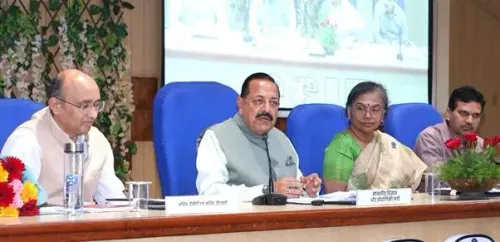
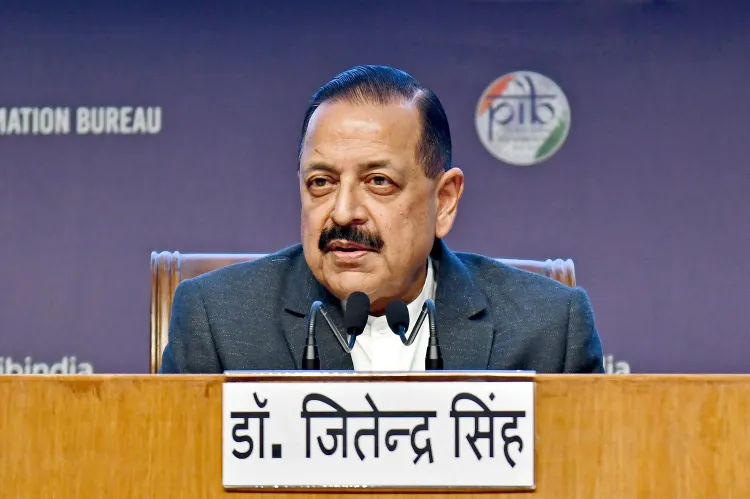
New Delhi, Feb 2 (NationPress) The introduction of affordable medications, vaccines, and diagnostics bolstered by domestic biomanufacturing is poised to offer significant social and economic assistance, particularly to the middle class and marginalized groups, according to Union Minister of State (Independent Charge) for Science and Technology, Dr. Jitendra Singh, during a press briefing on Monday.
While addressing reporters post-Budget, Dr. Singh emphasized that the forthcoming benefits may take time to manifest fully, yet the Budget showcases a definitive, methodical vision where structural reforms are enhanced by cutting-edge technologies, increasingly propelled by artificial intelligence.
Dr. Singh responded to queries regarding support for the middle class, asserting that the lasting impact of the Budget lies in long-term relief from escalating healthcare and living expenses, as opposed to mere short-term income assessments.
He pointed out that substantial investments in biopharma, diagnostics, vaccines, and gene-based therapies will notably alleviate the financial strain on families coping with chronic illnesses such as cancer, diabetes, and metabolic disorders.
The minister highlighted alarming statistics, noting the presence of over 11–12 crore diabetics, nearly 14 crore pre-diabetics, and a swiftly rising cancer incidence, with projections anticipating two million cases annually by 2030.
Regarding the Rs 10,000 crore Biopharma Shakti initiative, Dr. Singh stated that India has already positioned itself as a global leader in bio-manufacturing, ranking among the top bio-economies worldwide, particularly within the Indo-Pacific region.
He mentioned that the new financial allocation would further solidify this status by enhancing capabilities in biologics, biosimilars, vaccines, medical devices, and gene-based technologies.
The minister described biotechnology as the forthcoming major industrial catalyst, akin to the role of IT in prior decades, forecasting that the next industrial revolution will be characterized by a bio-revolution, involving recycling, regeneration, circular economy, and advanced life-science innovations.
Dr. Singh noted that the Budget also addresses non-communicable diseases and mental health, domains that have often been overlooked in the past. He announced the establishment of new super-specialty academic and clinical institutes for mental health in North India, ensuring broader and fairer access to care.
Additionally, the minister underscored the initiative to create new institutes for Ayurveda and pharmaceutical education, asserting that these efforts will reinforce traditional medicine systems while integrating them with contemporary research and healthcare delivery.
Point of View
I believe this Budget signifies a pivotal moment for India's healthcare landscape. With an emphasis on biotechnology and affordability, it aims to address pressing health issues faced by the middle class. While immediate impacts may vary, the long-term vision is commendable, fostering a healthier future for all.
NationPress
21 Sept 2026
Frequently Asked Questions
What is the Biopharma Shakti initiative?
The Biopharma Shakti initiative is a Rs 10,000 crore investment aimed at enhancing India's bio-manufacturing capabilities, focusing on biologics, biosimilars, vaccines, and gene-based technologies.
How will the Budget support the middle class?
The Budget focuses on affordable healthcare solutions, particularly for chronic diseases, aiming to ease financial burdens and provide long-term relief from rising healthcare costs.
What impact does biotechnology have on the economy?
Biotechnology is expected to become a major industrial driver, similar to IT, contributing to economic growth through innovations in health and environmental solutions.
What are the new mental health initiatives?
The Budget includes plans to establish new super-specialty institutes for mental health in North India, promoting equitable access to mental health care.
How does the Budget address chronic diseases?
By investing in biopharma and diagnostics, the Budget aims to alleviate the financial impact of chronic diseases like diabetes and cancer on families.