ESIC to directly manage all new hospitals, adds dental college and cancer care block
Synopsis
In one of its most expansive single-meeting decisions, ESIC has moved to directly control all new hospitals, approved a dental college in Delhi, launched a medical college in Haridwar with 50 MBBS seats from 2027–28, and greenlit a cancer care block for the Eastern Zone — a sweeping upgrade that signals a decisive centralisation of India's largest worker health insurance network.
Key Takeaways
All upcoming and newly commissioned ESI Hospitals will be directly managed by the ESIC , not state governments.
A Dental College with UG and PG facilities will be built at ESIC Medical College and Hospital, Basaidarapur, New Delhi .
A new ESIC Medical College at Haridwar , Uttarakhand, will admit 50 MBBS students annually from 2027–28 .
A Radiation Oncology Block with PET-CT and Linear Accelerator was approved at ESIC Joka, Kolkata for the Eastern Zone.
Five new Sub-Regional Offices approved in Meghalaya, Chhattisgarh, Rajkot, Jamshedpur, and Jabalpur.
The unemployment allowance scheme extended from 1 July 2026 to 30 June 2027 .
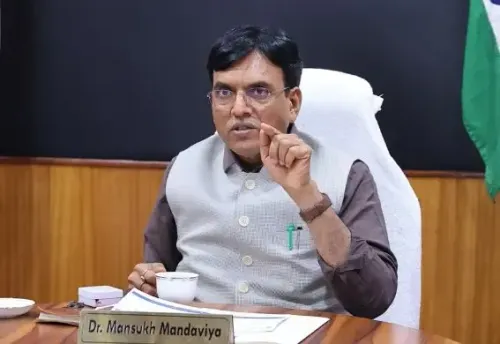
The Employees' State Insurance Corporation (ESIC) on Tuesday, 30 June 2026, approved a sweeping set of proposals to overhaul its healthcare infrastructure, expand medical education, and decentralise administration — decisions that will directly affect millions of insured workers and their families across India. The meeting was chaired by Labour and Employment Minister Mansukh Mandaviya in New Delhi.
Direct ESIC Management of New Hospitals
The most consequential decision of the meeting is that all upcoming and newly commissioned ESI Hospitals will henceforth be directly managed by the ESIC, rather than delegated to state governments. Hospitals currently under state management that are undergoing reconstruction or upgradation will remain with the respective states — unless the state government concerned chooses to hand over control to the ESIC, according to an official statement.
This marks a structural shift in how the corporation oversees its expanding hospital network, signalling a move toward greater central accountability over service quality and resource deployment.
Medical Education Expansion: Dental College and New MBBS Seats
In-principle approval was granted for two significant medical education initiatives. First, a Dental College with undergraduate and postgraduate facilities, a Super-Specialty cum OPD Block, staff quarters, hostels, and allied infrastructure will be constructed at ESIC Medical College and Hospital, Basaidarapur, New Delhi. Second, a new ESIC Medical College at Haridwar in Uttarakhand will be set up with an annual intake of 50 MBBS admissions, utilising the existing infrastructure of ESIC Hospital, Haridwar, from the academic year 2027–28 onwards.
The Corporation also approved the reorganisation and strengthening of its Medical Education Division, including the creation of functional verticals, additional posts, and the constitution of an ESIC Medical Education Advisory Board to guide the expansion of medical, dental, nursing, and allied health science institutions.
Cancer Care and Occupational Health Infrastructure
A Radiation Oncology Block received in-principle approval at ESIC Medical College and Hospital, Joka, Kolkata. The facility will feature a High-Energy Linear Accelerator, CT Simulator Unit, Brachytherapy Unit, and PET-CT Scan facility — significantly strengthening cancer care for beneficiaries across the Eastern Zone, covering West Bengal, Odisha, Bihar, Jharkhand, and the North-Eastern States.
Additionally, Occupational Disease Centres (ODCs) were approved at Sanathnagar, Faridabad, Ludhiana, Beltola, and Bhubaneswar, along with in-principle approval for Zonal Rehabilitation Centres for comprehensive occupational health management.
Ayush Integration and Regulatory Updates
The Corporation approved a Memorandum of Understanding between the Ministry of Ayush and ESIC to create a joint framework for integrating, promoting, and building capacity for Ayush services within the ESIC healthcare system — aimed at addressing occupational and lifestyle-related health challenges through holistic care.
A new consolidated Memorandum of Understanding for State ESI Societies was also approved, replacing the 2017 model Memorandum of Association and Rules and Regulations, necessitated by the enactment of the Code on Social Security, 2020. The Employees' State Insurance (General) Regulations, 2026 were also approved, revising the existing 1950 regulations under the same Code.
New Sub-Regional Offices and Unemployment Allowance Extended
To improve service delivery and decentralise administration following the Code on Social Security's implementation from 21 November 2025, the Corporation approved five new Sub-Regional Offices (SROs) at Meghalaya, Chhattisgarh, Rajkot (Gujarat), Jamshedpur (Jharkhand), and Jabalpur (Madhya Pradesh).
The unemployment allowance scheme for insured persons was extended for a further period of one year, from 1 July 2026 to 30 June 2027, according to the official statement. Together, these decisions represent one of the most comprehensive single-meeting expansions of the ESIC's mandate in recent years, with implementation timelines now closely watched by worker welfare advocates and state health departments alike.
Point of View
Procurement delays, and accountability gaps that the Centre had limited power to address. The simultaneous push into medical education, cancer care, and Ayush integration reflects an ambition to transform ESIC from a payer into a provider — a fundamentally different operating model. The real risk is execution: ESIC's administrative capacity has not always kept pace with its legislative mandate, and adding direct hospital management, five new offices, and two new medical colleges simultaneously is a large operational bet. Whether the newly constituted Medical Education Advisory Board will have the teeth to enforce quality benchmarks — or become another consultative body without consequence — will determine whether this round of expansion moves the needle for India's organised-sector workforce.
NationPress
30 Jun 2026
Frequently Asked Questions
What did ESIC decide about managing its hospitals?
ESIC decided on 30 June 2026 that all upcoming and newly commissioned ESI Hospitals will be directly managed by the corporation itself, rather than delegated to state governments. Hospitals already under state management that are being reconstructed or upgraded will continue under state control unless the concerned state opts to hand them over to ESIC.
Where will the new ESIC Medical College be set up?
A new ESIC Medical College will be established at Haridwar in Uttarakhand, utilising the existing infrastructure of ESIC Hospital, Haridwar. It will admit 50 MBBS students annually starting from the academic year 2027–28.
What cancer care facilities has ESIC approved?
ESIC granted in-principle approval for a Radiation Oncology Block at ESIC Medical College and Hospital, Joka, Kolkata. The block will house a High-Energy Linear Accelerator, CT Simulator Unit, Brachytherapy Unit, and PET-CT Scan facility, serving beneficiaries in West Bengal, Odisha, Bihar, Jharkhand, and the North-Eastern States.
Has the ESIC unemployment allowance scheme been extended?
Yes. The unemployment allowance scheme for insured persons has been extended for one year, from 1 July 2026 to 30 June 2027, as approved at the 30 June 2026 ESIC meeting.
Why are five new ESIC Sub-Regional Offices being opened?
The five new Sub-Regional Offices — in Meghalaya, Chhattisgarh, Rajkot (Gujarat), Jamshedpur (Jharkhand), and Jabalpur (Madhya Pradesh) — are being established to improve service delivery, compliance monitoring, and administrative decentralisation following the expanded coverage under the Code on Social Security, 2020, which came into effect from 21 November 2025.