India's rare disease framework: National Policy 2021 expands CoEs to 15, raises aid to ₹50 lakh
Synopsis
India's rare disease policy has quietly evolved from a footnote in health planning to a structured national framework — with CoEs doubling to 15, financial aid raised to ₹50 lakh, and customs duty exemptions on life-saving drugs expanding. The push for indigenous diagnostic models signals a deliberate move away from dependence on Western frameworks.
Key Takeaways
India's National Policy for Rare Diseases, 2021 has positioned the country among nations with a comprehensive rare disease framework, building on the National Health Policy, 2017 .
The number of Centres of Excellence (CoEs) has expanded from 8 to 15 , including two in north-east India .
Financial assistance for rare disease patients has been enhanced to ₹50 lakh per patient.
Life-saving rare disease drugs have been exempted from basic customs duty , with further expansion announced in the recent Union Budget .
ICMR is working to develop India-specific diagnostic and treatment models, reducing reliance on Western frameworks.
Dr Sunita Sharma called for integrating rare disease services across all healthcare levels for timely referral and continuity of care.
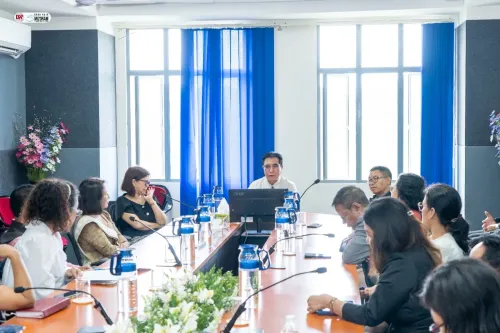
India has joined a select group of nations with a comprehensive national framework for rare diseases, following the institutionalisation of the National Policy for Rare Diseases, 2021 — a milestone that builds on the initial recognition of rare diseases in the National Health Policy, 2017. The government highlighted these developments at a conference in New Delhi on Tuesday, 6 May 2025, where senior health officials outlined progress and challenges in rare disease management across the country.
Key Developments in the National Policy
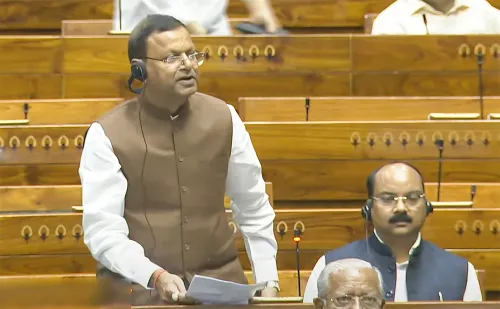
Union Health Secretary Punya Salila Srivastava addressed the conference, stating that the core objective of the policy is to understand stakeholder challenges, encourage innovation, and generate new ideas for strengthening rare disease management. She noted that the policy is implemented through Centres of Excellence (CoEs) — premier tertiary hospitals designated as the backbone of clinical care for rare disease patients.
The number of CoEs has grown from 8 to 15 over the years, with two CoEs now operational in north-east India, significantly broadening the national architecture for specialised care and patient support. This expansion is seen as a deliberate effort to extend equitable access beyond metropolitan centres.
Financial Support and Drug Access
Financial assistance under the policy has been progressively enhanced to ₹50 lakh per patient, enabling improved access to treatment for those suffering from identified rare diseases. Acknowledging the rising cost of therapies — many of which are imported and prohibitively expensive — the government has taken proactive steps to exempt life-saving rare disease drugs from basic customs duty, with further expansion of this exemption announced in the recent Union Budget. Srivastava also invited stakeholders to suggest additional drugs for consideration under such exemptions.
ICMR's Role and Indigenous Research
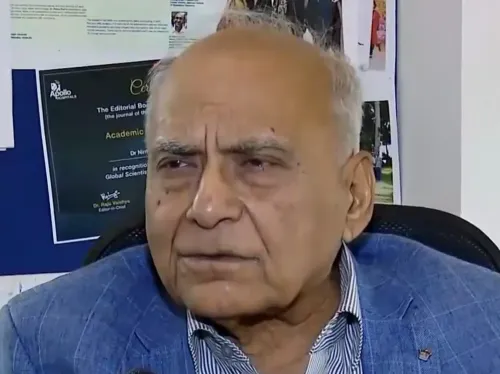
Dr Rajiv Bahl, Secretary of the Department of Health Research (DHR) and Director General of the Indian Council of Medical Research (ICMR), reflected on the significant progress made over the past three decades. He recalled that in the 1990s, identifying a patient with a suspected rare disease often led to a sense of helplessness, as diagnosis was extremely difficult and treatment options were virtually unavailable.
Dr Bahl underscored the need for India to develop its own context-specific model for diagnosis, treatment, and prevention of rare diseases, rather than relying solely on Western frameworks. He noted that ICMR is actively working to expand the range of tools available for managing rare diseases and advancing indigenous research and development of therapies. This push for homegrown solutions is particularly significant given that many rare diseases in India may have distinct genetic profiles compared to those prevalent in Western populations.
Strengthening Health Systems for Early Diagnosis
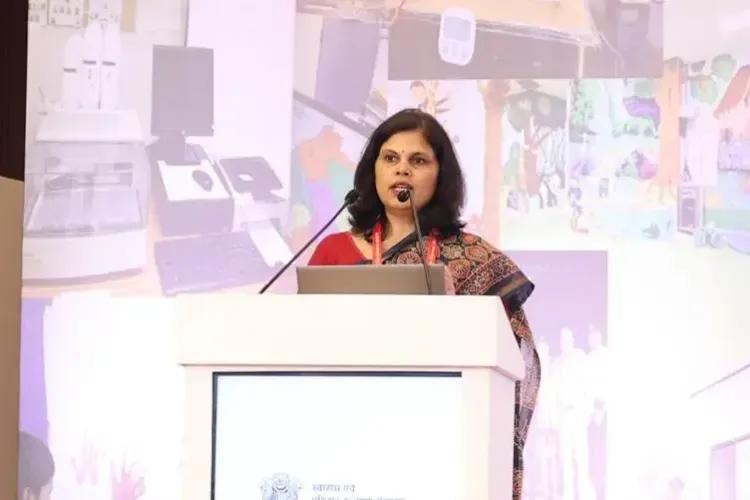
Dr Sunita Sharma, Director General of Health Services, emphasised the importance of strengthening health systems for early diagnosis and comprehensive management of rare diseases. She highlighted the need to integrate rare disease services across different levels of healthcare, ensuring timely referral and continuity of care through an efficient network of facilities. This comes amid growing recognition that delayed diagnosis remains one of the most critical barriers for rare disease patients in India, often leading to irreversible health consequences.
What Comes Next
With the CoE network now spanning 15 hospitals including facilities in the north-east, and financial assistance raised to ₹50 lakh, the government's framework is becoming more robust. The next phase is expected to focus on expanding indigenous diagnostic tools, broadening customs duty exemptions for therapies, and integrating rare disease care more deeply into primary and secondary healthcare networks. The trajectory suggests India's rare disease policy is shifting from awareness to active, systemic intervention.
Point of View
Raising financial caps, and trimming import costs on therapies. But the harder challenge remains unaddressed: the vast majority of India's estimated 70–100 million rare disease patients are still undiagnosed, largely because awareness at the primary care level is negligible. Expanding CoEs to 15 is meaningful, but without a robust referral pipeline from district hospitals and PHCs, these centres risk remaining islands of excellence in a sea of diagnostic gaps. The call for indigenous research models is the right instinct — India's genetic diversity means Western prevalence data is often a poor guide — but ICMR's translation record from research to accessible therapy has historically been slow.
NationPress
28 Sept 2026
Frequently Asked Questions
What is the National Policy for Rare Diseases 2021?
The National Policy for Rare Diseases, 2021 is India's official framework for diagnosing, treating, and managing rare diseases. It builds on the recognition of rare diseases in the National Health Policy, 2017, and is implemented through a network of Centres of Excellence (CoEs) at premier tertiary hospitals across the country.
How many Centres of Excellence for rare diseases exist in India?
As of the latest update, India has 15 Centres of Excellence (CoEs) for rare diseases, expanded from the original 8. This includes two CoEs in north-east India, broadening access to specialised care beyond metropolitan regions.
What financial assistance is available for rare disease patients in India?
The government provides financial assistance of up to ₹50 lakh per patient under the National Policy for Rare Diseases, 2021. This support has been progressively enhanced to improve access to treatment for patients suffering from identified rare diseases.
Are rare disease drugs exempt from customs duty in India?
Yes, the government has exempted life-saving rare disease drugs from basic customs duty. Further expansion of this exemption was announced in the recent Union Budget, and stakeholders have been invited to suggest additional drugs for consideration.
What is ICMR doing for rare diseases in India?
The Indian Council of Medical Research (ICMR) is actively working to expand diagnostic and therapeutic tools for rare diseases and is advancing indigenous research and development. ICMR is also pushing for India-specific models for diagnosis and treatment, rather than relying solely on Western frameworks.