Will the New Government Tackle the Healthcare Crisis in Bangladesh?
Synopsis
As Bangladesh prepares for a new government post-February 12 elections, the healthcare sector is in dire condition, plagued by mismanagement and funding cuts. Will the incoming administration address these critical health challenges?
Key Takeaways
Bangladesh's healthcare sector is described as fragile.
Funding cuts from USAID have severely impacted health services.
Over 50,000 jobs were lost due to project shutdowns.
The scrapping of HPNSP poses long-term challenges for healthcare.
Effective governance is crucial for restoring healthcare stability.
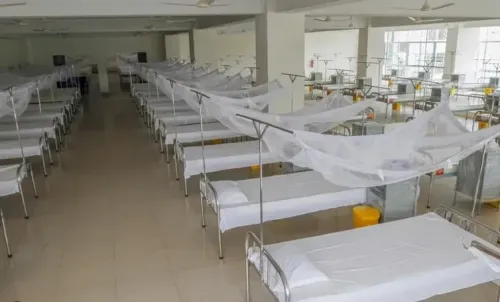
New Delhi, Jan 3 (NationPress) With the upcoming government set to take charge in Bangladesh following the general election on February 12, there are pressing issues that need urgent attention. Among these are the declining safety conditions and economic challenges, alongside reports highlighting a “fragile state” of the healthcare system.
The Daily Star editorial pointed out, “Misguided policy choices, insufficient administrative capabilities, and a lack of reform have rendered the healthcare sector vulnerable, resulting in a significant number of individuals being deprived of essential medical care.”
The editorial expressed hope that the new elected government will tackle these long-standing issues, but emphasized that the current administration should not neglect its duty to stabilize healthcare services and initiate meaningful reforms.
Additionally, the repercussions of the Trump administration's decision to suspend funding from the United States Agency for International Development (USAID) one year ago have significantly impacted Bangladesh.
Established under the Foreign Assistance Act of 1961, USAID aimed to combat communism by supporting developmental initiatives globally. The sudden cessation of funding for various programs has caused turmoil within Bangladesh’s healthcare framework.
The most critical disruptions were observed in tuberculosis care, community health initiatives, telemedicine services, disease surveillance, and water, sanitation, and hygiene (WASH) programs. The effects were particularly severe during the monsoon season in vulnerable coastal areas.
The editorial noted, “The troubles began with the abrupt cessation of USAID funding in January, which adversely impacted the health sector directly and indirectly. One immediate consequence was the halt of the International Centre for Diarrhoeal Disease Research's tuberculosis initiatives.”
By the end of May, reports indicated that 55 out of 59 USAID-funded projects had been terminated, leading to over 50,000 professionals losing their jobs and a loss of development aid amounting to USD 700 million. These projects encompassed vital areas such as education, health, food security, climate change, governance, and skills training. The collapse of Bangladesh’s largest telemedicine network, responsible for serving approximately 100,000 patients in 2024, further exemplifies the fallout from the funding cuts.
The cessation of funding has led to the suspension of disease tracking and emergency response efforts, coinciding with heightened risks of waterborne and vector-borne diseases during the monsoon.
Moreover, the absence of the WASH program has halted crucial water and sanitation projects in coastal regions, further exposing communities to contamination and health hazards during flooding.
The editorial lamented the situation worsening when the interim government scrapped the proposed fifth Health, Population, and Nutrition Sector Programme (HPNSP), which had been a guiding framework for health, nutrition, and family planning since 1998. It emphasized the need for effective leadership and strategic planning, which have been major shortcomings in the healthcare sector.
While there are several policies deemed essential for enhancing healthcare efficiency and accessibility, the editorial criticized the lack of visible efforts to implement these proposals into actionable plans.
Point of View
The situation in Bangladesh's healthcare sector is alarming. The upcoming government must prioritize these issues to ensure the wellbeing of its citizens. The need for effective governance and strategic planning cannot be overstated.
NationPress
27 Sept 2026
Frequently Asked Questions
What are the main issues facing Bangladesh's healthcare sector?
The main challenges include mismanagement, policy failures, and significant funding cuts affecting critical healthcare programs.
How has USAID funding cuts impacted healthcare in Bangladesh?
The cuts have led to the suspension of crucial health programs, including tuberculosis services, community health, and telemedicine.
What is the proposed Health, Population, and Nutrition Sector Programme (HPNSP)?
The HPNSP was a guiding framework for health, nutrition, and family planning services in Bangladesh since 1998, which has now been scrapped.
What is the current state of telemedicine in Bangladesh?
Bangladesh's largest telemedicine network collapsed after the funding cut, impacting over 100,000 patients.
What can the new government do to improve healthcare?
The new government needs to stabilize existing services and initiate necessary reforms to address the sector's challenges.