Kolkata AQI drops to 75 after rains flush out Diwali fireworks pollution
Synopsis
Kolkata's AQI plunged from a 'Severe' 400–500 during Diwali to a 'Satisfactory' 75 in just two days — entirely thanks to rain. It is a dramatic but fragile recovery: with winter approaching and dry conditions returning from Friday, the city's air could deteriorate again, and experts are already warning that festive firecracker habits remain the core problem.
Key Takeaways
Kolkata's AQI fell to the 'Satisfactory' category on 11 November 2026 after two consecutive days of rain.
Fort William recorded AQI 75 , Rabindra Sarobar recorded 73 , and Jadavpur recorded 72 , according to CPCB data at 9 am .
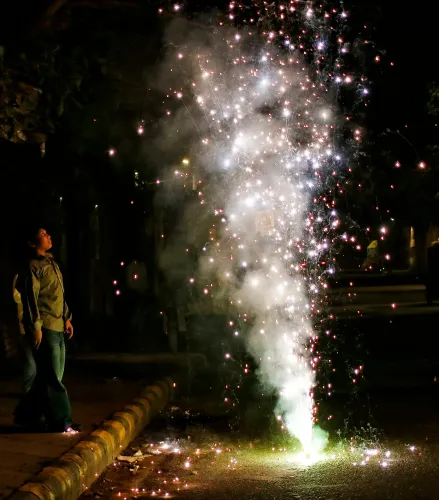
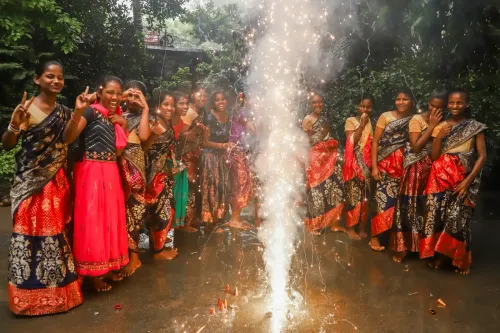
AQI had surged to between 400 and 500 ('Severe') on 8–9 November during Diwali and Kali Puja fireworks.
Environmentalist Somendra Mohan Ghosh called the turnaround 'remarkable', attributing it entirely to rainfall.
Experts warn the improvement is temporary and urge a shift to green crackers ahead of winter months.
Dry weather is expected to return from Friday , with winter onset likely to follow.
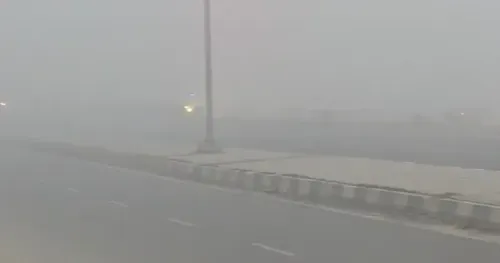
Kolkata's air quality recovered sharply on Wednesday, 11 November 2026, after two consecutive days of rainfall washed away the heavy particulate load left behind by Diwali and Kali Puja fireworks. According to data from the Central Pollution Control Board's (CPCB) National Air Quality Data Management System, recorded at 9 am, the city's Air Quality Index (AQI) fell to the 'Satisfactory' category across multiple monitoring stations — a dramatic recovery from the 'Severe' readings logged just days earlier.
AQI Readings Across Monitoring Stations
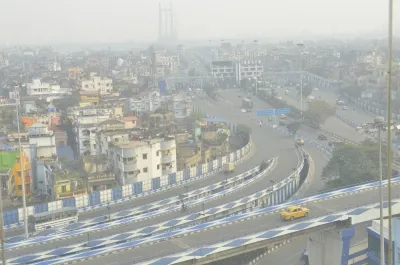
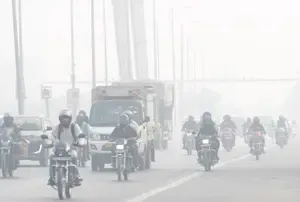
Among the major stations, Fort William recorded the highest reading at an AQI of 75, followed by Rabindra Sarobar at 73 and Jadavpur at 72. All three readings fall within the 'Satisfactory' band under India's national AQI classification, which runs from 0 to 500. The city had recorded AQI levels between 400 and 500 — firmly in the 'Severe' category — on 8 and 9 November, coinciding with widespread bursting of firecrackers during the festive period.
How Rain Acts as a Natural Air Cleanser
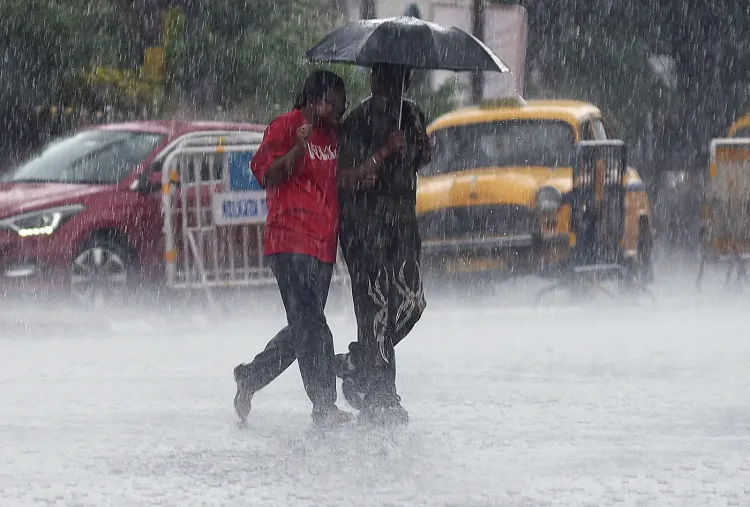
Environmental experts explained that rainfall physically pulls suspended particulate matter — particularly PM2.5 and PM10 — down to the ground through a process known as wet deposition. It also assists in removing certain gaseous pollutants from the lower atmosphere, reducing smog formation and improving visibility. Prominent environmentalist and green technologist Somendra Mohan Ghosh described the turnaround as remarkable. 'What a miracle! Yesterday evening's and today's morning rain sharply brought down Kolkata's AQI to 75, from the 400–500 range recorded on November 8 and 9 during Diwali fireworks celebrations,' he said.
Relief for Vulnerable Residents
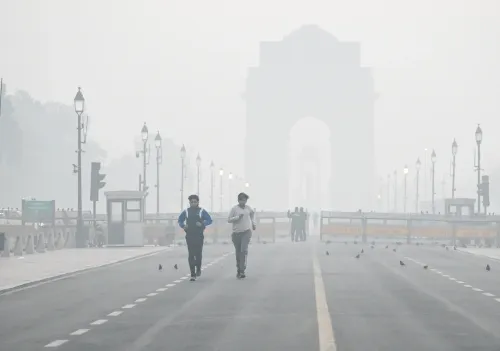
The improvement has provided considerable relief to asthma patients, senior citizens, and children — groups that are disproportionately affected when air quality deteriorates into the severe range. Residents across the city have welcomed the return of clearer skies following several days of thick, pollutant-laden air. This comes amid growing concern in India's major cities about post-festive pollution spikes, which have become an annual public health challenge in West Bengal and several other states.
Experts Warn Improvement May Be Temporary
Despite the relief, environmental experts cautioned that the gains could be short-lived as the city heads into the winter months, when cooler temperatures trap pollutants closer to the ground and natural ventilation decreases. They urged residents to avoid high-emission firecrackers and called for greater adoption of certified green crackers during upcoming festive occasions to prevent another severe pollution episode. Notably, the transition to winter — typically accompanied by declining wind speeds — tends to worsen air quality across the Indo-Gangetic Plain, of which Kolkata is a part.
Weather Outlook
The Meteorological Department has forecast scattered rainfall with thunderstorms across Kolkata and several south Bengal districts through Thursday. Conditions are expected to clear from Friday onwards, with dry weather likely to prevail and pave the way for the onset of winter. On Tuesday, Kolkata recorded a maximum temperature of 31 degrees Celsius — 0.5 degrees above normal — while the minimum settled at 24 degrees Celsius, three degrees above normal. Relative humidity ranged between 63% and 95%. Whether the improvement holds will depend on weather patterns and residents' behaviour during the remaining festive season.
Point of View
The same particulate load from future celebrations will linger far longer. The annual cycle of festive spikes followed by meteorological rescues has become predictable enough that it demands a structural policy response — not just advisories about green crackers that few enforce and fewer follow.
NationPress
11 Nov 2026
Frequently Asked Questions
What is Kolkata's AQI on 11 November 2026?
Kolkata's AQI fell to the 'Satisfactory' category on 11 November 2026, with Fort William recording 75, Rabindra Sarobar 73, and Jadavpur 72, according to CPCB data recorded at 9 am. This follows two consecutive days of rainfall that cleared Diwali and Kali Puja fireworks pollution.
How bad was Kolkata's air quality during Diwali?
Kolkata's AQI touched between 400 and 500 on 8 and 9 November 2026, placing it in the 'Severe' category on India's national AQI scale. The spike was driven by widespread bursting of firecrackers during Diwali and Kali Puja celebrations.
Why did the rain improve Kolkata's air quality so quickly?
Rainfall acts as a natural cleanser by pulling suspended particulate matter — particularly PM2.5 and PM10 — down to the ground through wet deposition, while also removing certain gaseous pollutants. This reduces smog and improves atmospheric visibility rapidly after heavy festive pollution events.
Will Kolkata's improved air quality last?
Experts caution that the improvement could be temporary. Dry weather is expected to return from Friday, and the onset of winter typically traps pollutants closer to the ground as wind speeds drop. Residents have been urged to avoid high-emission firecrackers to prevent another deterioration.
Who is most at risk from Kolkata's poor air quality after Diwali?
Asthma patients, senior citizens, and children are identified as most vulnerable to deteriorating air quality. These groups face heightened respiratory risk when AQI enters the 'Severe' range, as occurred on 8–9 November during the festive period.