RRU's Project PRAHARI trains 30 MP prison staff in mental health risk detection
Synopsis
Thirty Madhya Pradesh prison staff have completed RRU's Project PRAHARI — a structured week-long programme in psychological risk detection, suicide prevention, and trauma-informed crisis response. It is a rare, institutionalised attempt to embed mental health first-response capacity directly within India's correctional system, where distress among inmates routinely goes undetected.
Key Takeaways
30 correctional personnel from Madhya Pradesh prisons completed RRU's Project PRAHARI training on 6 August in Bhopal .
Training covered identification of depression , anxiety , suicidal behaviour , substance dependence , and behavioural warning signs.
The programme was organised by GCAS under SBSFI at Rashtriya Raksha University , in collaboration with MP Jail Headquarters .
Dr Varun Kapoor , Director General of Prisons, MP, stressed that many inmates with psychological distress go unrecognised and are denied essential mental health services.
The curriculum also addressed officer wellbeing , including vicarious trauma and burnout prevention for correctional staff.
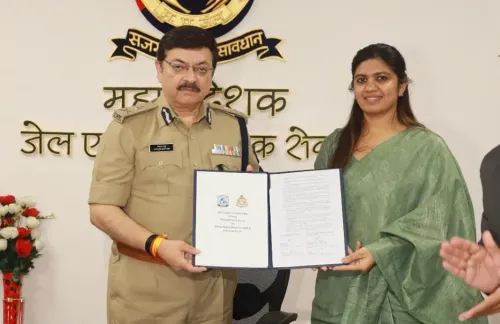
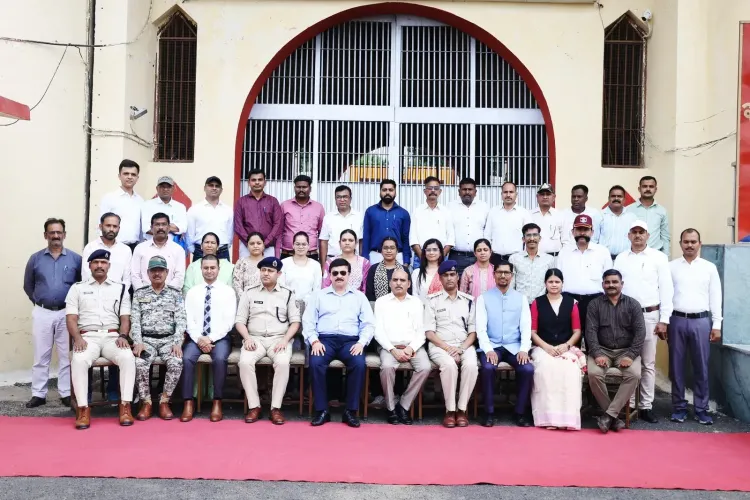
Rashtriya Raksha University (RRU) has trained 30 correctional personnel from prisons across Madhya Pradesh in a week-long capacity-building programme focused on identifying and managing psychological distress among inmates. The training, conducted under Project PRAHARI at the Regional Jail Management and Research Institute in Bhopal, concluded on 6 August, marking a significant step in institutionalising mental health support within the state's prison system.
What Project PRAHARI Covers
PRAHARI — short for Psychological Risk Assessment, Health Awareness and Resilience Initiative — was organised by Global Correctional Administration Studies (GCAS) under the School of Behavioural Sciences and Forensic Investigations (SBSFI) at RRU, in collaboration with the Madhya Pradesh Jail Headquarters. Participants were trained to identify a range of psychological risk indicators, including depression, anxiety, suicidal behaviour, substance dependence, and behavioural warning signs.
The curriculum also covered risk triage, trauma-informed crisis communication, de-escalation techniques, suicide prevention strategies, documentation and referral protocols. Notably, the programme addressed officer wellbeing as well — covering vicarious trauma and burnout prevention, recognising that correctional staff are themselves exposed to high-stress environments.
Leadership and Institutional Backing
The initiative was conducted under the leadership of RRU Vice-Chancellor Prof (Dr) Bimal Patel, with support from Madhya Pradesh Director General of Prisons Dr Varun Kapoor and guidance from Dr Noorin Chaudhary, Director of the School of Behavioural Sciences and Forensic Investigation.
The concluding session brought together senior officials including M.R. Patel, Deputy Inspector General, Jail Headquarters, Madhya Pradesh; Manendra Singh Parihar, Jail Superintendent, Central Jail, Bhopal; and Dinesh Imlay, Administrative Officer of the Regional Jail Management and Research Institute. Also present were Dr Rakesh Singh Kunwar, Campus Director of the RRU Bhopal Campus; Dr Geetesh Kumar Singh, Project Director, GCAS; and Mahima Gupta, Clinical Psychologist at SBSFI.
What Officials Said
Addressing participants, Dr Varun Kapoor underscored the gap in mental health identification within correctional facilities. 'While many individuals experiencing psychological distress are identified and receive appropriate support, others remain unrecognised and are deprived of essential mental health services,' he said.
Dr Kapoor noted that correctional staff, owing to their close and continuous interaction with inmates, are uniquely positioned to detect early warning signs. He urged participants to translate their training into daily practice, stating that the programme's impact would be measured by practical application rather than knowledge acquisition alone.
Why This Matters
Mental health in Indian prisons remains a chronically under-resourced area. Overcrowding, prolonged undertrial detention, and limited access to psychiatric services create conditions where distress frequently goes undetected. By embedding trained personnel within the prison system, Project PRAHARI attempts to create a first-response layer before clinical intervention is required. This is the kind of systemic, ground-level capacity building that national prison reform discourse has long called for but rarely seen implemented at scale.
With the programme now concluded, the focus shifts to whether the skills acquired translate into measurable improvements in inmate wellbeing and staff resilience across Madhya Pradesh's correctional facilities.
Point of View
Not the norm. Project PRAHARI is a meaningful intervention, but training 30 personnel across an entire state's prison network is a modest start. The real test is replication: whether this model scales to other states and whether trained staff are given the institutional support — caseload limits, referral pathways, psychiatric access — to act on what they learn. Without those enabling conditions, well-designed training risks becoming a credential exercise rather than a reform.
NationPress
20 Sept 2026
Frequently Asked Questions
What is Project PRAHARI launched by RRU?
Project PRAHARI stands for Psychological Risk Assessment, Health Awareness and Resilience Initiative. It is a capacity-building programme by Rashtriya Raksha University that trains prison personnel to identify and respond to mental health risks among inmates, covering suicide prevention, de-escalation, and trauma-informed communication.
How many prison staff were trained under Project PRAHARI in Madhya Pradesh?
Thirty correctional personnel from prisons across Madhya Pradesh completed the week-long PRAHARI programme at the Regional Jail Management and Research Institute in Bhopal, concluding on 6 August.
Which institution organised the PRAHARI training programme?
The programme was organised by Global Correctional Administration Studies (GCAS) under the School of Behavioural Sciences and Forensic Investigations (SBSFI) at Rashtriya Raksha University (RRU), in collaboration with the Madhya Pradesh Jail Headquarters.
What topics were covered in the PRAHARI training?
Participants were trained in identifying depression, anxiety, suicidal behaviour, substance dependence, and behavioural warning signs. The programme also covered risk triage, crisis communication, de-escalation, suicide prevention, documentation, referral protocols, and burnout prevention for correctional officers.
Why is mental health training for prison staff important in India?
Overcrowding, prolonged undertrial detention, and limited psychiatric access mean psychological distress among inmates frequently goes undetected in Indian prisons. Trained correctional staff can serve as a critical first-response layer, identifying at-risk individuals before conditions escalate to crisis.