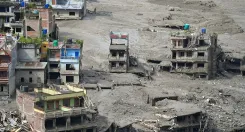
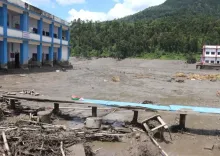
Nepal flash floods kill 157, hundreds missing in Bhote Koshi disaster
Synopsis
An avalanche-triggered flash flood with no rainfall warning struck Nepal's Bhote Koshi valley on 27 August, killing at least 157 people and leaving 391 tourists and 85 security personnel unaccounted for. Nine hydropower projects and 19 bridges have been swept away — and with identification still incomplete, the toll is almost certainly not final.
Key Takeaways
At least 157 people killed in Nepal's Bhote Koshi River flash floods on 27 August ; identification process ongoing.
391 tourists and 85 security personnel (including Nepal Army, police, and APF) remain missing.
Disaster triggered by an avalanche blocking the Lhende tributary — no rainfall warning preceded the flood.
At least 9 hydropower projects , 19 motorable bridges , and dozens of properties swept away in Rasuwa district.
India delivered 10 tonnes of humanitarian aid to Nepal; handed over by Ambassador Naveen Srivastava .
Rescue operations ongoing; full toll expected to rise as teams access remote areas.
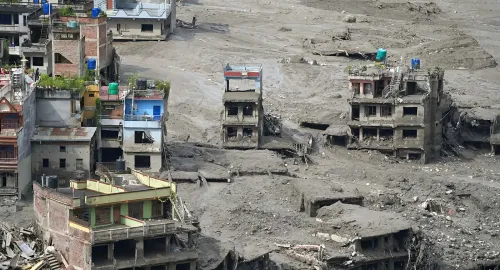
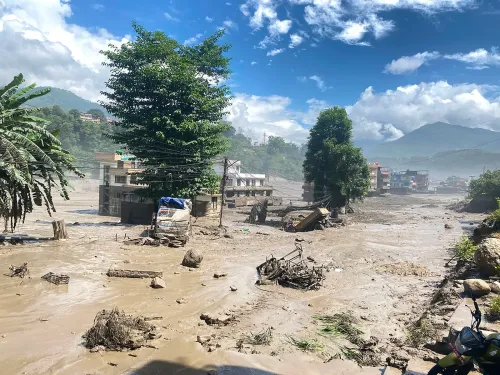
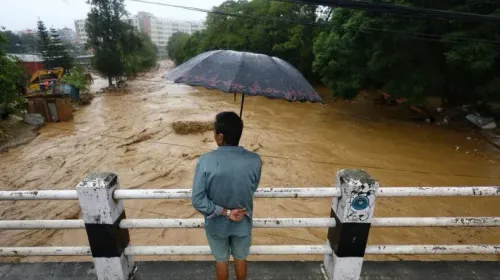
At least 157 people have been killed and hundreds more remain missing after devastating flash floods tore through Nepal's Bhote Koshi River valley across three districts on 27 August, local media reported. Among the missing are 391 tourists and 85 security personnel, with identification of the dead still under way.
How the Disaster Unfolded
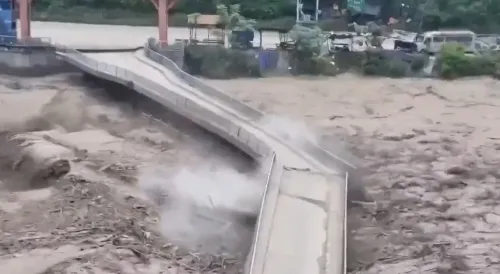
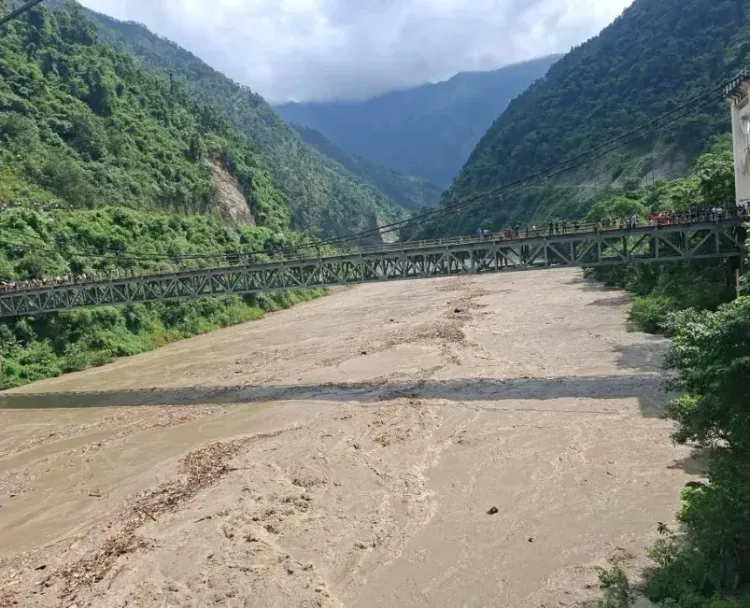
The catastrophe was triggered not by rainfall but by an avalanche that blocked the flow of the Lhende tributary of the Bhote Koshi River, according to The Kathmandu Post. The resulting surge first struck Timure, a village near the Nepal-China border at Rasuwagadhi. Because no rain had fallen in the area, residents had no advance warning and were going about their daily routines when the floodwaters hit.
Authorities placed areas along the riverbanks on high alert at around 9 am, urging residents to move to safe locations and stay away from the river — but for many, the warning came too late.
Security Personnel and Tourists Out of Contact
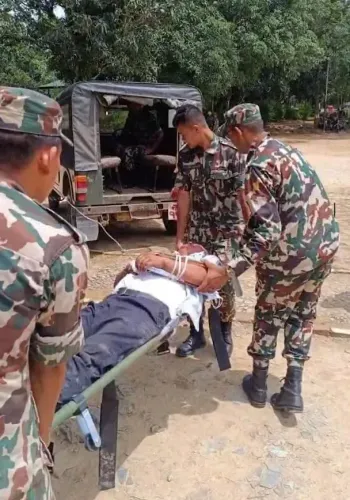
The Nepali government confirmed that 44 Nepal Army personnel, 28 police personnel deployed at various posts, and 13 Armed Police Force (APF) personnel working in the affected areas remained out of contact. Separately, 391 tourists who were in the region at the time of the flood are also unaccounted for, raising fears of a significantly higher final death toll.
Scale of Infrastructure Damage
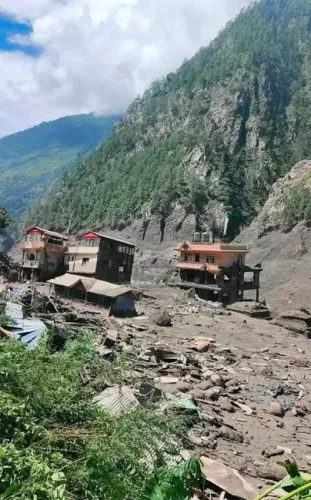
The floods have caused sweeping destruction across the Rasuwa district and the broader Nepal-China border region. According to the Prime Minister's Office (PMO), the disaster has affected several government offices, security installations, and hydropower facilities. At least nine hydropower projects, 19 motorable bridges, several commercial banks, and dozens of public and private properties have been swept away. Authorities are still compiling a full account of human and physical losses.
Government Response and Relief Operations
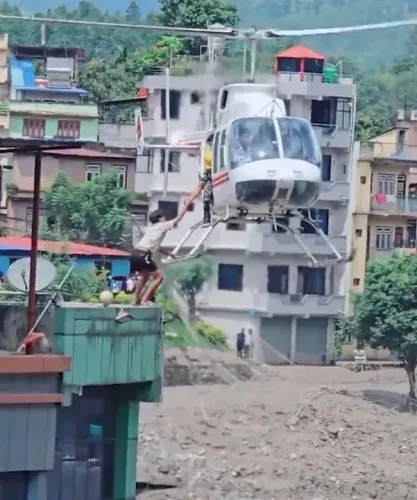
Nepal's Prime Minister's Office said security agencies and other concerned bodies were immediately mobilised for search, rescue, and relief operations following the flooding. Separately, India extended 10 tonnes of humanitarian assistance to Nepal in support of relief efforts. India's Ambassador to Nepal, Naveen Srivastava, formally handed over the aid consignment to Nepal's Minister of Culture, Tourism and Civil Aviation, Khadak Raj Paudel. The assistance includes essential relief materials for communities affected by flooding and landslides.
Ministry of External Affairs spokesperson Randhir Jaiswal said India stands firmly with Nepal and remains committed to extending all possible support. This is consistent with India's longstanding policy of prioritising humanitarian assistance to its Himalayan neighbour during natural disasters.
What Comes Next
With the identification process still incomplete and hundreds of missing persons unaccounted for, the death toll is expected to rise. Rescue teams continue to operate in difficult terrain along the Bhote Koshi valley, where damaged bridges and swept-away roads are hampering access. The full extent of the disaster — human and infrastructural — will likely take several more days to assess.
Point of View
Glacial lake outburst floods and avalanche-dammed surges can strike without any of the conventional rainfall triggers that early-warning systems are built around. With 391 tourists unaccounted for, this event also exposes the thin line between Nepal's booming adventure-tourism economy and catastrophic risk in under-monitored border zones. India's swift 10-tonne aid response is diplomatically significant, but the structural question — why nine hydropower projects and 19 bridges in a known flood-risk corridor were lost in a single surge — deserves a harder answer than relief logistics can provide.
NationPress
27 Aug 2026
Frequently Asked Questions
What caused the Nepal flash floods on 27 August?
The floods were triggered by an avalanche that blocked the Lhende tributary of the Bhote Koshi River, causing a sudden surge of water. No rainfall was reported in the area beforehand, meaning residents had no warning before the floodwaters struck.
How many people have been killed and are missing in the Nepal floods?
At least 157 people have been killed, according to local media reports, though the identification process is still under way. A further 391 tourists and 85 security personnel — including Nepal Army, police, and Armed Police Force members — remain missing and out of contact.
Which areas of Nepal were worst affected by the Bhote Koshi floods?
The flood first hit Timure, near the Nepal-China border at Rasuwagadhi, and caused severe damage across three districts, with Rasuwa district particularly hard hit. Government offices, security installations, hydropower facilities, bridges, and commercial banks in the region were swept away.
What has India done to help Nepal after the floods?
India extended 10 tonnes of humanitarian assistance to Nepal to support relief operations. India's Ambassador Naveen Srivastava formally handed over the aid to Nepal's Minister of Culture, Tourism and Civil Aviation, Khadak Raj Paudel. The Ministry of External Affairs confirmed India's commitment to providing all possible support.
Why is the death toll from Nepal's Bhote Koshi floods expected to rise?
Hundreds of people — including tourists and security personnel — remain unaccounted for, and the identification of the dead is still incomplete. Damaged bridges and roads are hampering rescue teams from reaching remote parts of the Bhote Koshi valley, making a full assessment of casualties difficult.