Trump says Iran war ending 'fairly soon', claims Khamenei alive but gravely wounded
Synopsis
Trump told conservative broadcaster Glenn Beck that US military action against Iran would end 'fairly soon' — and made the unverified claim that Supreme Leader Khamenei is alive but gravely wounded on his left side. With 22 boats reportedly destroyed overnight and the Strait of Hormuz declared functional, Trump is projecting imminent victory, but independent confirmation of any of these claims remains elusive.
Key Takeaways
President Trump said on 27 August that US action against Iran would end 'fairly soon' , in an interview with broadcaster Glenn Beck .
Trump claimed Supreme Leader Khamenei was 'very seriously wounded' on the left side of his body but still alive — offering no independent evidence.
US forces reportedly destroyed 22 boats overnight as part of a naval blockade operation, according to Trump.
Trump said the Strait of Hormuz is operational, with approximately 10 million barrels of oil moving through it daily.
Preventing Iran from acquiring a nuclear weapon was described as the '99.9 per cent' objective of the conflict.
Trump defended his withdrawal from the 2015 JCPOA and predicted energy prices would fall as the conflict winds down.
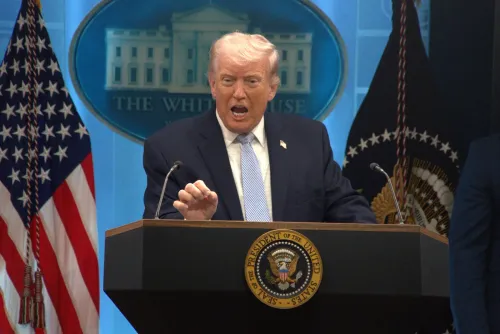
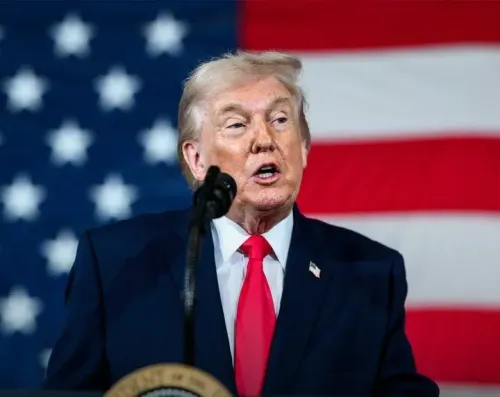
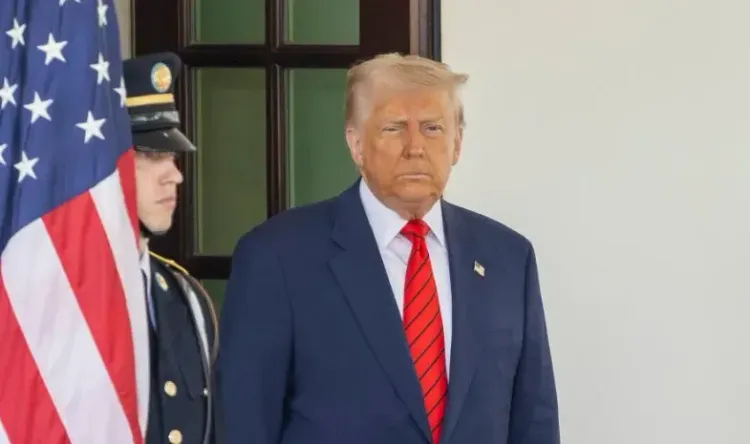
US President Donald Trump said on 27 August that American military action against Iran would end 'fairly soon', while claiming that Iranian Supreme Leader Ayatollah Mojtaba Khamenei was 'very seriously wounded' but still alive. Trump made the remarks in an interview with conservative broadcaster Glenn Beck, offering no independent evidence to support his assessment of Khamenei's condition.
What Trump Said About Khamenei
Trump stated: 'I don't think he's dead. He was very seriously wounded.' He described injuries to 'the left side of his body, the arm, the leg, the whole thing.' The President offered no evidence for these claims, but said Iranian officials continued to speak of consulting the supreme leader for final approvals — which he interpreted as a sign Khamenei remained in some capacity of authority, or that Iranian officials were 'putting on a pretty good show.'
The Iranian government has not publicly confirmed or denied the extent of any injuries to Khamenei. Independent verification of his condition remains unavailable.
Military Operations and the Strait of Hormuz
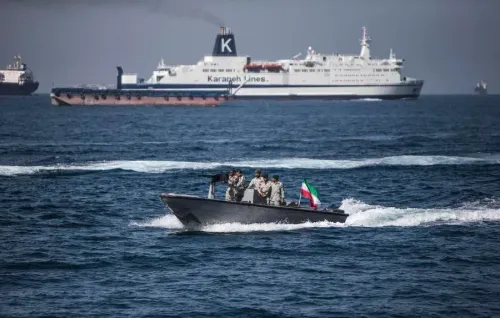
Trump claimed that US forces had destroyed 22 boats overnight as part of operations linked to a naval blockade. He praised the performance of the US Navy and broader military, saying: 'Our Navy has been unbelievable. Our military has been unbelievable, the combination.'
He also asserted that the Strait of Hormuz remained operational despite the conflict, claiming mines had been cleared and that approximately 10 million barrels of oil had moved through the waterway the previous day. 'The strait, it's functioning; it's a functioning strait,' he said.
Iran's Military Capacity, According to Trump
Trump argued that Iran had been severely degraded militarily. 'Their Navy is, as you know, totally gone. Their air force is totally gone,' he said, adding that some Iranian soldiers were reportedly not being paid and that inflation inside the country had surged. He offered no sourcing for these claims beyond his own assertion.
On the absence of visible public protest inside Iran, Trump said demonstrators faced armed security forces and snipers. 'It's very hard to protest when you have people that are willing to shoot you and kill you,' he said.
Nuclear Weapons as the Central Objective
Trump described preventing Iran from acquiring a nuclear weapon as the '99.9 per cent' rationale for the conflict. 'We cannot let Iran have a nuclear weapon. That's what it's all about,' he said, adding that he believed Iran would use one if it obtained it.
He also defended his first-term withdrawal from the 2015 Iran nuclear agreement, formally known as the Joint Comprehensive Plan of Action (JCPOA), framing it as a necessary precursor to current US policy.
Energy Prices and the Road Ahead
Trump acknowledged that the conflict had forced an economic 'detour', with energy prices rising as a consequence. He predicted, however, that both the fighting and the resulting price pressures would ease. 'The prices are coming down very rapidly,' he said, drawing a parallel to what he described as a 'victory in Venezuela' as a template for the expected outcome in Iran.
With no ceasefire framework publicly announced and Khamenei's status unverified, the trajectory of the US-Iran conflict remains deeply uncertain.
Point of View
US allies, and domestic audiences simultaneously, without requiring proof. The pattern mirrors earlier presidential assertions about adversary leaders that later proved inaccurate or exaggerated. More tellingly, Trump's framing of the Strait of Hormuz as 'functioning' and oil flowing freely is aimed squarely at energy markets and American voters feeling pump-price pain. The JCPOA defence is also notable: it pre-empts the inevitable question of whether the current conflict could have been avoided, anchoring the narrative in 2018 rather than 2025.
NationPress
11 Oct 2026
Frequently Asked Questions
What did Trump say about the Iran war ending?
Trump said US military action against Iran would end 'fairly soon', in an interview with conservative broadcaster Glenn Beck on 27 August. He linked the expected conclusion to what he described as Iran's severely weakened military and economic position.
Is Iranian Supreme Leader Khamenei dead or alive, according to Trump?
Trump claimed Khamenei is alive but 'very seriously wounded', describing injuries to the left side of his body including the arm and leg. He offered no independent evidence, and the Iranian government has not publicly confirmed these claims.
What military actions did Trump describe in the interview?
Trump said US forces had destroyed 22 boats overnight as part of a naval blockade operation, and that mines had been cleared from the Strait of Hormuz. He claimed Iran's navy and air force had been 'totally' destroyed, though these assertions were not independently verified.
Why is the US in conflict with Iran, according to Trump?
Trump stated that preventing Iran from acquiring a nuclear weapon was the '99.9 per cent' rationale for the conflict. He also defended his 2018 withdrawal from the Joint Comprehensive Plan of Action (JCPOA) as a necessary step that preceded current US policy.
How is the Strait of Hormuz affected by the US-Iran conflict?
Trump said the Strait of Hormuz remains operational, claiming mines had been cleared and approximately 10 million barrels of oil were moving through it daily. Independent confirmation of these claims was not available at the time of the interview.