Canada arrests 17 members of 'For Brothers' gang targeting South Asian community

Synopsis
Canada's Peel Regional Police have dismantled 'For Brothers', an international criminal network that ran a campaign of shootings, arson, and extortion against South Asian businesses in Ontario and British Columbia, with links to California. The 17-man arrest sweep — backed by the FBI and FINTRAC — lands as India's envoy says security cooperation between New Delhi and Ottawa is at its strongest in years.
Key Takeaways
Peel Regional Police arrested 17 men on 25 May 2025 linked to the 'For Brothers' international criminal network.
The group is accused of 16 violent incidents — including arson and shootings involving 324 rounds discharged — targeting South Asian businesses in Brampton , Mississauga , Caledon , and British Columbia .
The 17 accused face a combined 106 criminal charges ; 6 may face deportation after trial.
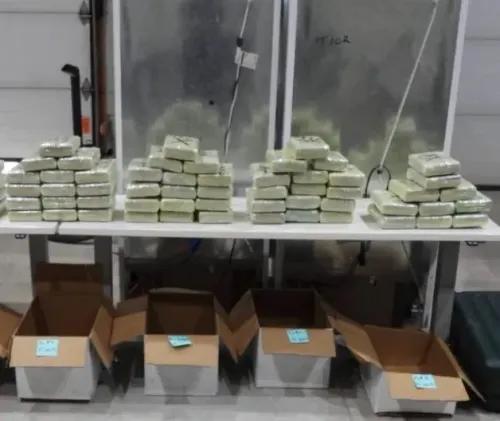
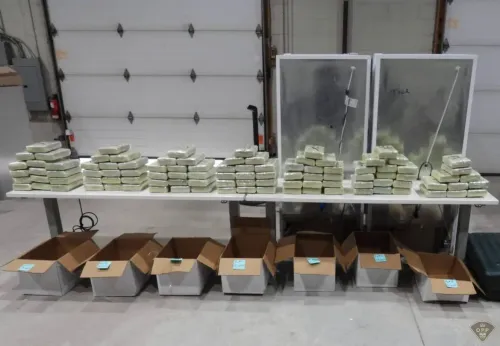
Police seized 6 firearms , illicit drugs, cell phones, SIM cards, and fraudulent IDs during April 2026 search warrants.
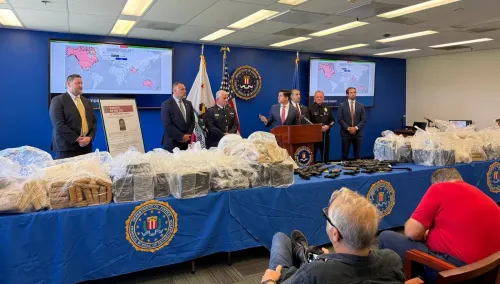
The joint operation involved OPP , CBSA , FBI , and FINTRAC , launched in December 2025 .
India's High Commissioner Dinesh K Patnaik said India-Canada security cooperation has improved significantly, with joint operations now underway.
Canadian police in Ontario have arrested 17 individuals linked to an international criminal network called 'For Brothers', which systematically extorted South Asian business owners and community members across Brampton, Mississauga, Caledon, and British Columbia, with alleged cross-border ties to California. The Peel Regional Police Extortion Task Force announced the arrests on Monday, 25 May 2025, calling it the dismantling of a coordinated campaign of intimidation, threats, and escalating violence.
Scale of the Operation
The joint investigation, launched in December 2025, brought together Peel Regional Police, the Ontario Provincial Police (OPP), the Canada Border Services Agency (CBSA), the Federal Bureau of Investigation (FBI), and the Financial Transactions and Reports Analysis Centre of Canada (FINTRAC). The multi-agency task force linked the 17 accused to 24 incidents in total, of which 16 were classified as violent — including arson and multiple shootings in which 324 rounds were discharged. The accused collectively face 106 criminal charges.
Targets and Tactics
According to the police statement, several businesses — including restaurants and trucking companies — were repeatedly targeted after refusing to comply with extortion demands. In one particularly alarming incident, investigators allege two of the accused carried out a shooting and arson at a residential address in Caledon, followed within minutes by a second shooting targeting a business in Brampton. The group's tactics reportedly escalated in violence each time businesses resisted their demands.
In April 2026, investigators executed a series of search warrants across multiple locations, resulting in the arrest of the 17 men. During the operation, police seized six firearms, illicit drugs, multiple cell phones, SIM cards, and fraudulent identification documents.
The Accused
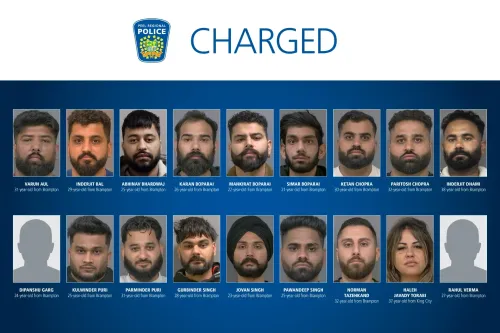
The 17 men named by Peel Regional Police are: Iqbal Singh Bhagria, 25, of Brampton; Akashdeep Singh, 24, of Norval; Ravinder Singh, 25, of Surrey, B.C.; Jashanbir Singh, 21, of Surrey, B.C.; Dilawarpreet Singh, 26, of Brampton; Mandeep Singh, 21, of Brampton; Prabhdeep Sohal, 22, of Brampton; Partapbir Ghuman, 22, of Brampton; Ajaydeep Singh, 29, of Brampton; Navroop Singh, 24, of Brampton; Rajan Singh, 28, of Barrie; Amritjot Singh, 22, of Brampton; Jashanpreet Singh, 22, of Brampton; Guneet Guneet, 27, of Brampton; Sukhwinder Singh, 32, of Brampton; Mohinder Singh, 30, of Brampton; and Gautam Gautam, 22, of Manteca, California. Police noted that six of the individuals charged may face immigration consequences, including possible removal from Canada, once their criminal proceedings conclude.
What the Police Chief Said
Peel Regional Police Chief Nishan Duraiappah described the arrests as a product of sustained cross-jurisdictional cooperation. 'Extortion is not confined to one region but connected both nationally and internationally. Addressing it requires strong cross-border collaboration and intelligence-sharing among agencies,' he said. Duraiappah acknowledged the fear caused within the South Asian community and pledged continued action.
India-Canada Security Ties and the Broader Context
The arrests come amid a broader shift in India-Canada bilateral relations, which had deteriorated sharply following the Nijjar controversy. India's High Commissioner to Canada, Dinesh K Patnaik, said in an interview that security cooperation between the two countries had improved significantly in recent months. 'There is closed cooperation in every sector especially the security issues,' he said, noting that national security advisors, police forces, and investigating agencies were now in regular dialogue and conducting joint operations.
Patnaik acknowledged that extremist elements remained present in Canada but argued they had been pushed to the fringe, crediting Canadian Prime Minister Mark Carney's administration with a more proactive stance. He alleged that many such networks had evolved from ideological operations into profit-driven criminal enterprises. 'They're making money out of it. It became a thing, which is more of an economic activity than an ideological activity,' he said, citing gun running, drug smuggling, people trafficking, and extortion as key activities. Despite past tensions, Patnaik said bilateral ties were now 'in a good space.'
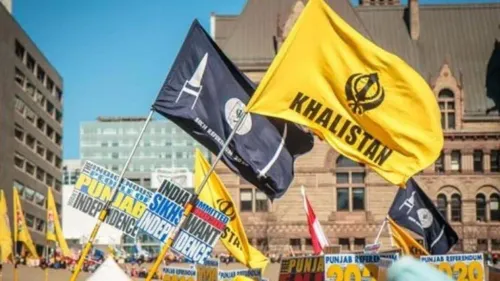
This development is the latest in Canada's ongoing crackdown on organised criminal networks, including groups accused of running operations with links to pro-Khalistan elements — a longstanding concern for New Delhi. With 17 arrests, 106 charges, and six deportation reviews underway, authorities on both sides will be watching how the prosecutions unfold.
Point of View
But as a diplomatic signal. For years, India complained that Canada's political environment shielded criminal networks with ideological cover; the multi-agency sweep — including FBI involvement — suggests that cover is thinning. The High Commissioner's remarks about networks shifting from ideology to profit are telling: it reframes the Khalistan-adjacent criminal ecosystem as organised crime first, which is an easier basis for extradition and deportation than contested political designations. The real test will be whether the six deportation reviews result in actual removals, and whether Canadian courts treat the India-linked intelligence as credible evidence rather than diplomatic pressure.
NationPress
20 Sept 2026
Frequently Asked Questions
Who are the 'For Brothers' and what did they do in Canada?
'For Brothers' is an international criminal network allegedly responsible for a series of targeted extortion attacks against South Asian businesses and community members in Brampton, Mississauga, Caledon, and British Columbia, with links to California. The group is accused of 16 violent incidents including arson and shootings in which 324 rounds were discharged, targeting businesses such as restaurants and trucking companies that refused to pay extortion demands.
How many people were arrested and what charges do they face?
17 men were arrested by the Peel Regional Police Extortion Task Force following search warrants executed in April 2026. Together, the accused face 106 criminal charges across 24 incidents. Six of the individuals may also face immigration consequences, including possible removal from Canada, after their criminal cases are resolved.
Which agencies were involved in the investigation?
The investigation was a joint forces operation that commenced in December 2025, involving Peel Regional Police, the Ontario Provincial Police (OPP), the Canada Border Services Agency (CBSA), the FBI, and the Financial Transactions and Reports Analysis Centre of Canada (FINTRAC).
What does this mean for India-Canada relations?
India's High Commissioner to Canada, Dinesh K Patnaik, said security cooperation between the two countries has improved significantly in recent months, with national security advisors, police forces, and investigating agencies now in regular dialogue and conducting joint operations. He described bilateral ties as being 'in a good space' despite past tensions over the Nijjar controversy.
What evidence was seized during the operation?
During search warrants executed across multiple locations in April 2026, police seized six firearms, illicit drugs, multiple cell phones, SIM cards, and fraudulent identification cards.