18,000 Iranian cargo containers stranded at Pakistani ports over exorbitant fees
Synopsis
Around 18,000 Iranian cargo containers are stuck at Pakistani ports after Middle East war-driven rerouting in March 2026 pushed shipments into a fee trap — with clearance costs now rivalling or exceeding the value of the goods themselves. Unaccredited brokers, a stalled discount deal, and sanctions fears have paralysed resolution, leaving a potential sea route via Chabahar as the only viable off-ramp still on the table.
Key Takeaways
Approximately 18,000 Iranian cargo containers remain stranded at Pakistani ports as of October 2026 .
Cumulative fees — storage, demurrage, and transport — have exceeded $25,000 per shipment, near or above the cargo value for many owners.
The blockage began in March 2026 following maritime rerouting caused by the Middle East war .
Only around 1,000 container owners have initiated clearance procedures despite follow-up notices.
An 80 per cent fee discount previously negotiated has not yet been implemented.
A private-sector proposal to ship cargo via Chabahar Port using 300–400 container vessels awaits formal agreement between both sides.
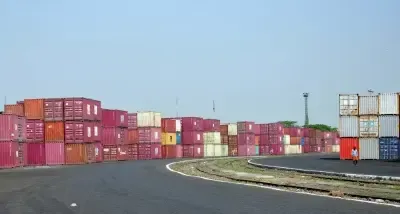
Approximately 18,000 containers belonging to Iranian cargo owners are stranded at Pakistani ports, with cumulative storage fees, container demurrage, and overland transport costs for certain shipments reportedly surpassing $25,000 — making their clearance economically unviable for many owners. The figures emerged from a meeting of the Tehran Chamber of Commerce's Transport Commission, according to a report by Iranwire news portal.
Scale of the Crisis
Mohammad-Ali Kargascha, a board member of the International Transport Companies Association of Iran, placed the number of stranded containers at approximately 18,000 during the Commission meeting. He noted that the value of many shipments ranges between $20,000 and $30,000 — a figure that now closely mirrors the fees owners must pay simply to clear and transport them, rendering the exercise financially pointless for a large proportion of cargo owners.
Only around 1,000 container owners have initiated clearance procedures in response to follow-up notices, underscoring the scale of the impasse.
How the Blockage Began
The crisis traces back to March 2026, when maritime transport restrictions triggered by the Middle East war forced the rerouting of vessels. A significant portion of goods was offloaded at Pakistani ports as an emergency measure, but their onward transfer to Iran has since been paralysed by a combination of financial burdens and operational hurdles.
Kargascha cited three primary obstacles: bills of lading registered under intermediary companies, fears of sanctions repercussions, and the exorbitant fees levied by Pakistani authorities. The situation is further complicated by what the report describes as unaccredited companies — lacking Pakistani approval — that have allegedly collected 'astronomical sums' from cargo owners without taking any effective steps toward clearance.
Diplomatic and Commercial Efforts
Peyman Sanandaji, head of the Transport Commission at the Tehran Chamber of Commerce, confirmed that the matter is being pursued in coordination with Iran's Ministry of Foreign Affairs and the Iranian Embassy in Pakistan. An updated list of cargo owners — categorised by whether their shipments are destined for Iran or third countries — is set to be transmitted to Pakistani authorities.
Meanwhile, Amir Naqiseh, CEO of an international logistics firm, revealed that an 80 per cent fee discount previously negotiated has yet to be implemented, adding another layer of frustration to an already fraught process.
Proposed Sea Route via Chabahar
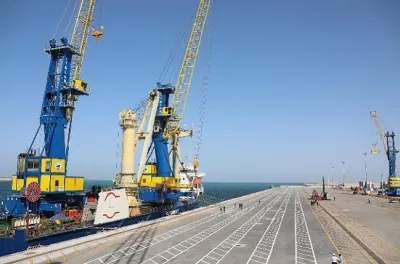
To reduce costs, the private sector has proposed transporting the stranded cargo by sea to Chabahar Port using vessels with a capacity of 300 to 400 containers. However, the proposal has not yet reached the execution phase, as it requires formal coordination with Pakistan and mutual agreement on cost-sharing arrangements.
The resolution of this standoff will likely depend on diplomatic engagement at the bilateral level, with tens of millions of dollars in trade effectively held hostage by fee structures and procedural gridlock.
Point of View
An unimplemented discount deal, and port authorities whose fee structures have turned a humanitarian rerouting into a commercial trap. The fact that only 1,000 of 18,000 container owners have moved toward clearance signals that the financial calculus is simply broken. Unless the 80 per cent discount is enforced and the Chabahar sea-route proposal moves from proposal to execution, this stockpile will grow — and the diplomatic fallout between Tehran and Islamabad will deepen.
NationPress
29 Oct 2026
Frequently Asked Questions
Why are Iranian cargo containers stranded at Pakistani ports?
Around 18,000 Iranian containers became stranded at Pakistani ports after the Middle East war in March 2026 triggered maritime transport restrictions, forcing vessels to reroute and offload cargo at Pakistani facilities. Their onward transfer to Iran has since been blocked by exorbitant port fees, sanctions concerns, and procedural obstacles.
How much are the clearance costs compared to the cargo value?
Cumulative storage, demurrage, and overland transport fees for certain shipments have exceeded $25,000, according to reports from the Tehran Chamber of Commerce's Transport Commission. Since the value of many shipments ranges between $20,000 and $30,000, clearance is economically unviable for most owners.
What steps are Iranian authorities taking to resolve the crisis?
Iran's Ministry of Foreign Affairs and the Iranian Embassy in Pakistan are coordinating on the matter, according to Peyman Sanandaji of the Tehran Chamber of Commerce. An updated cargo owner list is being prepared for transmission to Pakistani authorities, and an 80 per cent fee discount previously negotiated is being pursued for implementation.
What is the proposed Chabahar Port solution?
The Iranian private sector has proposed transporting the stranded containers by sea to Chabahar Port using vessels with a capacity of 300 to 400 containers, bypassing overland cost hurdles. The proposal has not yet been executed as it requires formal coordination with Pakistan and agreement on shared costs.
How many container owners have started the clearance process?
Only around 1,000 container owners — out of an estimated 18,000 affected — have initiated clearance procedures in response to follow-up notices, highlighting how financially prohibitive the process has become for the vast majority.