212 arrested in Islamabad raids on illegal call centres, Chinese nationals among suspects

Synopsis
Pakistani cyber authorities arrested 212 people — including Chinese nationals — in a single operation targeting three illegal call centres in Islamabad. The bust follows a near-identical raid in Faisalabad last year that netted 48 Chinese nationals, signalling what investigators describe as a persistent, organised fraud infrastructure operating inside Pakistan.
Key Takeaways
212 people , including Chinese nationals , were arrested in raids on three illegal call centres in Islamabad .
The NCCIA targeted facilities in the E-11 and G-10 sectors of the capital.
Scam methods included tasking fraud , romance scams , and impersonation of Google representatives.
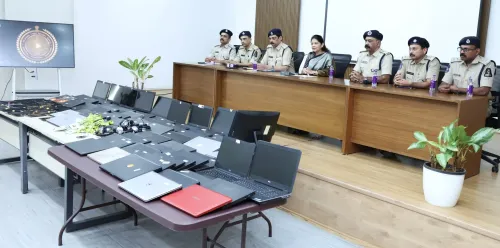
Authorities seized 383 computers and CPUs , 306 mobile phones , and 299 monitors and laptops .
A similar NCCIA raid in Faisalabad in July last year arrested 149 people , including 48 Chinese nationals .
Pakistani authorities have not disclosed the exact number of Chinese nationals detained in the current operation.
Pakistani authorities have arrested 212 people, including Chinese nationals, following raids on three illegal call centres in Islamabad suspected of running an international online fraud network, according to reports. The operation, conducted by Pakistan's National Cyber Crime Investigation Agency (NCCIA), targeted facilities operating in the capital's E-11 and G-10 sectors.
How the Fraud Schemes Operated
According to the NCCIA, the call centres deployed multiple scam methods, including tasking fraud, romance or 'love-dating' scams, and impersonation of Google representatives. Tasking fraud typically lures victims with small initial payments for completing minor online tasks — such as liking videos, rating products, or promoting content — before pressuring them to deposit larger sums to unlock supposed higher-value earnings or withdraw funds. The scheme is designed to build false trust before the financial extraction begins.
Equipment and Evidence Seized
Authorities seized a substantial cache of digital equipment from the raided sites. An NCCIA spokesperson confirmed the recovery of 383 computers and CPUs, 306 mobile phones, and 299 monitors and laptops. The arrested individuals include both Pakistani and Chinese men and women, though Pakistani authorities have not disclosed the precise number of Chinese nationals detained in the current operation.
Pattern of Arrests: A Recurring Problem
This is not an isolated incident. In July last year, the NCCIA reported arresting 149 people — including 48 Chinese nationals and individuals from other countries — during a raid on a factory in Faisalabad. Those individuals were allegedly involved in hacking bank systems and other cybercrimes, operating from within the factory premises. A large quantity of laptops and gadgets was recovered in that operation as well. The recurrence of such raids underscores what critics argue is a persistent and organised cyber-fraud infrastructure operating within Pakistan, with reported involvement of foreign nationals.
Broader Context: China-Pakistan Cybercrime Links
The repeated presence of Chinese nationals in these operations has drawn attention to a broader regional pattern of cyber fraud syndicates operating out of South and Southeast Asia. Law enforcement agencies across the region have flagged the rise of organised 'cyber scam compounds' — some reportedly operating under coercive conditions — that target victims internationally. Pakistan's NCCIA has been increasingly active in cracking down on such networks, though analysts note that enforcement alone may be insufficient without addressing the structural conditions that allow these operations to proliferate.
Point of View
Islamabad now — suggest Pakistan's cyber fraud problem is structural, not episodic. The recurring presence of Chinese nationals raises questions that go beyond law enforcement: it points to a cross-border organised crime layer that bilateral diplomatic channels have so far failed to disrupt. The NCCIA's raids are visible and well-publicised, but without disclosure of how many foreign nationals are charged, prosecuted, and deported — rather than simply detained — the enforcement record remains opaque. Pakistan's credibility on cybercrime cooperation will ultimately be judged not by the number of arrests but by what happens after them.
NationPress
27 Sept 2026
Frequently Asked Questions
How many people were arrested in the Islamabad call centre raids?
Pakistani authorities arrested 212 people , including Chinese nationals, in raids on three illegal call centres in Islamabad. The operation was conducted by the National Cyber Crime Investigation Agency (NCCIA) in the city's E-11 and G-10 sectors.
What types of fraud were the call centres conducting?
The call centres allegedly ran multiple scam operations, including tasking fraud , romance or love-dating scams , and impersonation of Google representatives. Tasking fraud lures victims with small initial payments before convincing them to deposit larger sums to complete supposed higher-value tasks.
How many Chinese nationals were arrested in the Islamabad raids?
Pakistani authorities confirmed that the arrested individuals include both Pakistani and Chinese men and women, but have not disclosed the exact number of Chinese nationals detained in this specific operation.
Has Pakistan conducted similar raids before?
Yes. In July last year , the NCCIA arrested 149 people — including 48 Chinese nationals — during a raid on a factory in Faisalabad . Those individuals were allegedly involved in hacking bank systems and other cybercrimes.
What equipment was seized during the Islamabad raids?
Authorities recovered 383 computers and CPUs , 306 mobile phones , and 299 monitors and laptops from the three raided call centres in Islamabad, according to the NCCIA spokesperson.