Spain train crash: 46 killed as two high-speed trains collide in Toledo
Synopsis
Two high-speed trains — a Renfe AVE and a private Iryo service — collided near Urda in Spain's Toledo province on Wednesday, killing at least 46 people from a combined passenger load of 544. The Madrid-Andalusia high-speed corridor is fully suspended, authorities have deployed three medical helicopters, and the death toll is expected to climb as rescue teams comb through derailed carriages on an embankment.
Key Takeaways
At least 46 people were killed after two high-speed trains collided near Urda, Toledo, Spain on 28 October 2026 .
The crash involved a Renfe AVE service and a private Iryo train carrying a combined 544 passengers .
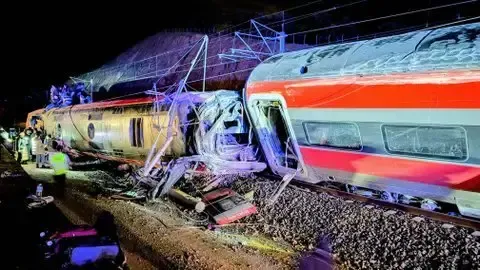
Initial indications suggest the AVE train rear-ended the Iryo train , derailing two carriages onto an embankment.
Emergency services including three medical helicopters and fire crews from multiple municipalities are active at the site.
The Madrid–Andalusia high-speed rail corridor has been fully suspended since 8:54 am local time with no resumption timeline.
Authorities warn the death toll may rise further as rescue operations continue.
At least 46 people were killed after two high-speed trains collided in Toledo province, Spain, on Wednesday, 28 October 2026, in one of the country's deadliest rail disasters in recent memory. The accident involved a Renfe AVE service and a private Iryo train near the station in Urda, with authorities warning that the death toll could rise further as rescue operations continue.
How the Collision Unfolded
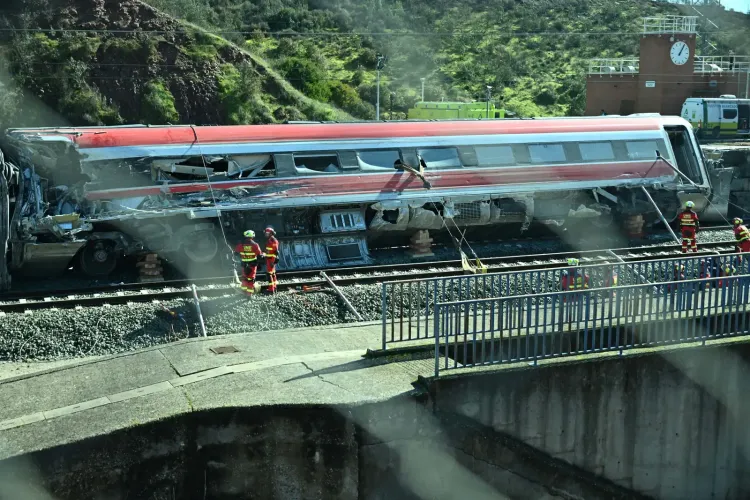
Emergency services received the distress call at 8:54 am local time after the violent impact was reported. According to the Ministry of Transport spokesperson, initial indications suggest the AVE train rear-ended the Iryo train, causing two of the Iryo train's carriages to derail and fall down an embankment. The exact cause of the collision has not yet been officially confirmed, according to the spokesperson for the regional government of Castilla-La Mancha.
The Castilla-La Mancha 112 emergency service confirmed the deployment of fire crews from Alcazar de San Juan and Orgaz, Civil Protection units from surrounding municipalities, and three medical helicopters at the scene to search for survivors and assist the injured.
Passengers on Board
The two trains were together carrying 544 passengers at the time of the crash, according to data provided by Esther Padilla, spokesperson for the Government of Castilla-La Mancha. The Iryo train had 146 passengers and one infant on board, while the Renfe AVE train was carrying 397 passengers, according to reports from Spanish outlet El País. Local authorities had initially confirmed at least 39 fatalities, with the figure subsequently rising to at least 46.
Rail Network Suspended
The collision has brought the high-speed rail corridor between Madrid and Andalusia to a complete halt since 8:54 am local time on Wednesday. Medium-distance high-speed services have also been disrupted. Renfe confirmed that train services between Madrid, Ciudad Real, and Andalusia remain suspended with no timeline for resumption.
In a statement shared on X, Iryo announced the suspension of all services originating from Atocha station and bound for the southern corridor. The operator added that it had activated 'all emergency protocols' and was 'collaborating closely' with authorities to manage the situation.
Rescue and Response
Rescue teams remained active at the crash site as of Wednesday afternoon, working to extract survivors from the derailed carriages. The scale of the operation — involving multiple helicopter units and inter-municipal Civil Protection teams — reflects the severity of the impact. Authorities have not yet specified how many passengers remain unaccounted for, and official figures are expected to be updated as the search progresses.
This comes amid renewed scrutiny of Spain's high-speed rail safety systems, which had previously been regarded as among the most advanced in Europe. The incident is the most serious on the Spanish high-speed network since the 2013 Santiago de Compostela derailment.
Point of View
Making a collision of this magnitude particularly alarming. The initial indication that one train rear-ended another raises immediate questions about signalling, communication, and traffic management on the Madrid–Andalusia corridor — a critical artery that is now fully paralysed. With 544 passengers on board and a death toll that authorities themselves expect to climb, the pressure on both Renfe and Iryo to explain how two scheduled services ended up on the same track will be immense. The last major Spanish high-speed disaster — Santiago de Compostela in 2013 — resulted in sweeping safety overhauls; whether those measures extended to this corridor is now the central question.
NationPress
28 Oct 2026
Frequently Asked Questions
What happened in the Spain train crash on 28 October 2026?
Two high-speed trains — a Renfe AVE service and a private Iryo train — collided near the station in Urda, Toledo province, Spain, on 28 October 2026. At least 46 people were killed and the death toll is expected to rise, with 544 passengers on board the two trains at the time of the crash.
What caused the high-speed train collision in Toledo?
The official cause has not yet been confirmed. According to the Ministry of Transport spokesperson, initial indications suggest the AVE train may have rear-ended the Iryo train, causing two of the Iryo train's carriages to derail and fall onto an embankment. An investigation is ongoing.
How many passengers were on the trains involved in the Spain crash?
The two trains were carrying a combined 544 passengers. The Iryo train had 146 passengers and one infant on board, while the Renfe AVE train was carrying 397 passengers, according to the Castilla-La Mancha government spokesperson.
Is train service between Madrid and Andalusia running after the crash?
No. The high-speed rail corridor between Madrid and Andalusia has been fully suspended since 8:54 am local time on 28 October. Renfe confirmed suspension of services between Madrid, Ciudad Real, and Andalusia, and Iryo suspended all services from Atocha station to the southern corridor. No resumption timeline has been given.
What emergency response has been deployed at the crash site?
The Castilla-La Mancha 112 emergency service has deployed fire crews from Alcazar de San Juan and Orgaz, Civil Protection units from surrounding municipalities, and three medical helicopters to search for survivors and assist victims at the crash site near Urda.