Afghanistan families selling daughters to survive as hunger crisis deepens
Synopsis
Three in four Afghans cannot meet basic needs, and the desperation has reached a point where families in provinces like Ghor are selling daughters — sometimes as young as five — for surgery money or food. With 28 million in poverty, GDP per capita falling, and international aid slashed since the Taliban's return, the child-selling pattern documented since 2021 is not an anomaly. It is a system of last resort.
Key Takeaways
Three in four Afghans cannot meet basic needs, with nearly five million facing emergency-level hunger, according to UN data .
Saeed Ahmad of Ghor province sold his five-year-old daughter Shaiqa for 200,000 Afghani (under USD 3,200 ) to fund life-saving surgery, as reported by the BBC .
Over 80 per cent of Afghan households are reportedly in debt; between 23 and 30 million people face acute food insecurity.
A recent UN report estimated 28 million Afghans were living in poverty in 2025 , with real GDP per capita declining by 2.1 per cent .
The pattern of child-selling has been documented by BBC , VOA , ITV News , Deutsche Welle , and SBS News since at least 2021 .
Taliban restrictions on women and girls and the suspension of international aid are cited as key drivers compounding the crisis.
Extreme poverty and hunger are reportedly forcing Afghan families to sell their children — overwhelmingly daughters — for food, medical treatment, or debt relief, according to multiple international media reports including the BBC. The crisis, documented across Afghanistan, is no longer a pattern of isolated incidents: UN data indicates that three in four Afghans cannot meet their basic needs, with nearly five million people facing emergency-level hunger.
A Father's Impossible Choice in Ghor Province
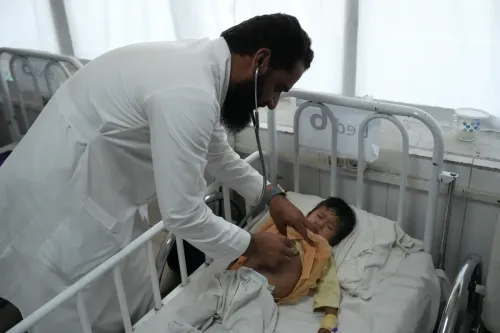
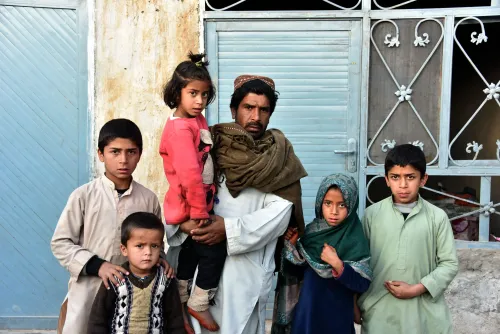
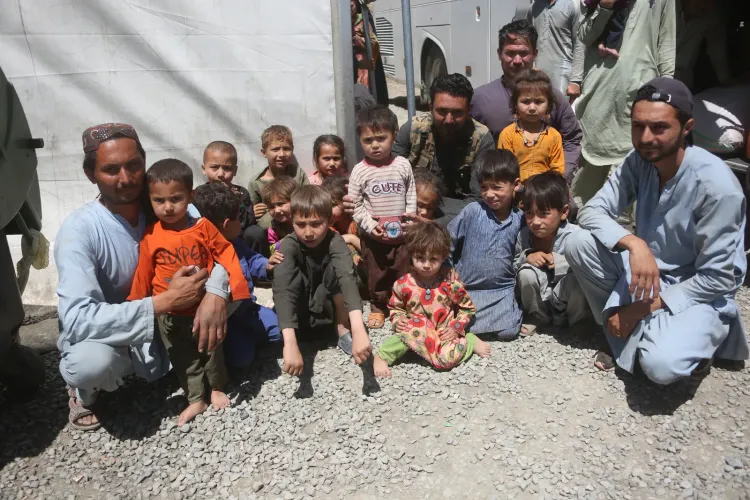
A BBC report from Ghor province documented several families driven to sell their daughters by extreme hunger and unemployment. One father, Saeed Ahmad, said he was compelled to sell his five-year-old daughter Shaiqa for 200,000 Afghani (less than USD 3,200) to fund life-saving surgery for a liver cyst and appendicitis. Ahmad stipulated that the buyer could take her away only after her medical treatment was completed. Shaiqa's surgery was reportedly successful.
Another distressed father, introducing his seven-year-old twins Roqia and Rohila, told the broadcaster he was willing to sell his daughters because he was, in his own words, 'so poor, in debt, and helpless.'
A Pattern Documented Across Years and Outlets
This is not a new phenomenon — it is a worsening one. A 2022 VOA programme titled 'In Afghanistan, Selling One Child to Save Another' documented how parents in drought-stricken areas sold one child to prevent the rest of the family from starving, laying bare the arithmetic of survival in rural Afghanistan. That same year, Britain's ITV News reported that 'desperate families are driven by starvation to try to sell their own children,' with footage of emaciated babies dying in hospitals due to shortages of medicine and food. One mother was found with her children laid out in a local market 'like goods for sale.'
Germany's Deutsche Welle (DW) ran a feature titled 'Child trafficking in Afghanistan,' documenting how internally displaced families in rural provinces are pushed into child-selling networks, often mediated by brokers or relatives. Australia's SBS News reported in 2021 on an Afghan mother who sold one of her newborn twins to a childless couple to stave off starvation for the rest of her family — a case that drew global attention as a symbol of the country's humanitarian collapse.
The Scale of the Crisis
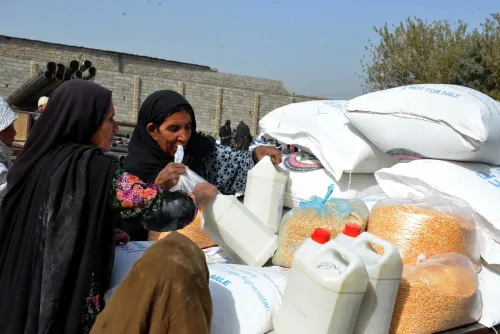
According to UN data cited in recent reports, over 80 per cent of Afghan households are in debt. Between 23 and 30 million people are estimated to be in acute food insecurity, driven by unemployment, climate-related droughts, and the collapse of a foreign-aid-dependent economy. A recent UN report noted that approximately 28 million people in Afghanistan were living in poverty in 2025, with the situation compounded by mass population returns, worsening drought, and shrinking international aid.
The same report observed that while Afghanistan recorded a second consecutive year of economic growth, real GDP expanded by just 1.9 per cent in 2025, down from 2.3 per cent the previous year. With population growth reaching 6.5 per cent, real GDP per capita declined by an estimated 2.1 per cent.
Aid Cuts and Taliban Restrictions Compound the Crisis
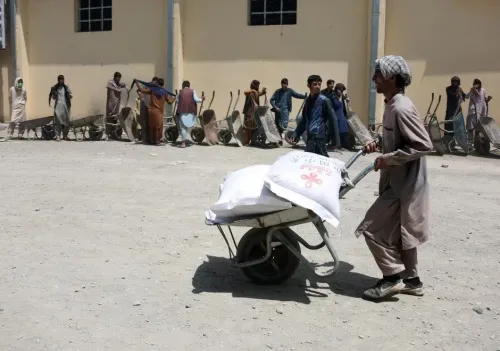
Commentators note that the crisis has deepened markedly since the Taliban's return to power and the subsequent suspension of much international aid. Taliban restrictions on women and girls — barring them from education and most employment — have further narrowed economic options for households already on the edge. Healthcare services have largely collapsed, and the aid that once provided basic support for millions has dwindled to a fraction of its former scale, according to reports.
Earlier accounts documented parents saying they sold children because 'the other children were dying of hunger,' underscoring that this is a systemic pattern rather than a series of aberrations. As international attention fragments, observers warn that without a significant restoration of humanitarian funding and a rollback of restrictions on women, the conditions driving child-selling in Afghanistan are likely to persist.
Point of View
The international community's aid withdrawal, and a decade of climate shocks. What the BBC's Ghor report captures is not a cultural aberration but a market of last resort created by policy decisions made in Kabul, Washington, and Brussels. The GDP growth figure of 1.9 per cent is being cited as a sign of stabilisation, but with population growth at 6.5 per cent, it is in fact a decline in living standards dressed in positive language. Until international accountability mechanisms address both Taliban gender restrictions and the conditions attached to aid restoration, the arithmetic that forces a father to sell a five-year-old will remain unchanged.
NationPress
21 Sept 2026
Frequently Asked Questions
Why are Afghan families selling their children?
Afghan families are reportedly selling their children — most often daughters — to pay for food, medical treatment, or debt relief, driven by extreme poverty and hunger. UN data indicates three in four Afghans cannot meet basic needs, and over 80 per cent of households are in debt, leaving child-selling as a desperate last resort for survival.
How widespread is the humanitarian crisis in Afghanistan?
According to a recent UN report, approximately 28 million people in Afghanistan were living in poverty in 2025. Between 23 and 30 million people face acute food insecurity, and nearly five million are at emergency-level hunger. Real GDP per capita declined by an estimated 2.1 per cent in 2025 despite nominal economic growth.
What role have the Taliban and aid cuts played in the crisis?
Commentators and international reports attribute the deepening crisis partly to the Taliban's return to power, which triggered the suspension of much international aid and imposed sweeping restrictions on women and girls in employment and education. These factors have narrowed household income options and reduced access to basic services including healthcare.
Is this a new phenomenon or a long-standing pattern?
Reports from VOA, ITV News, Deutsche Welle, and SBS News have documented child-selling in Afghanistan since at least 2021, making it a recurring pattern rather than isolated incidents. A 2022 VOA programme specifically documented parents selling one child to prevent the rest of the family from starving during drought conditions.
What is the situation in Ghor province specifically?
A BBC report from Ghor province found multiple families selling daughters due to extreme hunger and unemployment. One case involved a father named Saeed Ahmad who sold his five-year-old daughter Shaiqa for 200,000 Afghani — less than USD 3,200 — to fund surgery for a liver cyst and appendicitis. The surgery was reportedly successful.