Afghan forces seize 24 assault rifles at Torkham border crossing
Synopsis
Afghan security forces seized 24 assault rifles hidden inside a vehicle carrying returnees at the Torkham border crossing — the latest in a string of eastern-border interceptions that also netted Kalashnikovs, grenades, pistols, and rifle barrels across Nangarhar, Laghman, and Paktia provinces. The pattern points to organised smuggling networks exploiting civilian transit routes.
Key Takeaways
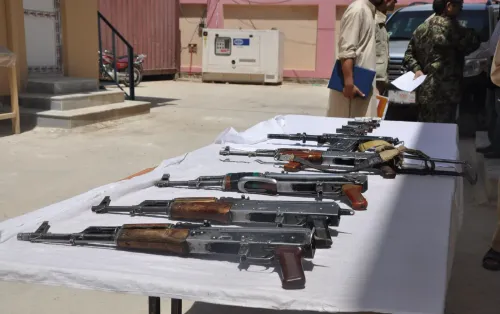
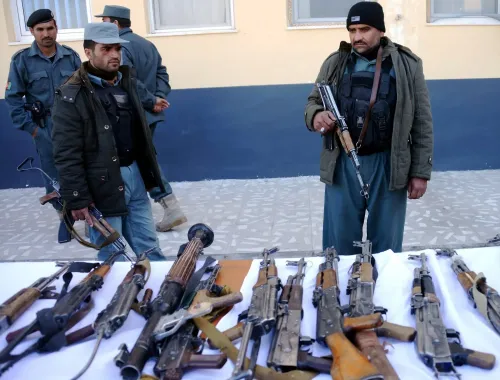
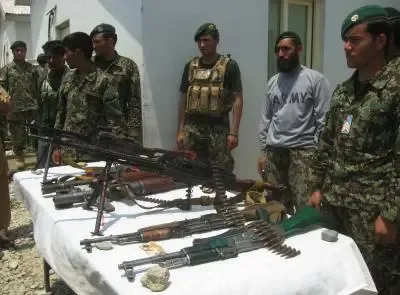
Afghan security forces seized 24 assault rifles at the Torkham border crossing in Nangarhar province on 2 August .
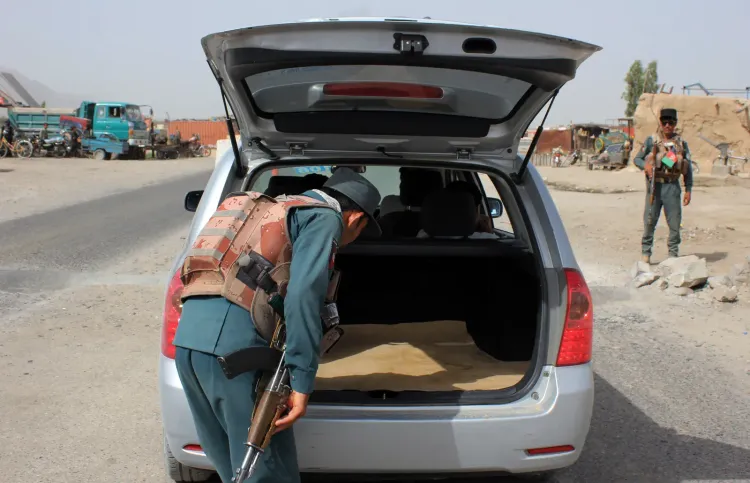
The weapons were hidden inside a vehicle transporting Afghan returnees from a neighbouring country.
No details were provided on whether any individuals were detained in the 2 August operation.
On 29 July , two people were arrested in Laghman province with five Kalashnikovs , three grenades , and hundreds of rounds of ammunition.
In June , a haul in Paktia province included 8 Kalashnikov rifles , 12 pistols , 20 Kalashnikov barrels , and 1,000 rounds of pistol ammunition.
The operations are part of a sustained Afghan government campaign to curb unauthorised weapons and border smuggling.
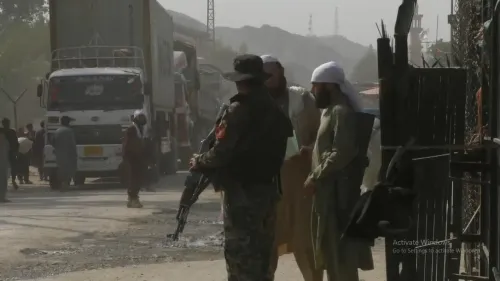
Afghan security forces intercepted a cross-border firearms smuggling attempt and seized 24 assault rifles of various types in eastern Nangarhar province on 2 August, the provincial government announced. The weapons were being transported into Afghanistan from a neighbouring country when security personnel stopped the consignment at the Torkham border crossing.
How the Weapons Were Concealed
According to the provincial government statement, the arms had been hidden inside a vehicle carrying Afghan returnees — a method that exploits the high volume of civilian traffic at one of Afghanistan's busiest border points. Officials did not confirm whether any individuals were detained in connection with the seizure.
Part of a Wider Crackdown
The Torkham interception is not an isolated incident. It forms part of a broader Afghan government campaign to collect unauthorised weapons from civilians and disrupt smuggling networks along border regions, backed by reinforced deployment of security personnel at key crossings.
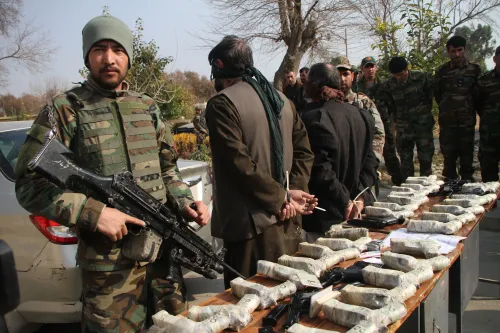
On 29 July, police in Laghman province — east of Afghanistan — arrested two individuals in Dawlat Shah district for illegal possession of firearms. Authorities recovered five Kalashnikov assault rifles, three hand grenades, and hundreds of rounds of ammunition from the pair. Mohammad Yunus Yusufzai, the provincial police spokesman, said authorities would not permit anyone to undermine law and order by carrying unauthorised weapons.
Earlier Seizures in Paktia Province
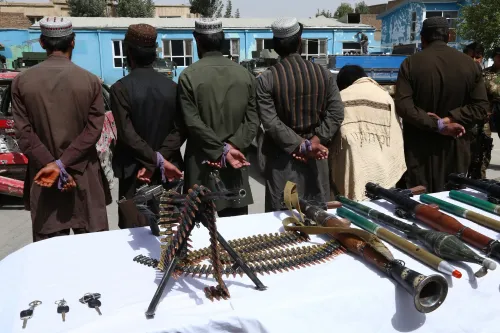
In June, a separate security operation in the Nari Zhwara area of Dand Patan district in Paktia province — a border district adjoining Pakistan — yielded a significant haul. Seized items included eight Kalashnikov rifles, 12 pistols, 20 Kalashnikov barrels, three M4 rifle barrels, and 1,000 rounds of pistol ammunition, according to the provincial police office. Authorities said the shipment was being smuggled into Afghanistan when it was intercepted.
Pattern of Cross-Border Arms Flow
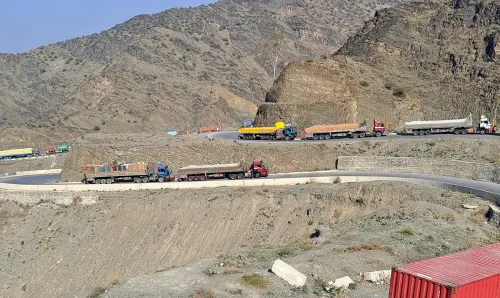
Taken together, the three incidents — spanning Nangarhar, Laghman, and Paktia — point to sustained pressure on Afghanistan's eastern border corridor. The Torkham crossing, a critical trade and transit route between Afghanistan and Pakistan, has historically been a flashpoint for contraband movement. The repeated use of civilian vehicles and returnee convoys as cover suggests organised smuggling networks are adapting their methods to evade detection. Whether the latest seizures lead to prosecutions remains unclear, as officials have yet to provide details on arrests linked to the 2 August operation.
Point of View
Laghman, and Paktia within weeks reveal a persistent and adaptive smuggling pipeline along Afghanistan's eastern border — not a series of random finds. The repeated use of civilian returnee vehicles as cover is particularly telling: it suggests networks that monitor and exploit humanitarian movement patterns. What remains conspicuously absent from official statements is any information on arrests or prosecutions, which raises questions about whether interdiction is translating into accountability or simply confiscation. A crackdown without consequences rarely deters organised supply chains.
NationPress
16 Sept 2026
Frequently Asked Questions
Where were the 24 assault rifles seized by Afghan forces?
The 24 assault rifles were seized at the Torkham border crossing in eastern Nangarhar province on 2 August. The weapons had been concealed inside a vehicle carrying Afghan returnees and were being smuggled in from a neighbouring country.
Were any suspects arrested in the Torkham arms seizure?
Officials provided no details on whether any individuals were detained in connection with the 2 August seizure at Torkham. The provincial government statement confirmed the interception but did not mention arrests.
What other arms seizures have Afghan forces made recently?
On 29 July, police in Laghman province arrested two people and recovered five Kalashnikov rifles, three hand grenades, and hundreds of rounds of ammunition. In June, a separate operation in Paktia province netted eight Kalashnikov rifles, 12 pistols, 20 Kalashnikov barrels, three M4 rifle barrels, and 1,000 rounds of pistol ammunition.
Why is the Torkham border crossing significant in arms smuggling?
Torkham is one of Afghanistan's busiest border crossings, handling high volumes of civilian and commercial traffic between Afghanistan and Pakistan. Its heavy footfall makes it a target for smugglers who conceal contraband — including weapons — inside legitimate vehicles and returnee convoys.
What is the Afghan government's broader policy on unauthorised weapons?
The Afghan government has been running a campaign to collect unauthorised arms from civilians outside official security forces and to curb weapons smuggling along border regions. This includes reinforced deployment of security personnel at key crossings and districts.