Africa's AIM2030 initiative: Leaders push for local medicine and vaccine manufacturing
Synopsis
At the Africa Forward Summit in Nairobi, African leaders backed AIM2030 — a World Bank and African Union-supported drive to double the continent's domestic production of medicines and vaccines. The initiative is Africa's most structured multilateral response yet to the supply chain fragility exposed by COVID-19, and its success could redefine how the continent manages health crises for decades.
Key Takeaways
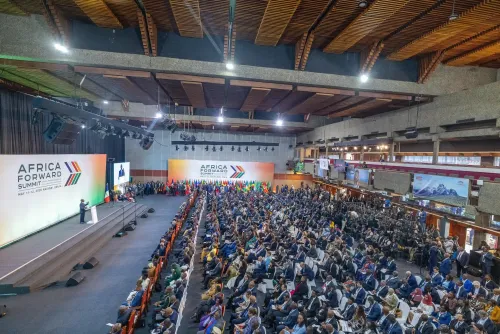
African leaders agreed on 12 May 2025 to accelerate AIM2030 , the Africa Initiative for Medical Access and Manufacturing , on the sidelines of the Africa Forward Summit in Nairobi .
AIM2030 targets doubling local manufacturing of health products, supported by the World Bank and the African Union .
Kenyan President William Ruto highlighted infrastructure and technical capacity gaps as key bottlenecks to be addressed.
AU Commission Chairperson Mahmoud Ali Youssouf called for innovative funding models and resilient regional supply chains.
WHO Africa Regional Director Mohamed Yakub Janabi described the initiative as a bold commitment aligned with Agenda 2063 .
The summit concluded with leaders calling for a new financial paradigm to unlock Africa's broader economic potential.
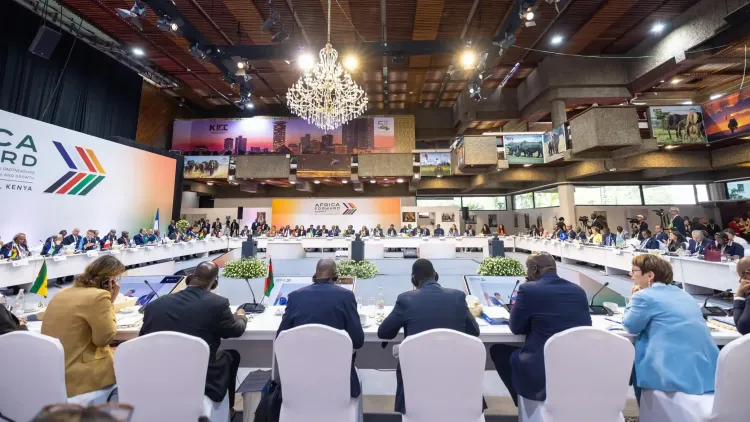
African leaders on Tuesday, 12 May agreed to accelerate AIM2030 — the Africa Initiative for Medical Access and Manufacturing — a continental drive to double domestic production of essential health commodities, including medicines and vaccines. The agreement was reached on the sidelines of the Africa Forward Summit in Nairobi, Kenya, ahead of the event's formal opening ceremony.
What AIM2030 Aims to Achieve
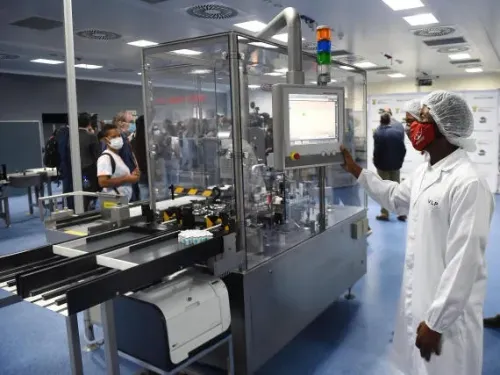
AIM2030, supported by the World Bank and the African Union (AU), targets a doubling of indigenous manufacturing of health products across the continent. The initiative is explicitly aligned with Agenda 2063, the AU's long-term blueprint for socio-economic transformation. It also seeks to secure equitable access to health commodities and build resilient health systems capable of withstanding future global supply chain disruptions — a lesson drawn directly from the COVID-19 pandemic.
What Leaders Said
Kenyan President William Ruto stressed that Africa must overcome infrastructure and technical capacity bottlenecks to accelerate AIM2030's implementation. He said addressing these gaps is essential for the continent to achieve self-sufficiency in vaccines and medicines — a prerequisite, he argued, for effectively combating deadly diseases.
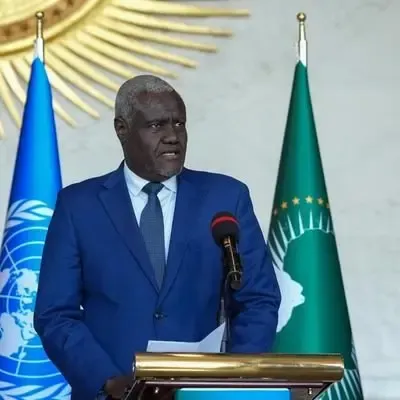
African Union Commission Chairperson Mahmoud Ali Youssouf said the establishment of a vibrant local pharmaceutical manufacturing base would boost the continent's health resilience, human rights, and development outcomes. He called on African countries to explore innovative funding models and build resilient value chains to enhance supply across regional markets.
Mohamed Yakub Janabi, World Health Organisation (WHO) Regional Director for Africa, described AIM2030 as a bold commitment by African nations and multilateral partners, noting that the continent has drawn clear lessons from the COVID-19 pandemic to reduce the fragility of its health systems.
Why This Matters for the Continent
Africa's dependence on imported medicines and vaccines has long been identified as a structural vulnerability. The COVID-19 pandemic laid this bare when vaccine supply chains buckled under global demand, leaving many African nations at the back of the queue. This is not the first continental push for pharmaceutical self-reliance, but AIM2030's backing from both the World Bank and the African Union gives it a multilateral weight that earlier efforts lacked.
Notably, the initiative comes at a moment when global supply chain fragility — accelerated by geopolitical tensions and post-pandemic restructuring — has renewed urgency around regional manufacturing capacity worldwide. For Africa, the stakes are particularly high: the continent bears a disproportionate burden of infectious disease yet manufactures only a small fraction of the medicines it consumes.
Summit Conclusion and Next Steps
The Africa Forward Summit concluded with world leaders and African heads of state calling for a new financial paradigm to unlock the continent's economic potential. Specific timelines for AIM2030 implementation milestones were not immediately disclosed, but multilateral partners including the World Bank are expected to play a key role in financing the initiative's early phases.
Point of View
But Africa has announced pharmaceutical self-reliance goals before without sustained follow-through. The difference this time is multilateral co-sponsorship from the World Bank and the AU — which brings financing credibility — but the hard part remains: infrastructure deficits, regulatory fragmentation across 54 countries, and the chronic underinvestment in cold-chain logistics that makes vaccine distribution as difficult as vaccine production. Unless AIM2030 pairs manufacturing targets with binding regulatory harmonisation and verifiable supply-chain benchmarks, it risks becoming another well-intentioned continental framework that stalls at implementation.
NationPress
17 Sept 2026
Frequently Asked Questions
Where and when was AIM2030 discussed?
African leaders discussed AIM2030 on 12 May 2025 on the sidelines of the Africa Forward Summit in Nairobi, Kenya, ahead of the summit's formal opening ceremony.
Why is local pharmaceutical manufacturing important for Africa?
Africa currently manufactures only a small fraction of the medicines and vaccines it consumes, making it heavily dependent on global supply chains. The COVID-19 pandemic exposed this vulnerability when supply disruptions left many African nations without timely access to vaccines, according to WHO Regional Director Mohamed Yakub Janabi.
Who is supporting AIM2030?
AIM2030 is supported by the World Bank and the African Union, with WHO also playing an advisory role. African heads of state, including Kenyan President William Ruto, have publicly backed the initiative.
What are the main challenges AIM2030 needs to overcome?
President Ruto identified infrastructure deficits and technical capacity gaps as the primary bottlenecks. AU Commission Chairperson Mahmoud Ali Youssouf also stressed the need for innovative funding models and resilient regional value chains to make the initiative viable.