AIR SUVIDHA 2.0 launched for passengers from Ebola-hit nations
Synopsis
India has revived and upgraded its pandemic-era AIR SUVIDHA portal in direct response to the WHO's PHEIC declaration over the Ebola/Bundibugyo virus outbreak in the DRC and Uganda. The new version mandates a 21-day travel history from all international arrivals and pipes real-time data to health and immigration agencies — a significant step-up in India's border health surveillance architecture.
Key Takeaways
The Ministry of Civil Aviation and DIAL launched AIR SUVIDHA 2.0 on 25 June to screen passengers from Ebola-affected countries.
The WHO declared the Ebola/Bundibugyo virus disease outbreak in the DRC and Uganda a PHEIC on 17 May under IHR 2005.
South Sudan and other DRC/Uganda border nations have been classified as high-risk for transmission.
Passengers must submit a mandatory 21-day travel history declaration up to 24 hours before arrival in India.
Real-time data is shared with the Airport Health Officer , Bureau of Immigration , IDSP , and State Surveillance Officers .
The portal is fully contactless , replacing physical declaration forms at arrival counters.
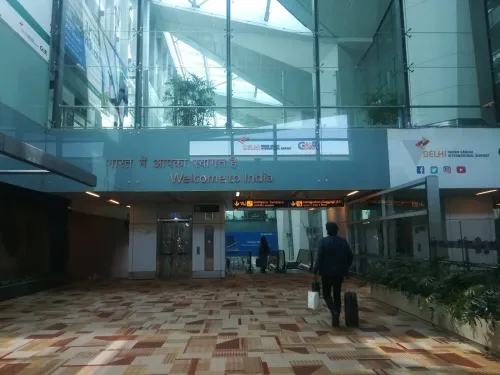
The Ministry of Civil Aviation, in coordination with Delhi International Airport Limited (DIAL), on Thursday, 25 June launched AIR SUVIDHA 2.0 — a fully contactless, upgraded Passenger Health Self-Declaration Portal — to strengthen public health surveillance at international Points of Entry following the ongoing Ebola/Bundibugyo virus disease outbreak. The move comes weeks after the World Health Organization (WHO) declared the outbreak a Public Health Emergency of International Concern (PHEIC).
Background: The Ebola Outbreak That Triggered the Launch
The WHO declared the Ebola/Bundibugyo virus disease (BVD) outbreak in the Democratic Republic of the Congo (DRC) and Uganda a PHEIC on 17 May under the International Health Regulations (IHR) 2005. The current outbreak has been confirmed specifically as Bundibugyo virus disease, and countries sharing borders with the DRC and Uganda — including South Sudan — have been classified as high-risk zones for potential transmission, according to the latest WHO assessment.
What AIR SUVIDHA 2.0 Requires from Passengers
Developed in collaboration with the Directorate General of Health Services (DGHS) and the Ministry of Health and Family Welfare, the portal mandates that all international arriving passengers submit an online Health Self-Declaration before immigration clearance. The declaration covers a 21-day travel history, exposure history, and any related symptoms. According to officials, the Self Declaration Form (SDF) can be submitted up to 24 hours before arrival in India, and passengers are advised to complete it during the web check-in process for faster clearance on landing.
Real-Time Data Sharing Across Agencies
A key feature of the upgraded system is its real-time data-sharing mechanism, which connects multiple agencies simultaneously — including the Airport Health Officer, the Bureau of Immigration, the Integrated Disease Surveillance Programme (IDSP), and State Surveillance Officers. Officials said this integration is designed to enable rapid identification of at-risk travellers and ensure timely referral, monitoring, and public health intervention without creating bottlenecks at arrival counters.
Contactless Process at the Airport
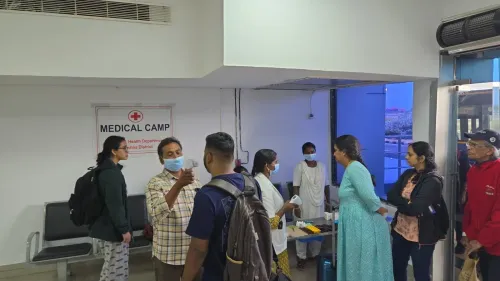
Once the declaration is completed online, passengers need only present the downloaded Self Declaration Form at the International Travel Health Desk or the Immigration Counter, eliminating the need for physical paper forms on arrival. The process is intended to be fully contactless, reducing both delays and the risk of surface transmission at crowded airport touchpoints.
What Officials Said
'All international travellers are requested to complete their Self-Declaration accurately and in advance, in the interest of passenger safety and public health,' officials stated. The system reflects India's broader post-pandemic shift toward digital health surveillance at borders, building on the original AIR SUVIDHA platform that was first deployed during the COVID-19 pandemic. As the BVD outbreak continues to evolve internationally, health authorities are expected to periodically review and update the list of high-risk countries subject to mandatory declaration requirements.
Point of View
If overdue, upgrade — but its effectiveness will hinge entirely on enforcement at non-Delhi international airports, which the current announcement does not address. The portal's real-time data-sharing architecture is a genuine improvement over the COVID-era version, yet the declared scope covers only passengers arriving in India, leaving transit and connecting-flight passengers in an ambiguous zone. With the BVD outbreak still active and South Sudan flagged as high-risk, India's health surveillance net needs to extend well beyond a single digital form.
NationPress
24 Sept 2026
Frequently Asked Questions
What is AIR SUVIDHA 2.0?
AIR SUVIDHA 2.0 is an upgraded, fully contactless Passenger Health Self-Declaration Portal launched by India's Ministry of Civil Aviation on 25 June to screen international travellers arriving from Ebola-affected countries. It requires passengers to submit a 21-day travel and exposure history before immigration clearance.
Why has India launched AIR SUVIDHA 2.0 now?
The launch follows the WHO's declaration of the Ebola/Bundibugyo virus disease outbreak in the DRC and Uganda as a Public Health Emergency of International Concern (PHEIC) on 17 May under IHR 2005. India activated the portal to prevent potential importation of the disease through international air travel.
Which countries are considered high-risk under this system?
The DRC and Uganda are the epicentres of the current Bundibugyo virus disease outbreak. Countries sharing borders with them — including South Sudan — have been categorised as high-risk areas for potential transmission, according to the latest WHO assessment.
How do passengers complete the AIR SUVIDHA 2.0 declaration?
Passengers can fill out the Self Declaration Form (SDF) online up to 24 hours before their arrival in India, ideally during the web check-in process. On arrival, they need only present the downloaded form at the International Travel Health Desk or Immigration Counter — no physical forms are required.
Which agencies receive the health declaration data?
The portal shares passenger data in real time with the Airport Health Officer, Bureau of Immigration, Integrated Disease Surveillance Programme (IDSP), and State Surveillance Officers, enabling rapid identification and referral of at-risk travellers.