Ebola outbreak 2025: India warns against travel to Congo, Uganda, South Sudan
Synopsis
India has issued a formal travel advisory against non-essential travel to the DRC, Uganda, and South Sudan after WHO declared the Bundibugyo strain Ebola outbreak a Public Health Emergency of International Concern. No approved vaccine or treatment exists for this specific strain — making this one of the more serious global health alerts in recent years, with Africa CDC also invoking its highest emergency tier.
Key Takeaways
India's Health Ministry issued a travel advisory on 25 May 2025 against non-essential travel to the DRC , Uganda , and South Sudan .
The WHO has declared the Ebola outbreak a Public Health Emergency of International Concern (PHEIC) .
The Africa CDC has also declared it a Public Health Emergency of Continental Security .
The outbreak involves the Bundibugyo virus strain of Ebola, for which no approved vaccine or treatment currently exists.
India has reported zero cases of Bundibugyo Ebola as of the advisory date.
The WHO IHR Emergency Committee on 22 May 2025 called for strengthened surveillance at all Points of Entry in member states.
India's Health Ministry on Sunday, 25 May 2025, issued a formal travel advisory urging all Indian citizens to avoid non-essential travel to the Democratic Republic of the Congo (DRC), Uganda, and South Sudan amid a confirmed outbreak of Ebola Virus Disease caused by the Bundibugyo virus strain. The World Health Organization (WHO) has declared the situation a Public Health Emergency of International Concern (PHEIC), its highest alert level.
What the Advisory Says
The Health Ministry stated that Indian citizens currently residing in or travelling through the affected countries must 'strictly follow public health guidance issued by local authorities and maintain heightened precautions.' The advisory remains in effect 'until further notice,' signalling that the government is closely monitoring the evolving situation on the ground.
Crucially, India has not reported any confirmed case of Ebola Disease caused by the Bundibugyo virus strain, the ministry confirmed.
Scale of the Outbreak
The Africa Centres for Disease Control and Prevention (Africa CDC) has separately declared the outbreak a Public Health Emergency of Continental Security — its own highest-tier designation — underscoring the severity of the spread across the DRC and Uganda. Countries sharing borders with both nations, including South Sudan, are assessed to be at high risk of disease transmission, according to official assessments.
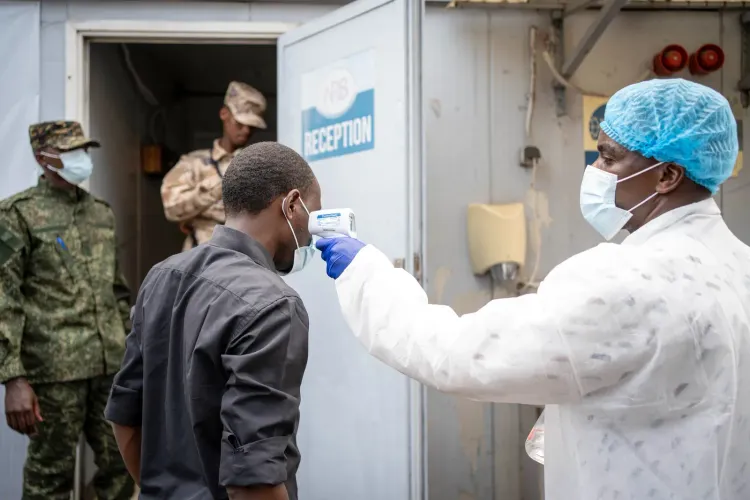
The WHO IHR Emergency Committee, meeting on 22 May 2025, issued temporary recommendations calling on member states to strengthen disease surveillance at all Points of Entry. Specifically, authorities have been directed to 'detect, assess, report and manage travellers with unexplained febrile illness arriving from areas with documented Bundibugyo virus detection,' while also discouraging travel to those areas.
What Is Bundibugyo Ebola
Ebola Virus Disease is a viral haemorrhagic fever caused by infection with the Ebola virus. The Bundibugyo strain is one of several known variants and is associated with a high mortality rate. As of now, no approved vaccines or specific treatments exist for Ebola Disease caused specifically by the Bundibugyo virus strain, making containment and early detection the primary lines of defence.
What Indian Travellers Should Do
Indian nationals in or around the affected region are advised to register with the nearest Indian embassy or consulate, follow all local public health directives, avoid contact with individuals displaying symptoms of unexplained fever, and monitor updates from the Ministry of Health and Family Welfare. Those returning from the affected countries should report any fever or illness immediately to health authorities upon arrival in India.
What Happens Next
The WHO and Africa CDC are expected to provide updated situation reports as surveillance data comes in. India's advisory will remain active until the international health bodies downgrade the emergency status. This is the first major Ebola-related travel advisory issued by India in response to a WHO-declared PHEIC linked to the Bundibugyo strain, reflecting how seriously New Delhi is treating cross-border transmission risk.
Point of View
For which vaccines exist; this outbreak does not have that safety net. The simultaneous invocation of the highest emergency tiers by both WHO and Africa CDC is unusual and signals that containment is not yet under control. New Delhi is right to act early, but the advisory's 'until further notice' framing also means there is no clear off-ramp — and Indian diaspora communities in East and Central Africa will need far more granular guidance than a single ministry statement provides.
NationPress
16 Sept 2026
Frequently Asked Questions
Why has India issued a travel advisory for Congo, Uganda, and South Sudan?
India issued the advisory because of an active Ebola Virus Disease outbreak caused by the Bundibugyo strain in the DRC and Uganda, with South Sudan assessed as high-risk due to its shared borders. The WHO has declared the situation a Public Health Emergency of International Concern (PHEIC), prompting the Health Ministry to advise Indian citizens to avoid non-essential travel to all three countries until further notice.
What is the Bundibugyo strain of Ebola?
The Bundibugyo strain is one of several known variants of the Ebola virus, which causes viral haemorrhagic fever with a high mortality rate. Unlike the more widely known Zaire strain, no approved vaccines or specific treatments currently exist for Ebola Disease caused by the Bundibugyo virus strain.
Has India reported any Ebola cases?
No. As of the advisory issued on 25 May 2025, India has not reported any confirmed case of Ebola Disease caused by the Bundibugyo virus strain, according to the Health Ministry.
What should Indian citizens in the affected countries do?
Indian nationals in or near the DRC, Uganda, or South Sudan should strictly follow local public health guidelines, avoid contact with individuals showing unexplained fever, register with the nearest Indian embassy or consulate, and monitor updates from India's Ministry of Health and Family Welfare. Those returning to India should report any fever or illness to health authorities immediately upon arrival.
What has the WHO recommended to other countries?
The WHO IHR Emergency Committee, meeting on 22 May 2025, issued temporary recommendations urging countries to strengthen disease surveillance at Points of Entry — specifically to detect and manage travellers with unexplained febrile illness from areas with documented Bundibugyo virus detection. The committee also discouraged travel to those areas.