WHO declares Ebola outbreak in Congo, Uganda a global health emergency
Synopsis
For only the seventh time in its history, the WHO has declared a public health emergency of international concern — this time for an Ebola outbreak driven by the Bundibugyo virus in the DRC's Ituri Province. With 246 suspected cases, 65 deaths, and mining corridors connecting the region to Uganda and South Sudan, the window to prevent wider spread is narrow.
Key Takeaways
The WHO declared the Ebola outbreak in the DRC and Uganda a public health emergency of international concern (PHEIC) on 17 May .
The outbreak is caused by the Bundibugyo virus and does not meet the threshold of a pandemic emergency.
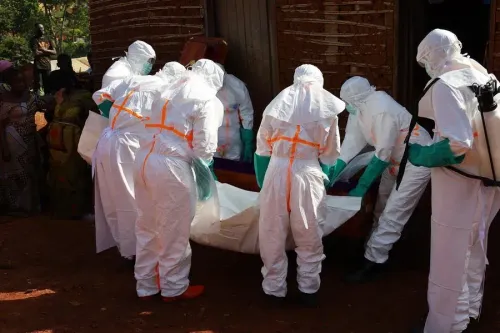
At least 246 suspected cases and 65 deaths have been recorded, mainly in Mongwalu and Rwampara , Ituri Province .
Preliminary tests detected the virus in 13 of 20 samples tested by the National Institute of Biomedical Research .
Africa CDC has rated the risk of further spread as high , citing urban density, population movement, mining activity, and proximity to Uganda and South Sudan .
An urgent cross-border coordination meeting is being convened with health authorities from the DRC , Uganda , and South Sudan .
The World Health Organisation (WHO) on Sunday, 17 May formally determined that the Ebola outbreak in the Democratic Republic of the Congo (DRC) and Uganda constitutes a public health emergency of international concern (PHEIC) — the highest alert level the agency can issue. The outbreak is caused by the Bundibugyo virus, a strain distinct from the more familiar Zaire Ebola virus, and does not meet the separate threshold of a pandemic emergency, the WHO clarified.
Scale of the Outbreak
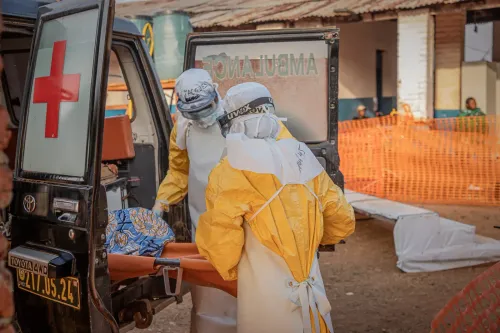
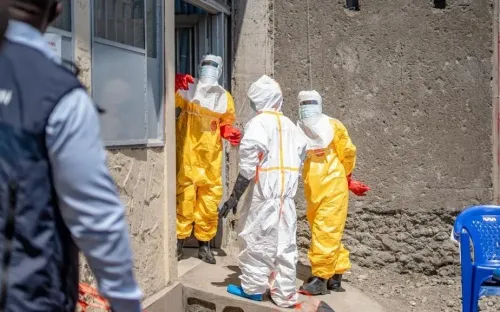
Approximately 246 suspected cases and 65 deaths have been recorded, concentrated primarily in Mongwalu and Rwampara in the DRC's Ituri Province. Suspected cases have also emerged in Bunia. Of the confirmed cases, four deaths have been recorded. Preliminary laboratory tests by the National Institute of Biomedical Research detected the virus in 13 of 20 samples, according to the Africa Centres for Disease Control and Prevention (Africa CDC), which cited consultations with the DRC's Ministry of Health and National Public Health Institute.
Why Spread Risk Is Rated High
Africa CDC has warned of a high risk of further spread, pointing to a combination of factors: dense urban settings, active population movement, ongoing mining activities, insecurity in the region, and the geographic proximity of Ituri Province to both Uganda and South Sudan. This convergence of mobility and instability makes containment significantly harder than in previous rural-centred outbreaks.
International Response and Cross-Border Coordination
The WHO Director-General acknowledged the commitment of the governments of the DRC and Uganda in taking what he described as 'necessary and vigorous actions' to bring the situation under control. He also credited both nations for their transparency in communicating the risk to other member states — a factor that enabled the global community to begin preparedness measures early.
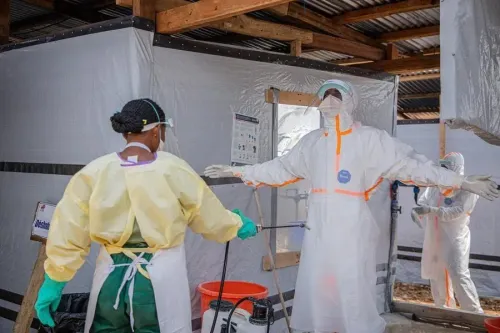
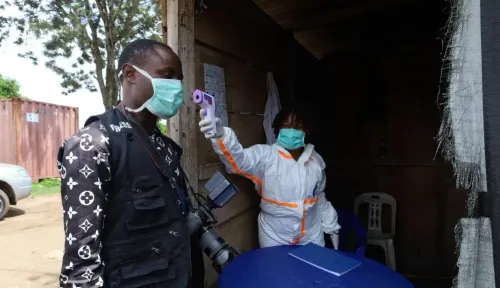
Africa CDC is convening an urgent coordination meeting with health authorities from the DRC, Uganda, and South Sudan, alongside key international partners, to reinforce cross-border surveillance, response logistics, and information sharing.
What Comes Next
A PHEIC declaration unlocks accelerated international funding, expedited vaccine access, and coordinated diplomatic pressure on transit countries to strengthen border health screening. Notably, this is only the seventh time in WHO history that a PHEIC has been declared — past instances include the COVID-19 pandemic, the 2014 West Africa Ebola crisis, and the 2022 mpox outbreak. The Bundibugyo strain, last seen in a significant outbreak in 2012, has a lower case fatality rate than the Zaire strain but remains highly dangerous. With mining corridors connecting Ituri to neighbouring countries, health authorities are racing to establish containment before the virus reaches larger urban centres.
Point of View
Mobile, cross-border labour flows that are exceptionally difficult to screen. The Bundibugyo strain's lower fatality rate compared to Zaire Ebola could paradoxically accelerate spread, as more survivors move through communities before diagnosis. The real test is whether the DRC — still recovering from years of conflict in the east — can sustain the surveillance and response infrastructure a PHEIC demands, or whether this becomes another case where the declaration arrives too late to change the trajectory.
NationPress
2 Oct 2026
Frequently Asked Questions
What is a WHO public health emergency of international concern?
A public health emergency of international concern (PHEIC) is the highest alert level the World Health Organisation can declare. It signals that a disease event poses a risk beyond the borders of the affected country and requires a coordinated international response, including accelerated funding, vaccine access, and border health measures.
What is the Bundibugyo virus and how does it differ from other Ebola strains?
The Bundibugyo virus is one of six known species in the Ebolavirus genus. It was first identified in Uganda's Bundibugyo district in 2007 and generally has a lower case fatality rate than the more common Zaire strain, which drove the catastrophic 2014 West Africa outbreak. It remains a dangerous pathogen with no widely approved treatment.
How many cases and deaths have been reported in the current outbreak?
As of the PHEIC declaration on 17 May, approximately 246 suspected cases and 65 deaths have been recorded, primarily in Mongwalu and Rwampara in the DRC's Ituri Province. Four deaths have been confirmed among laboratory-confirmed cases.
Why is the risk of further spread considered high?
Africa CDC has flagged a high spread risk due to urban population density, active population movement, mining activity connecting Ituri to neighbouring regions, ongoing insecurity, and the province's proximity to Uganda and South Sudan — all of which complicate containment efforts.
What happens now that a PHEIC has been declared?
The PHEIC declaration triggers accelerated international funding, expedited access to vaccines and medical countermeasures, and coordinated diplomatic engagement with transit countries. An urgent coordination meeting is being convened by Africa CDC with health authorities from the DRC, Uganda, and South Sudan to strengthen cross-border surveillance and response.