Pakistan's Foreign Media Guidelines 2026 muzzle PoJK coverage, CPJ warns
Synopsis
Pakistan's new Foreign Media Facilitation Guidelines 2026 — requiring journalists to seek government clearance before reporting outside three cities — look less like a media policy and more like a blackout mechanism. With the CPJ calling the rules 'draconian' and PoJK's election-era unrest still unresolved, Islamabad appears to be betting that controlling the messenger will contain the message.
Key Takeaways
Pakistan introduced the Foreign Media Facilitation Guidelines 2026 , requiring journalists to obtain an NOC from the Information Ministry for assignments outside Islamabad, Lahore, and Karachi .
The rules come amid months of reported deaths, arrests, torture, and election irregularities in Pakistan-occupied Jammu and Kashmir (PoJK) .
Pakistan banned Al Jazeera after the broadcaster reported on protests and election-day violence in PoJK, accusing it of 'yellow journalism' .
The Committee to Protect Journalists (CPJ) has called the guidelines 'draconian' and demanded their withdrawal, warning of an information blackout in PoJK.
Waliullah Rahmani of CPJ warned the rules expose journalists to administrative retaliation and prevent free reporting outside the three main cities.
Authorities can suspend or revoke journalist accreditation for conduct deemed against Pakistan's ideology, sovereignty, security, or public order .
Pakistan has introduced sweeping new press regulations — the Foreign Media Facilitation Guidelines 2026 — that critics and international press freedom groups say are designed to suppress independent reporting on the ongoing unrest in Pakistan-occupied Jammu and Kashmir (PoJK). The guidelines, which require journalists to obtain a no-objection certificate (NOC) from Pakistan's Information Ministry for assignments outside the three main cities, have drawn sharp condemnation from the Committee to Protect Journalists (CPJ), which has called on Islamabad to withdraw the rules immediately.
What the New Guidelines Mandate
Under the Foreign Media Facilitation Guidelines 2026, both international journalists and Pakistani journalists contributing to foreign media outlets — including social media and internet-based platforms — must secure an NOC for any official assignment conducted outside Islamabad, Lahore, and Karachi. The scope of the rules is notably broad: even foreign journalists travelling to Abbottabad or Murree — towns in proximity to PoJK's border — for leisure purposes are required to obtain prior clearance, according to an opinion piece published in The Global Kashmir.
Authorities have also reserved the right to suspend or revoke the accreditation of any journalist or media outlet for conduct deemed 'against the ideology, sovereignty, security, or public order of Pakistan' — a vaguely worded provision that critics argue gives officials sweeping discretionary power.
Context: Unrest in PoJK and the Al Jazeera Ban
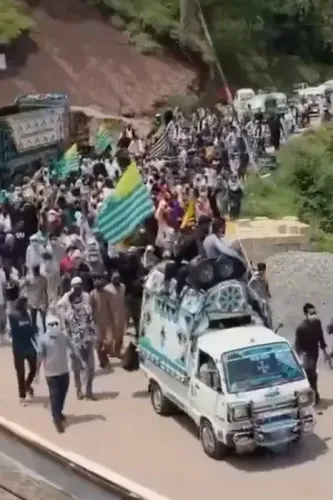
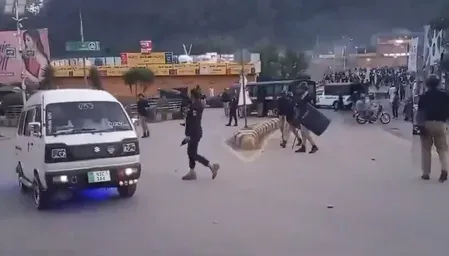
The guidelines come amid months of reported turmoil in PoJK, with accounts of deaths, arrests, detentions, intimidation, torture, and the alleged use of indiscriminate force by Pakistani authorities against protesters. Elections in the region, initially planned as a single-phase exercise, were reportedly split into three phases due to the deteriorating security situation. Voter turnout on polling day was described as very low, and allegations of election rigging subsequently emerged, according to the same opinion piece.
International broadcaster Al Jazeera reported on the protests, unrest, and violence on election day. Pakistan responded by issuing a formal statement accusing Al Jazeera of 'yellow journalism' and 'selective reporting', and went on to impose a ban on the outlet within the country. The episode appears to have accelerated the push for the new media guidelines, according to the analysis in The Global Kashmir, authored by Syed Fukran.
CPJ Calls Guidelines 'Draconian'
The Committee to Protect Journalists (CPJ), a leading international press freedom organisation, has called on Pakistani authorities to withdraw the Foreign Media Facilitation Guidelines 2026, describing them as 'draconian' and warning they are likely to censor coverage of the unrest in PoJK.
Waliullah Rahmani, CPJ's Afghanistan and Pakistan Representative, said: 'The Foreign Media Facilitation Guidelines open the door for Pakistani authorities to further restrict international media coverage, prevent journalists from reporting freely outside Pakistan's three main cities, and risk exposing them to administrative retaliation.' Rahmani added that the guidelines represent yet another 'appalling blow to press freedom in Pakistan, where journalists are already facing an intense crackdown' — particularly those covering the situation in PoJK.
The CPJ also alleged that Pakistani authorities had banned coverage of protests demanding electoral reform in PoJK after international outlets reported on police brutality during clashes with demonstrators, and that mobile and internet services had been suspended in the region.
The Narrative Control Argument
The author of the Global Kashmir opinion piece argued that the intent behind the new rules is explicit: 'Simply to hide its brutality in PoJK and so that its so-called narrative of autonomy, self-rule and being the protector of Kashmiris does not get exposed in the world.' The piece further warned that the restrictions risk creating an 'information blackout' that could allow further abuses to go unnoticed and make it harder for residents to demand basic rights or hold authorities accountable.
What Happens Next
International press freedom organisations are being urged to intervene. The CPJ's call to withdraw the guidelines has so far not been acknowledged publicly by Islamabad. With PoJK remaining a politically sensitive flashpoint — and with the region's elections already clouded by controversy — independent verification of ground conditions is likely to grow harder under the new framework. How Pakistan responds to sustained international pressure on the guidelines will be closely watched.
Point of View
In effect, a geographic gag order — and the timing is not incidental. They arrive precisely as independent reporting on PoJK's election violence and protest crackdowns was beginning to reach international audiences. The Al Jazeera ban was the first move; the NOC framework is the structural follow-through. What is striking is how openly the mechanism conflates state security with narrative management: accreditation can be revoked for content 'against the ideology' of Pakistan — a standard so elastic it can swallow almost any critical report. The CPJ's condemnation will matter only if it is backed by coordinated pressure from governments and multilateral bodies; past Pakistani press-freedom rollbacks have weathered international criticism with minimal course correction.
NationPress
9 Aug 2026
Frequently Asked Questions
What are Pakistan's Foreign Media Facilitation Guidelines 2026?
They are new press regulations introduced by Pakistan that require international journalists and Pakistani journalists contributing to foreign media — including social media platforms — to obtain a no-objection certificate (NOC) from the Information Ministry before working on assignments outside Islamabad, Lahore, and Karachi. The guidelines also allow authorities to suspend or revoke journalist accreditation for conduct deemed against Pakistan's ideology, sovereignty, security, or public order.
Why have these guidelines been introduced now?
The guidelines follow months of reported unrest in Pakistan-occupied Jammu and Kashmir (PoJK), including protests, alleged election rigging, and accusations of security force brutality. Critics, including the author of an opinion piece in The Global Kashmir, argue the rules are designed to prevent independent reporting on the situation in PoJK from reaching the outside world, particularly after Pakistan banned Al Jazeera for covering the unrest.
What has the Committee to Protect Journalists said?
The CPJ has called the Foreign Media Facilitation Guidelines 2026 'draconian' and demanded that Pakistani authorities withdraw them. CPJ's Afghanistan and Pakistan Representative Waliullah Rahmani warned that the guidelines expose journalists to administrative retaliation and prevent free reporting outside Pakistan's three main cities, calling them an 'appalling blow to press freedom in Pakistan.'
What is the situation in PoJK that prompted these concerns?
For several months, reports have emerged from PoJK of deaths, arrests, detentions, intimidation, torture, and the alleged use of indiscriminate force against protesters. Elections in the region were split from one phase into three due to the unrest, voter turnout was very low, and allegations of election rigging subsequently surfaced, according to reports and an opinion piece in The Global Kashmir.
Why was Al Jazeera banned in Pakistan?
Pakistan banned Al Jazeera after the international broadcaster reported on protests, unrest, and election-day violence in PoJK. Pakistani authorities accused Al Jazeera of 'yellow journalism' and 'selective reporting.' Critics argue the ban was an early attempt to control international media coverage before the broader Foreign Media Facilitation Guidelines 2026 were introduced.