CPJ slams Pakistan's foreign media guidelines, flags PoK censorship risk

Synopsis
Pakistan's new Foreign Media Facilitation Guidelines 2026 — introduced days after the government attacked Al Jazeera's PoK reporting — require foreign journalists to obtain government clearance before leaving three cities. With over 50 dead in PoK, internet suspended since June, and Al Jazeera blocked, the CPJ says this is not a facilitation framework but a censorship architecture.
Key Takeaways
The Committee to Protect Journalists (CPJ) demanded Pakistan withdraw its Foreign Media Facilitation Guidelines 2026 on 7 August .
The guidelines require foreign journalists to obtain a no-objection certificate (NOC) from the Ministry of Information and Broadcasting to report outside Islamabad , Lahore , and Karachi .
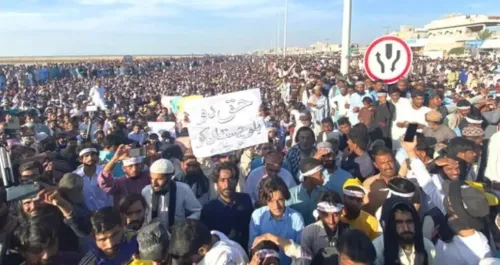
Unrest in Pakistan-occupied Kashmir (PoK) has claimed more than 50 lives , with the actual toll reportedly higher.
Pakistan blocked access to Al Jazeera's website after accusing it of 'yellow journalism' over PoK coverage.
Internet services in PoK have been suspended since 5 June ; broadband was only partially restored on 29 July , with mobile data still disrupted.
Multiple civil society organisations have urged Pakistan to end restrictions on press freedom and access to information.
The Committee to Protect Journalists (CPJ) on 7 August called on Pakistani authorities to immediately withdraw the newly issued Foreign Media Facilitation Guidelines 2026, labelling the rules 'draconian' and warning they are likely to suppress international coverage of ongoing unrest in Pakistan-occupied Kashmir (PoK). The demand was made from New York, where the global press freedom organisation is headquartered.
What the New Guidelines Require
The Foreign Media Facilitation Guidelines 2026 mandate that all foreign journalists obtain a no-objection certificate (NOC) from Pakistan's Ministry of Information and Broadcasting (MOIB) before travelling to any city outside Islamabad, Lahore, and Karachi for news reporting purposes. The guidelines also lay out registration and accreditation procedures for foreign media houses, organisations, outlets, freelancers, fixers, and associated personnel working in or contributing to international media from Pakistan, according to reports citing Pakistani daily Dawn.
CPJ's Sharp Criticism
Waliullah Rahmani, CPJ's Afghanistan and Pakistan Representative, said the guidelines 'open the door for Pakistani authorities to further restrict international media coverage, prevent journalists from reporting freely outside Pakistan's three main cities, and risk exposing them to administrative retaliation.' Rahmani described the move as 'yet another appalling blow to press freedom in Pakistan, where journalists are already facing an intense crackdown' — particularly those reporting on the PoK situation.
Context: PoK Unrest and Al Jazeera Restrictions
According to the CPJ, the guidelines were introduced days after the Pakistani government publicly criticised international reporting on elections and protests in PoK and accused international media outlet Al Jazeera of engaging in 'yellow journalism.' Access to Al Jazeera's website has since been restricted in Pakistan. The CPJ further alleged that Pakistani authorities have banned coverage of protests demanding electoral reform in PoK, following international reports on police brutality during clashes with demonstrators, and have suspended mobile and internet services in the region.
Scale of the Crisis on the Ground
The unrest in PoK has claimed more than 50 lives and left hundreds injured over recent days, with the actual toll reportedly expected to be significantly higher. The crackdown on protesters has drawn international condemnation over alleged human rights abuses and the deteriorating state of media freedom in the territory. Notably, internet services in PoK have remained suspended since 5 June, with broadband only partially restored on 29 July, while mobile data disruption continues.
Civil Society Pushback
Earlier this week, multiple local and international civil society organisations urged Pakistani authorities to end escalating restrictions on freedom of expression, press freedom, access to information, and human rights advocacy. The collective pressure from civil society groups and international press freedom bodies marks a significant convergence of concern over Pakistan's media environment — one that critics argue has been deteriorating steadily under successive governments.
With the PoK situation still volatile and international scrutiny intensifying, the Pakistani government's next move on the guidelines will be closely watched by press freedom monitors worldwide.
Point of View
But a bureaucratic chokepoint that can be tightened or loosened at will. What is striking is the sequencing — Al Jazeera criticised, then blocked; guidelines issued, then justified as 'facilitation.' The pattern suggests a government that has learned to use administrative procedure as a censorship tool, insulating itself from the optics of an outright press ban while achieving the same effect. The 50-plus death toll in PoK, if independently verified, would constitute one of the region's worst episodes of protest-related violence in years — and Pakistan's media architecture appears designed to ensure that number stays contested.
NationPress
21 Sept 2026
Frequently Asked Questions
What are Pakistan's Foreign Media Facilitation Guidelines 2026?
The Foreign Media Facilitation Guidelines 2026 are rules issued by Pakistan's Ministry of Information and Broadcasting that require all foreign journalists to obtain a no-objection certificate (NOC) before travelling to any city outside Islamabad, Lahore, and Karachi for reporting. They also set out registration and accreditation procedures for foreign media personnel operating in Pakistan.
Why has the CPJ condemned the guidelines?
The Committee to Protect Journalists called the guidelines 'draconian,' warning they will restrict international media coverage, prevent free reporting outside Pakistan's three main cities, and expose journalists to administrative retaliation. The CPJ's Pakistan representative said the rules are another blow to press freedom in a country already under an intense media crackdown.
What is the situation in Pakistan-occupied Kashmir?
Unrest in Pakistan-occupied Kashmir has claimed more than 50 lives and left hundreds injured in recent days, with the actual toll reportedly higher. Protests demanding electoral reform have been met with a crackdown, internet services have been suspended since 5 June, and Pakistani authorities have allegedly banned coverage of the demonstrations.
Why was Al Jazeera blocked in Pakistan?
Pakistan's government accused Al Jazeera of 'yellow journalism' over its coverage of elections and protests in PoK. Access to Al Jazeera's website was subsequently restricted in Pakistan, according to the CPJ.
What has civil society said about Pakistan's press restrictions?
Multiple local and international civil society organisations have urged Pakistani authorities to end escalating restrictions on freedom of expression, press freedom, access to information, and human rights advocacy, citing the ongoing internet suspension in PoK and the new foreign media guidelines.