Amit Shah's 'not a dharamshala' remark: NDA backs anti-infiltration stand
Synopsis
Home Minister Amit Shah told the Intelligence Bureau's National Security Strategy Conference that India is 'not a dharamshala' — and NDA allies from BJP to RLD closed ranks behind him. The remarks signal a hardening Centre posture on illegal infiltration, framed explicitly as a prerequisite for Viksit Bharat 2047. The political unanimity within the alliance is notable; the enforcement follow-through will be the real test.
Key Takeaways
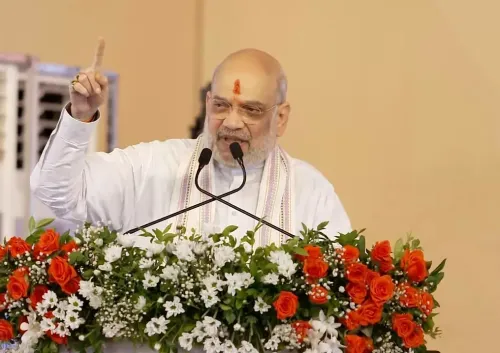
Home Minister Amit Shah declared 'India is not a Dharamshala' at the Intelligence Bureau's National Security Strategy Conference in New Delhi on 26 August .
Shah linked strong internal security to India's Viksit Bharat 2047 goal, calling for action on infiltration, terrorism, and narcotics trafficking.
Maharashtra BJP MLA Ram Kadam and Bihar BJP President Sanjay Saraogi both endorsed Shah's anti-infiltration position.
Tyagi said no foreign national should have the right to reside in India without citizenship.
Shah said infiltrators would be 'detected, deleted and deported' — a three-step enforcement framework the government has yet to detail publicly.
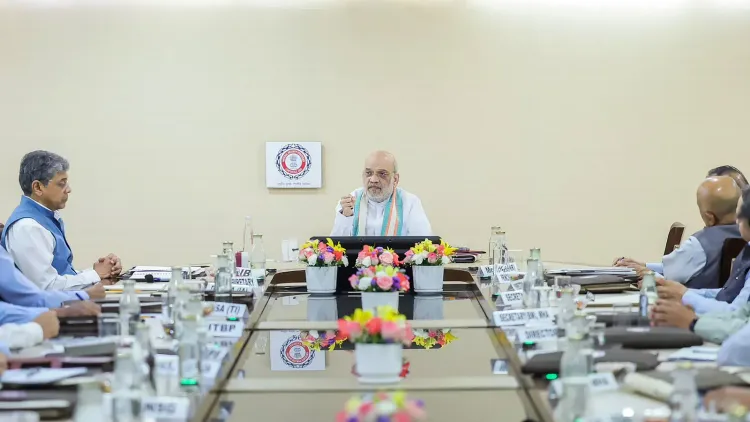
New Delhi, 26 August — National Democratic Alliance (NDA) leaders on Wednesday rallied behind Home Minister Amit Shah after he declared that India is 'not a dharamshala' for illegal infiltrators, calling his position essential to safeguarding the country's national security and long-term demographic stability.
What Shah Said
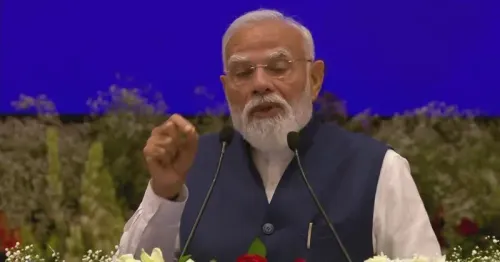
Addressing the valedictory session of the Intelligence Bureau's National Security Strategy Conference in New Delhi, Shah outlined an expansive internal security vision for the next two decades. He argued that India's goal of becoming a Viksit Bharat by 2047 would depend significantly on a strong internal security framework.
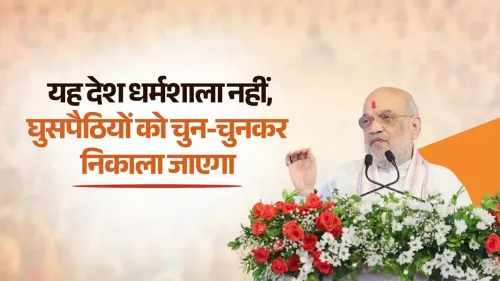
'This country is not a Dharamshala, and only the citizens of the country have the right to live in this country,' Shah said, warning that illegal infiltrators could pose serious challenges to national security, economic stability, and demographic balance. He called for proactive, coordinated action against infiltration, terrorism, narcotics trafficking, and other emerging threats.
NDA Leaders Back the Position
Maharashtra Bharatiya Janata Party (BJP) MLA Ram Kadam said Shah had spoken in the larger national interest and that infiltration could not be ignored. 'The Home Minister has spoken in the interest of the nation. This country is a family, and the people of this country have the primary right to it. If infiltrators come here, compromise the nation's security, usurp the rights of the local people, and fuel terrorist activities, what else can be expected?' Kadam said.
Kadam also alleged that during the Congress regime, illegal infiltrators were 'deliberately encouraged and used as a vote bank' — a claim Congress has not publicly responded to at the time of writing.
Bihar BJP President Sanjay Saraogi endorsed Shah's stance, saying the government and the party were firmly committed to preventing illegal infiltration. 'Union Minister Amit Shah has said that infiltrators will be detected, deleted and deported — identified, removed and sent out of the country,' Saraogi said.
Ally RLD Calls Statement Significant
Rashtriya Lok Dal (RLD) leader K.C. Tyagi described Shah's remarks as particularly significant given the circumstances in which they were made. 'No foreign national should have the right to reside in India without obtaining citizenship,' Tyagi said.
Broader Context
The statements come against the backdrop of the Centre's renewed focus on strengthening internal security and addressing threats linked to illegal infiltration, organised crime, and cross-border terrorism. Notably, the Intelligence Bureau conference itself signals an institutional push to align intelligence and law enforcement priorities ahead of a longer-term national security roadmap. This is not the first time the issue of illegal infiltration has dominated political discourse — it has been a recurring flashpoint, particularly in border states such as West Bengal, Assam, and Tripura. How the government translates Shah's rhetoric into verifiable enforcement outcomes will be closely watched in the months ahead.
Point of View
But the political consensus within the NDA should not be mistaken for a policy blueprint. India has debated illegal infiltration for decades — the National Register of Citizens exercise in Assam alone took years and generated enormous legal and humanitarian controversy. The real question is what enforcement mechanism follows this conference: Shah's 'detect, delete, deport' formulation is a slogan, not yet a statute. Without a transparent, legally robust framework, the gap between strong language and ground-level action risks becoming a credibility liability for the government, not just an opposition talking point.
NationPress
26 Aug 2026
Frequently Asked Questions
What did Home Minister Amit Shah say about illegal infiltrators?
Shah said 'This country is not a Dharamshala, and only the citizens of the country have the right to live in this country.' He made the remarks at the Intelligence Bureau's National Security Strategy Conference in New Delhi on 26 August, warning that infiltrators threaten national security, economic stability, and demographic balance.
Why did Shah make these remarks at the Intelligence Bureau conference?
The conference was focused on India's internal security strategy for the next two decades. Shah used the platform to outline a proactive security vision tied to the Viksit Bharat 2047 goal, arguing that strong internal security is a prerequisite for India's development ambitions.
Which NDA leaders supported Shah's position?
Maharashtra BJP MLA Ram Kadam, Bihar BJP President Sanjay Saraogi, and RLD leader K.C. Tyagi all publicly backed Shah's anti-infiltration stance, describing it as being in the national interest.
What is the 'detect, delete, deport' policy Shah referred to?
Bihar BJP President Sanjay Saraogi quoted Shah as saying infiltrators would be 'detected, deleted and deported' — meaning identified, removed from official records, and expelled from the country. The government has not yet publicly detailed the legal or administrative mechanism for implementing this.
How does this fit into the broader national security debate in India?
Illegal infiltration has been a long-running political and security issue, particularly in border states like West Bengal, Assam, and Tripura. The Centre has periodically intensified its focus on the issue; the Intelligence Bureau conference signals an institutional effort to align security agencies around a longer-term framework.