Is Khawaja Asif's Admission a Direct Acknowledgment of Pakistan's Policy Failure in Afghanistan?

Synopsis
Khawaja Asif's recent remarks about Pakistan's role in Afghanistan reveal a profound internal struggle regarding past policies. His candid acknowledgment of acting as a 'hired force' opens a dialogue on accountability and responsibility, highlighting a troubling shift in blame towards Kabul amid Pakistan's ongoing security challenges.
Key Takeaways
Khawaja Asif's admission is a significant acknowledgment of Pakistan's policy failures in Afghanistan.
The statement reveals Pakistan's internal struggles regarding its Afghan strategy.
There is a concerning trend of shifting blame towards Kabul for Islamabad's security issues.
Asif's remarks challenge long-standing narratives about Pakistan's ideological motivations.
The relationship between Pakistan and Afghanistan is increasingly strained.
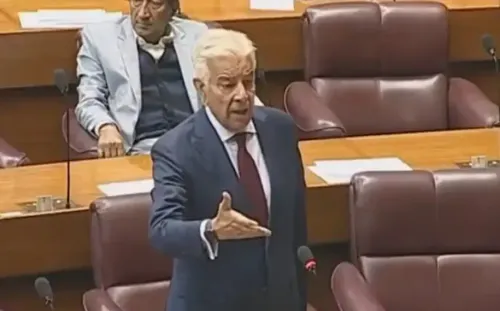
Kabul, Feb 13 (NationPress) Pakistan's Defence Minister Khawaja Asif recently indicated that his nation operated as a "hired force" in Afghanistan, marking one of the clearest admissions of a policy misstep. His comments unveil Pakistan's internal struggle regarding its Afghan strategy and suggest a renewed attempt to transfer blame for Islamabad's security challenges onto Kabul, according to a report.
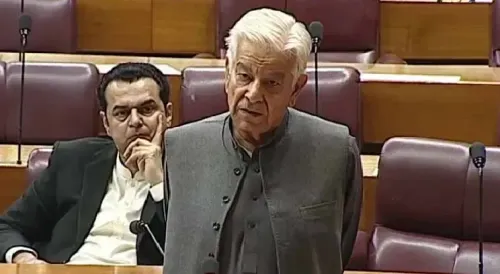
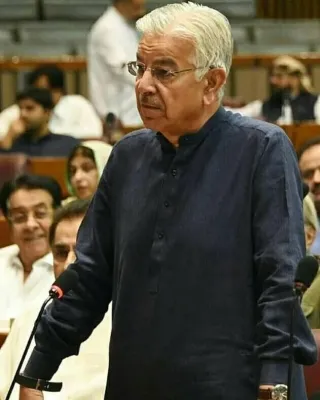
During a recent address in Pakistan's National Assembly following the Islamabad suicide bombing, Asif condemned terrorism and elaborated on Pakistan's prolonged involvement as a "hired force" in Afghanistan. His statements, paired with fresh allegations from Pakistan's Interior Ministry and analyses circulating on social media, illustrate that Pakistan is grappling with reconciling its historical interventions with current insecurities, as reported by the Afghan Diaspora Network citing Tolo News.
Asif asserted that Pakistan's engagement in the Afghan conflict spanned 22 to 23 years, primarily to further Western interests rather than for ideological reasons. He emphasized that Pakistan's choice to engage in these conflicts was motivated by the desire to gain support from the United States rather than any religious conviction.
"For decades, we were embroiled in Afghanistan as a hired force," he stated, further noting that Pakistan has yet to fully acknowledge its errors and is at risk of repeating them. His admission directly challenges the narrative maintained by Pakistan for years—that its involvement in Afghanistan was a religious duty and a defense of the Muslim world.
Former Afghan diplomat Aziz Mareq commented that Asif's remarks focus less on accountability and more on absolving Pakistani officials of responsibility, as reported by the Afghan Diaspora Network citing Tolo News. He pointed out that Pakistan's actions in Afghanistan were largely driven by economic motivations.
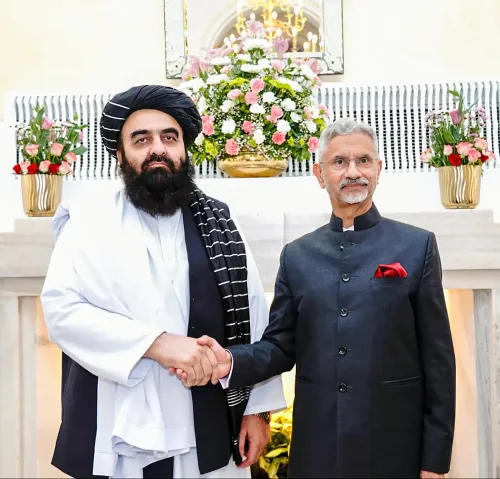
Asif's statements also highlighted Pakistan's discontent with the Taliban, noting that Afghanistan, which once heeded Pakistan's concerns, is now "reluctant" to provide assurances regarding counter-terrorism efforts. These comments reveal the declining relationship between Pakistan and Afghanistan, especially considering Pakistan's earlier hopes of securing its western border with the Taliban's resurgence.
In a report from the Afghan Diaspora Network, Kazim Jafari, a political science student at the University of Heidelberg in Germany, remarked, "Khawaja Asif’s acknowledgment that Pakistan acted as a "hired force" in Afghanistan is one of the most significant admissions of policy failure by a Pakistani minister. However, his address also exposed the contradictions within Pakistan’s Afghan strategy: an acknowledgment of past mistakes intertwined with an ongoing tendency to externalize blame.
"For Afghanistan, these statements are both enlightening and concerning. They reveal Pakistan’s internal deliberation on its Afghan policy, while also signaling a renewed effort to shift the blame for Pakistan’s security dilemmas onto Kabul. The competing narratives—Pakistan’s claims regarding Afghan-based militants and Afghan analysts’ reminders of Pakistan’s own militant networks—illustrate a region trapped in cycles of accusation and denial," he added.
Point of View
It is vital to recognize the complexity of Khawaja Asif's statements. While his admissions reflect a rare acknowledgment of past mistakes, they also raise questions about accountability. The ongoing narrative of shifting blame complicates the path towards resolution and mutual understanding between Pakistan and Afghanistan. We must strive for a balanced perspective that encourages constructive dialogue.
NationPress
10 Oct 2026
Frequently Asked Questions
What did Khawaja Asif say about Pakistan's role in Afghanistan?
Khawaja Asif stated that Pakistan acted as a 'hired force' in Afghanistan, emphasizing that the country's involvement was driven by Western interests rather than ideological reasons.
How does Asif's admission affect Pakistan's narrative?
His admission challenges the long-held narrative that Pakistan's involvement in Afghanistan was a religious duty and suggests a need for accountability regarding past policies.
What are the implications of Asif's remarks for Pakistan-Afghanistan relations?
Asif's remarks indicate a deteriorating relationship between Pakistan and Afghanistan, especially as Pakistan now seeks assurances on counter-terrorism from a reluctant Kabul.