AU, Africa CDC urge continental solidarity to halt Bundibugyo Ebola spread
Synopsis
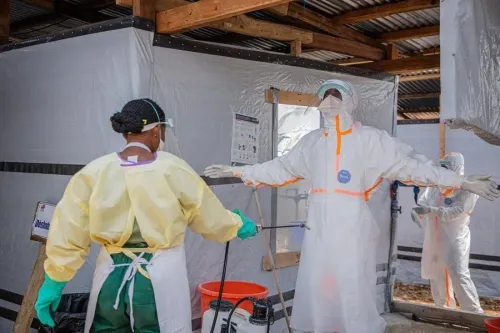
The Bundibugyo Ebola outbreak has crossed into West Africa after Nigeria confirmed a case, making it a five-country, three-region crisis. The AU and Africa CDC are now calling for an emergency ministerial meeting — one that will include finance and transport ministers — signalling that containment demands far more than a health-sector response alone.
Key Takeaways
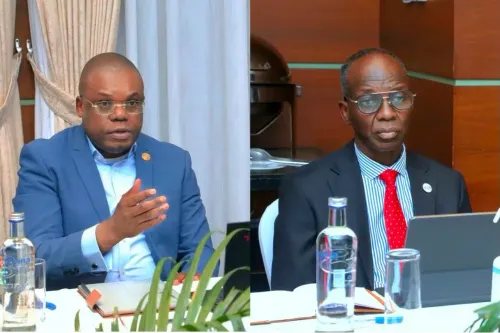
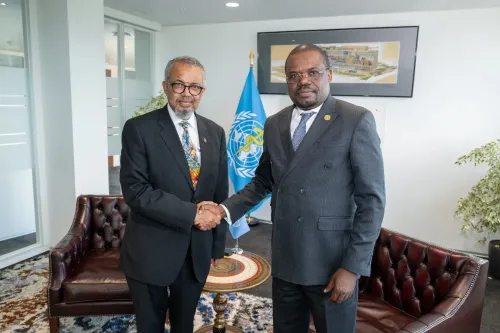
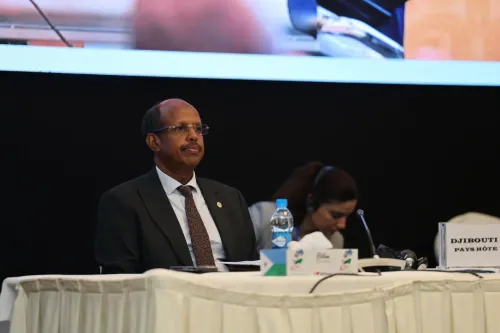
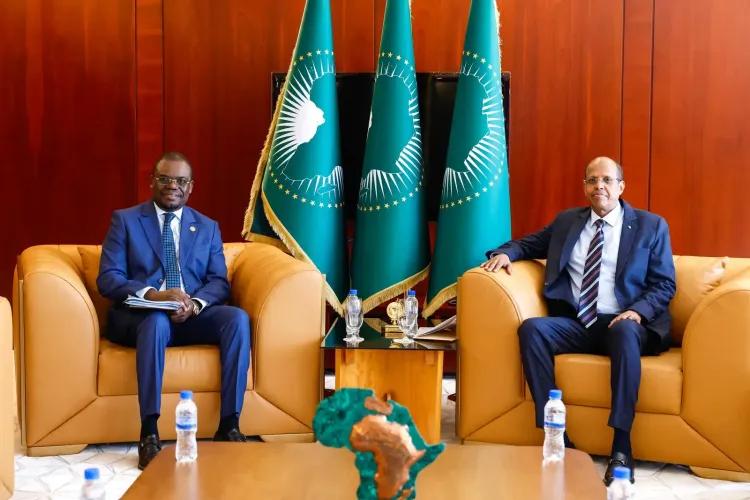
AU Commission Chairperson Mahmoud Ali Youssouf and Africa CDC Director-General Jean Kaseya issued a joint call for continental solidarity on Thursday, 22 October 2026 .
Nigeria became the fifth country to confirm a Bundibugyo Ebola case on Tuesday , extending the outbreak to West Africa .
The outbreak now spans three African regions : Central Africa (DRC), East Africa (Uganda, Kenya), and West Africa (Nigeria).
An online emergency ministerial meeting — including health, finance, and transport ministers — is scheduled for next Wednesday .
The Africa CDC declared a public health emergency of continental security on 18 May , one day after the WHO declared an international concern.
The African Union (AU) and the Africa Centres for Disease Control and Prevention (Africa CDC) have issued an urgent joint call for transparency, solidarity, and coordinated continental action to contain the rapidly spreading Bundibugyo Ebola outbreak, which has now reached five countries across three African regions. The call was made on Thursday, 22 October 2026, following high-level discussions between AU Commission Chairperson Mahmoud Ali Youssouf and Africa CDC Director-General Jean Kaseya.
The Joint Call for Action
Kaseya underscored that the evolving Ebola situation demands coordinated efforts across sectors, stronger preparedness, and timely mobilisation of resources where they are most urgently needed. The two leaders made 'a strong call for transparency, solidarity and coordinated continental action, with timely, collective decisions to contain the outbreak and protect our populations,' according to a statement from Kaseya.
'This is a moment for African solidarity, decisive leadership, and collective responsibility,' Kaseya said, stressing the vital importance of strengthening partnerships and advancing Africa's health security and sovereignty agenda.
How Far the Virus Has Spread
The outbreak has expanded significantly in recent days. On Tuesday, Nigeria became the fifth country to record a confirmed Bundibugyo Ebola case, marking the virus's arrival in West Africa. The disease had previously been recorded in the Democratic Republic of the Congo (DRC) in Central Africa, and in Uganda and Kenya in East Africa. The three-region spread is a significant escalation and a key driver of the AU's urgency.
Emergency Ministerial Meeting Called
Amid growing concerns over potential further spread, the Africa CDC is set to convene a high-level online emergency ministerial meeting on Wednesday next week. The crisis meeting is expected to bring together African ministers of health, alongside ministers of finance and transport, reflecting the multi-sectoral nature of an effective outbreak response. The inclusion of finance and transport ministers signals recognition that containment requires more than a health-sector response alone.
Background: How the Emergency Was Declared
The Africa CDC declared the Bundibugyo Ebola outbreak a public health emergency of continental security on 18 May, just one day after the World Health Organisation (WHO) declared it a public health emergency of international concern. The back-to-back declarations underlined the speed at which the situation was escalating. This is the latest chapter in a series of Ebola outbreaks that have periodically tested Africa's public health infrastructure, though the Bundibugyo strain — first identified in Uganda in 2007 — is considered less lethal than the more widely known Zaire strain.
What Comes Next
The outcome of next week's ministerial meeting will be closely watched for concrete commitments on resource mobilisation and cross-border surveillance protocols. With the virus now touching West, Central, and East Africa, the risk of further geographic expansion remains a pressing concern for global health authorities.
Point of View
Above all, a governance and logistics failure. Yet the gap between high-level solidarity calls and on-the-ground resource mobilisation has historically been wide on the continent. With the Bundibugyo strain now in three regions simultaneously, the test is not whether African leaders can convene — it is whether they can act fast enough and transparently enough to prevent a fifth-region spillover. The back-to-back AU and WHO emergency declarations since May suggest the international community sees real escalation risk; how quickly the ministerial meeting translates into binding commitments will be the metric that matters.
NationPress
23 Oct 2026
Frequently Asked Questions
What is the Bundibugyo Ebola outbreak and how serious is it?
The Bundibugyo Ebola outbreak is an ongoing viral haemorrhagic fever crisis in Africa, declared a public health emergency of continental security by the Africa CDC on 18 May 2026 and a public health emergency of international concern by the WHO the day before. It has now spread to five countries across three African regions.
Which countries have confirmed Bundibugyo Ebola cases?
As of 22 October 2026, confirmed cases have been reported in the Democratic Republic of the Congo (Central Africa), Uganda and Kenya (East Africa), and Nigeria (West Africa). Nigeria became the fifth affected country on Tuesday.
What action is the Africa CDC taking to contain the outbreak?
The Africa CDC is convening an online high-level emergency ministerial meeting on Wednesday next week, bringing together African health, finance, and transport ministers to advance a coordinated continental response and mobilise resources.
Why is Nigeria's confirmed case significant?
Nigeria's confirmed case marks the outbreak's first entry into West Africa, extending the virus across a third African region. This geographic spread significantly raises the risk of further transmission and has prompted the AU and Africa CDC to escalate their response.
How does the Bundibugyo Ebola strain compare to other Ebola strains?
The Bundibugyo strain, first identified in Uganda in 2007, is generally considered less lethal than the Zaire strain, which drove the large 2014–2016 West Africa outbreak. However, its spread across multiple regions simultaneously represents a serious public health challenge.