Australia returns 3 ancient Indian artefacts to High Commission in Canberra
Synopsis
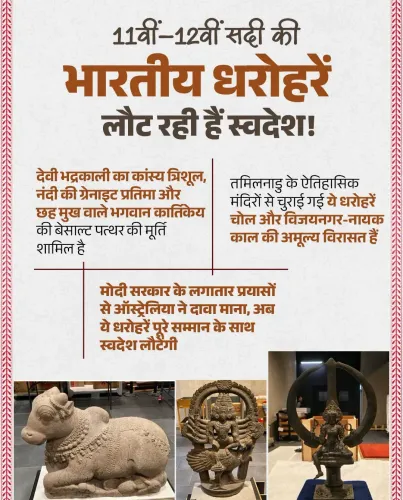
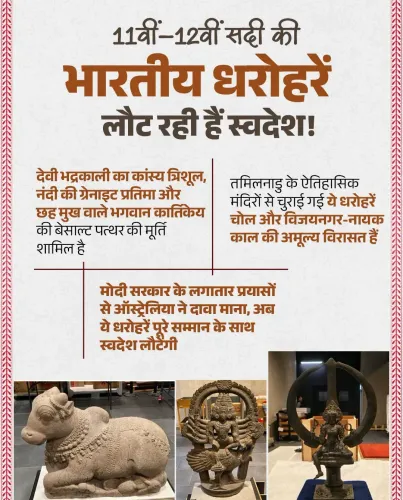
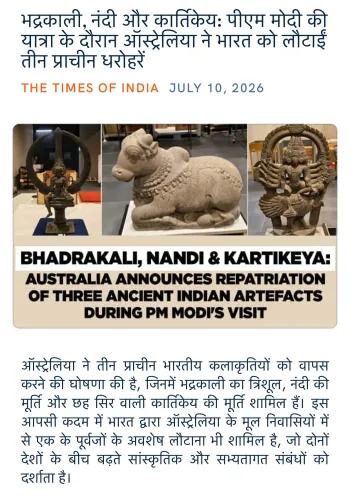
Three ancient Indian artefacts — a bronze Bhadrakali trident, a granite Nandi idol, and a basalt six-headed Karthikeya — have been formally handed to India's High Commission in Canberra by the National Gallery of Australia. The transfer fulfils a direct pledge made by PM Modi and PM Albanese at their July 2026 Leaders' Summit, and is part of a broader mutual cultural exchange that also sees India return an Australian First Nations ancestor.
Key Takeaways
The National Gallery of Australia handed over three ancient Indian artefacts to the Indian High Commission in Canberra on 11 November 2026 .
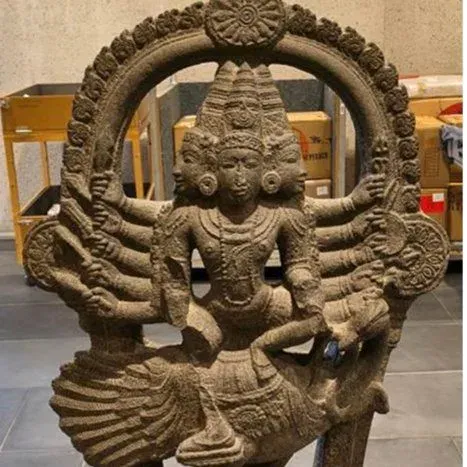
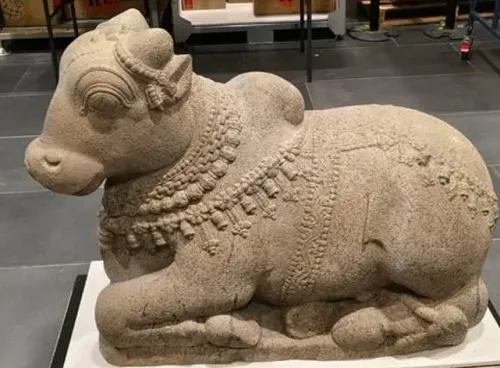
The artefacts are a bronze trident of Goddess Bhadrakali , a granite idol of Nandi , and a basalt sculpture of the six-headed Karthikeya .
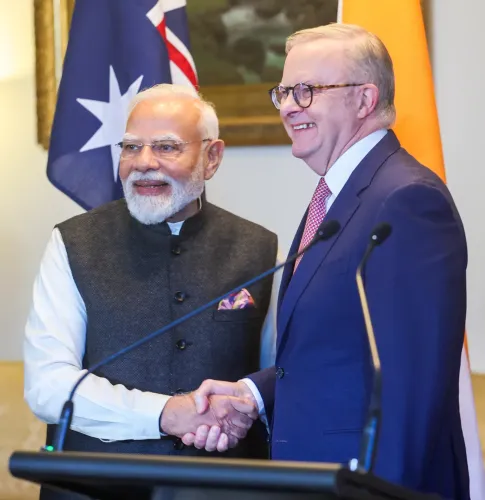
The transfer fulfils a commitment made by PM Narendra Modi and Australian PM Anthony Albanese at the 3rd Annual Leaders' Summit in July 2026 in Melbourne.
Australia also pledged to return items from the Art Gallery of New South Wales as part of the same agreement.
In a reciprocal gesture, India committed to repatriating the remains of an Australian First Nations ancestor held at the Government Museum of Chennai .
The artefacts are expected to arrive in India shortly; their final institutional placement has not yet been announced.
The National Gallery of Australia has formally handed over three ancient Indian artefacts to the Indian High Commission in Canberra on 11 November 2026, fulfilling a pledge made by Prime Minister Narendra Modi and Australian Prime Minister Anthony Albanese at the 3rd Annual Leaders' Summit in July 2026. The repatriation marks a significant milestone in India's sustained campaign to reclaim cultural heritage held in foreign collections.
The Three Artefacts Being Returned
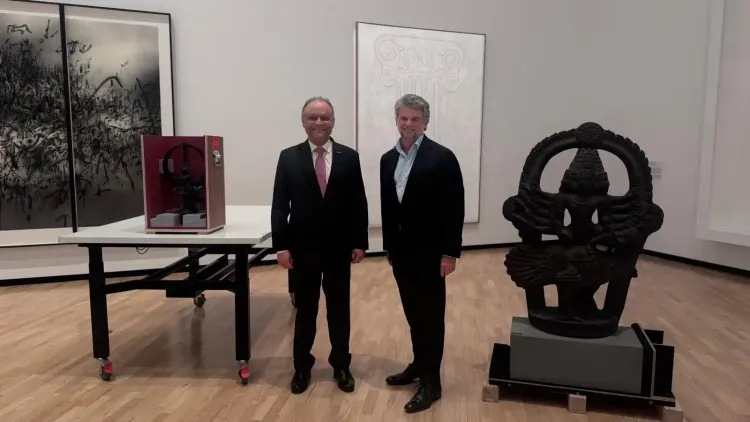
The objects being transferred are a bronze trident of Goddess Bhadrakali, a granite idol of Nandi, and a basalt sculpture of the six-headed Karthikeya — all previously displayed at the National Gallery of Australia. The Indian High Commission confirmed the formal takeover in a post on X, noting that the artefacts 'will soon be arriving in India, bringing our treasured heritage home.'
The mission also expressed appreciation for the cooperation extended by the National Gallery of Australia in effecting the transfer.
Commitment Rooted in the July 2026 Leaders' Summit
At the 3rd Annual Leaders' Summit held in Melbourne in July 2026, Prime Minister Albanese announced that items of cultural significance to India, then displayed in museums across Australia, would be returned. The commitment covered objects from both the National Gallery of Australia and the Art Gallery of New South Wales.
Addressing a joint press conference following delegation-level talks with Prime Minister Modi, Albanese stated: 'In the spirit of friendship, Australia will voluntarily return several items of cultural significance to India, previously held in the collections of the National Gallery of Australia and the Art Gallery of New South Wales.'
A Mutual Exchange: First Nations Ancestor Repatriation
The artefact handover is part of a broader cultural exchange between the two nations. India separately committed to repatriating the remains of an Australian First Nations ancestor held at the Government Museum of Chennai to the ancestor's traditional custodians — a gesture Albanese described as reflecting 'the strong cultural relationship and mutual respect between the two countries.'
Albanese commended Prime Minister Modi's decision, saying: 'The repatriation of First Nations ancestor promotes healing, justice, and reconciliation. I commend Prime Minister Modi for the decision to repatriate Australian First Nations ancestors to their Traditional Custodians.'
India's Broader Heritage Repatriation Drive
This transfer is the latest in a series of repatriations India has secured in recent years from countries including the United States, the United Kingdom, and Germany. New Delhi has consistently pressed foreign governments and institutions to return antiquities acquired — often under legally ambiguous circumstances — during the colonial era or through illicit art markets. The Australia handover, backed by a formal heads-of-government commitment, is notable for the speed and diplomatic clarity with which it was executed.
The three artefacts are expected to arrive in India shortly, with their eventual placement in a heritage institution yet to be officially announced.
Point of View
Handing back an Australian First Nations ancestor from Chennai. That symmetry gives both governments domestic cover and sets a template for future bilateral cultural exchanges. The broader question is whether this momentum extends to the Art Gallery of New South Wales items also promised at Melbourne — and whether India can replicate this model with countries where the diplomatic leverage is less favourable.
NationPress
11 Nov 2026
Frequently Asked Questions
Which artefacts did Australia return to India?
The National Gallery of Australia handed over three objects: a bronze trident of Goddess Bhadrakali, a granite idol of Nandi, and a basalt sculpture of the six-headed Karthikeya. All three were formally transferred to the Indian High Commission in Canberra on 11 November 2026.
Why did Australia return these artefacts to India?
The return fulfils a commitment made by Prime Ministers Narendra Modi and Anthony Albanese at the 3rd Annual Leaders' Summit in Melbourne in July 2026. At that summit, Australia pledged to voluntarily return items of cultural significance to India held in its national museum collections.
What is India giving back to Australia in return?
India committed to repatriating the remains of an Australian First Nations ancestor held at the Government Museum of Chennai to the ancestor's traditional custodians. PM Albanese described the gesture as promoting 'healing, justice, and reconciliation.'
Where will the returned artefacts be housed in India?
The Indian High Commission has confirmed the artefacts will arrive in India shortly, but the government has not yet officially announced which heritage institution will receive them.
How does this fit into India's broader repatriation efforts?
India has been pursuing the return of antiquities from foreign collections for several years, securing repatriations from the United States, the United Kingdom, Germany, and now Australia. The Canberra handover is notable for being anchored in a formal heads-of-government commitment, giving it unusual diplomatic weight and speed of execution.