Australia returns two Song Dynasty relics to China in Canberra ceremony
Synopsis
Two limestone statue heads from Northern Song Dynasty mausoleums in Henan — displaced for years — were formally handed back by Australia to China at the National Gallery of Australia in Canberra. The repatriation, achieved through UNESCO frameworks and a 2009 bilateral MoU, is a rare voluntary return by a Western institution and could set a precedent for future heritage repatriation talks.
Key Takeaways
Australia returned two Northern Song Dynasty (960–1127) cultural relics to China at the National Gallery of Australia in Canberra on 28 October 2026 .
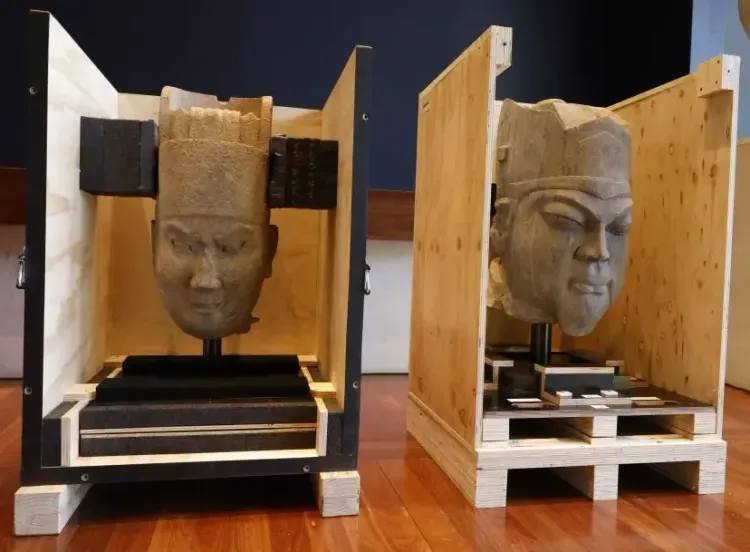
The artefacts are limestone statue heads from the Yongyu Mausoleum (military official) and Yongchang Mausoleum (civil official), both originating from Henan Province .
China's NCHA filed a formal repatriation request with supporting evidence to the NGA in 2025 .
The return was facilitated under the UNESCO 1970 Convention , a 2009 China-Australia bilateral MoU, and the NGA's 2021 provenance policy.
Both sides said the handover would strengthen Australia-China relations and broader people-to-people ties.
Australia on Wednesday, 28 October 2026 formally handed back two Northern Song Dynasty cultural relics to China at a ceremony held at the National Gallery of Australia (NGA) in Canberra, marking a significant milestone in bilateral cultural heritage cooperation between the two nations.
What Was Returned
The two artefacts are the head of a military official statue from the Yongyu Mausoleum and the head of a civil official statue from the Yongchang Mausoleum. Both pieces date to the Northern Song Dynasty (960–1127), are crafted from limestone, and originate from Henan Province in central China, according to the NGA.
Key Officials at the Ceremony
Tang Wei, Deputy Director of China's National Cultural Heritage Administration (NCHA), Liu Jinsong, Chinese Ambassador to Australia, and Nick Mitzevich, Director of the NGA, all attended the handover and delivered remarks. The event was described by both sides as a tangible expression of goodwill and shared responsibility toward protecting humanity's shared civilisational legacy.
How the Return Was Secured
In 2025, the NCHA, working alongside China's Ministry of Public Security and cultural and law enforcement authorities in Henan Province, formally submitted a memorandum and supporting evidence to the NGA requesting repatriation of the two relics. The successful handover was achieved through a framework built on three pillars: the UNESCO 1970 Convention on prohibiting illicit import, export, and transfer of cultural property; a bilateral memorandum of understanding on cultural heritage protection signed by China and Australia in 2009; and the NGA's own 2021 policy on due diligence and provenance research.
What Both Sides Said
The Chinese delegation said that returning displaced cultural relics to their countries of origin is 'an important step towards safeguarding cultural heritage, respecting the cultural rights and national sentiments of peoples around the world, and protecting the achievements of human civilisation.' Beijing characterised the handover as a meaningful outcome of China-Australia cooperation under international conventions and said it would 'further promote people-to-people exchanges and empathy between the two peoples.'
The Australian side said the return 'represented more than the physical transfer of cultural objects,' reflecting respect for cultural heritage, a sense of responsibility, and the value of international partnerships. Canberra added that the handover would help strengthen Australia-China relations and encourage continued cooperation in cultural heritage protection.
Broader Significance
The repatriation comes at a moment when China has been intensifying diplomatic efforts globally to recover artefacts displaced during periods of conflict and colonial-era acquisition. This return is a relatively rare instance of a Western nation voluntarily and proactively fulfilling a repatriation request under existing international legal frameworks, rather than through litigation or public pressure. Notably, the NGA's internal provenance policy — updated as recently as 2021 — played a direct role in facilitating the process, signalling a shift in how major cultural institutions are approaching ownership disputes. The development is likely to be cited in future repatriation discussions between China and other countries holding contested heritage objects.
Point of View
Or remains a bilateral one-off, will determine its legacy. China, meanwhile, has framed every repatriation in the language of civilisational sovereignty; each returned artefact becomes diplomatic currency as much as cultural heritage.
NationPress
28 Oct 2026
Frequently Asked Questions
What are the two cultural relics Australia returned to China?
The two relics are the limestone head of a military official statue from the Yongyu Mausoleum and the limestone head of a civil official statue from the Yongchang Mausoleum, both dating to China's Northern Song Dynasty (960–1127) and originating from Henan Province in central China.
Where and when did the handover ceremony take place?
The ceremony was held at the National Gallery of Australia (NGA) in Canberra on Wednesday, 28 October 2026. Senior officials from both China and Australia attended and delivered remarks.
How did China formally request the return of these relics?
In 2025, China's National Cultural Heritage Administration (NCHA), working with the Ministry of Public Security and Henan provincial authorities, submitted a formal memorandum and supporting evidence to the NGA requesting repatriation of the two artefacts.
What legal framework governed the repatriation?
The return was achieved under three frameworks: the UNESCO 1970 Convention on prohibiting illicit transfer of cultural property, a China-Australia bilateral memorandum of understanding on cultural heritage protection signed in 2009, and the NGA's own 2021 policy on due diligence and provenance research.
What does this return mean for Australia-China relations?
Both governments described the handover as a positive step in bilateral ties, with the Australian side saying it reflects respect for cultural heritage and international responsibility. China said the return would further promote people-to-people exchanges between the two nations.