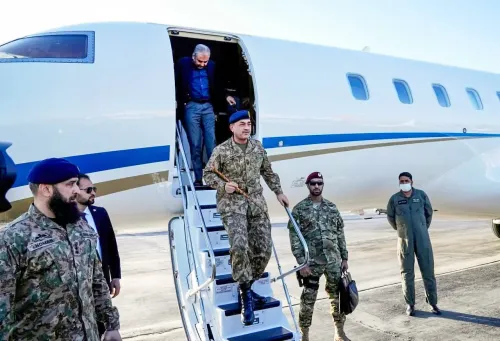
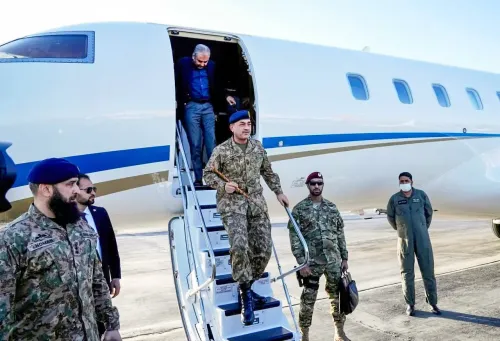
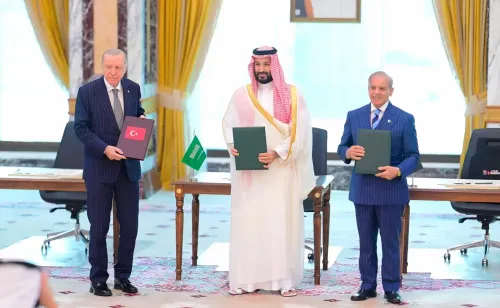
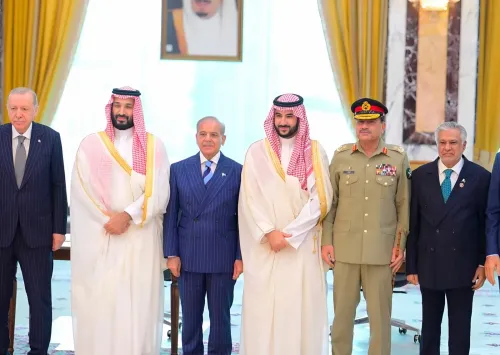
Badr Agreement: Pakistan-Turkey-Qatar-Indonesia pact threatens Western security, warns US think tank
Synopsis
A Washington think tank has sounded the alarm over the Badr Agreement — a new four-nation defence MoU signed in Doha by Pakistan, Turkey, Qatar, and Indonesia. The Middle East Forum warns it could erode US arms-transfer leverage, enable unauthorised technology transfer across NATO-linked systems, and potentially benefit Islamist actors — with the pact explicitly open to expansion.
Key Takeaways
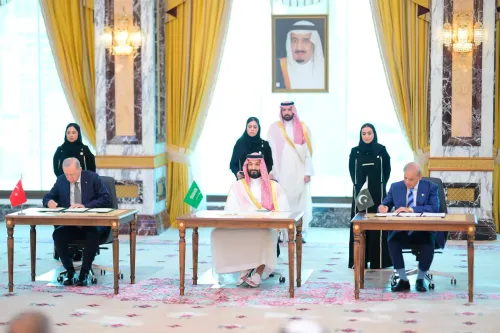
Pakistan , Turkey , Qatar , and Indonesia signed the Badr Agreement in Doha on 21 October 2026 , a defence MoU covering military production, R&D, training, and joint exercises.
The Middle East Forum warns the pact could weaken US leverage over arms transfers and sanctions, and create alternative channels for sensitive military technology.
All four signatories operate Western-origin military systems , raising fears of reverse engineering and unauthorised technology transfer under joint production programmes.
The report calls for Turkey , as a NATO ally, to provide formal assurances that allied technology will be protected in any joint Badr projects.
Concerns extend to Pakistan 's close military ties with China and the Islamist affiliations of Pakistan , Turkey , and Qatar .
The framework is open to expansion beyond its four founding members , prompting calls for Washington to act before it becomes further entrenched.
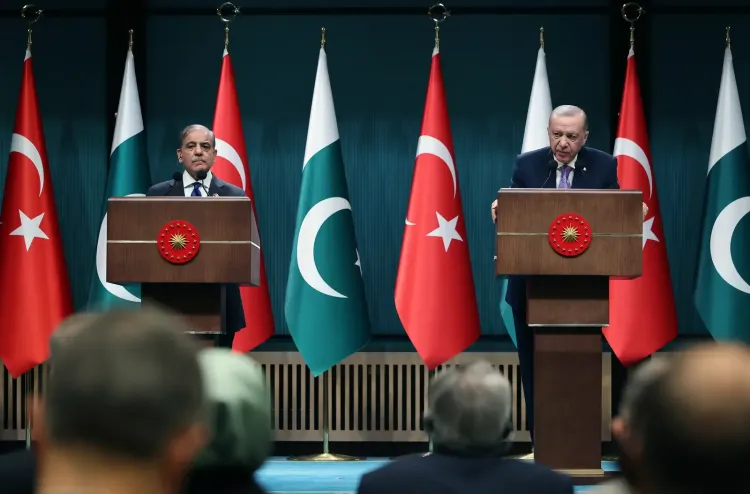
A new defence memorandum signed by Pakistan, Turkey, Qatar, and Indonesia in Doha on 21 October 2026 could pose a significant strategic challenge to Western security interests if military cooperation among the four nations deepens, according to a report by the Middle East Forum, a Washington-based think tank. The arrangement, formally called the Badr Agreement, is currently a Memorandum of Understanding rather than a binding treaty alliance, but analysts warn its trajectory warrants urgent attention from the United States and its allies.
What the Badr Agreement Entails
According to the Turkish Defence Ministry, the memorandum encompasses military production, research and development, technical training, and joint exercises. The framework assigns distinct roles to each member: Turkey contributes technology, Pakistan and Indonesia provide manufacturing capacity and skilled labour, and Qatar supplies capital. The think tank report described the pact's intent as 'plain: deeper Sunni cooperation,' noting that it could ultimately contribute to a broader Sunni security architecture.
Notably, the framework remains open to expansion beyond its four founding members — a feature the report flags as particularly significant for long-term Western strategic calculations.
Why Western Governments Are Concerned
The report identifies a layered set of security risks stemming from the agreement's industrial dimension. Each of the four signatories maintains established military procurement links with multiple Western suppliers. Turkey, a NATO ally, operates US-origin systems while simultaneously prioritising domestic defence production built on NATO standards. Pakistan relies heavily on American-origin military hardware; Qatar holds a diverse inventory of advanced Western platforms; and Indonesia also operates a substantial range of Western equipment.
The convergence of these systems under joint production and training programmes creates what the report describes as a critical vulnerability. 'Engineers can study each other's hardware. Reverse engineering becomes easier. So does unauthorised transfer. A component licensed to one member could reach another member, or a third party, without its original supplier's consent,' it stated.
Risks to US Arms Transfer Leverage and Sanctions Regimes
The Middle East Forum report warns that the Badr Agreement could 'challenge Western influence, weaken US leverage over arms transfers and sanctions, and create alternative channels for sensitive military technology to reach actors hostile to Western interests.' This comes amid existing concerns in Washington over Pakistan's close military cooperation with China, which the report explicitly highlights as a backdrop requiring a fresh review of end-use conditions attached to US-origin systems in Pakistan's arsenal.
The report recommends that Washington and its allies closely monitor all defence-technology transfers associated with the agreement, and that they seek formal assurances from Turkey — as a NATO member — that allied technology will be safeguarded in any joint projects undertaken under the Badr framework.
Islamist Ties and Broader Proliferation Risks
Beyond the technology dimension, the report raises concerns about the geopolitical affiliations of three of the four signatories. 'Pakistan, Turkey and Qatar each have ties to Islamist groups. Pakistan shelters Islamist militant factions. Turkey and Qatar both support the Muslim Brotherhood and host Hamas figures,' it noted. These associations, the report argues, amplify the risk that military cooperation under the Badr Agreement could indirectly benefit non-state actors hostile to Western interests.
What Washington Should Do Next
The report urges the United States to act before the arrangement becomes further entrenched, given the framework's openness to new members and its potential to evolve from an MoU into a more institutionalised security bloc. It calls for proactive diplomatic engagement with all four signatories, tighter end-use monitoring, and a reassessment of technology-transfer conditions — particularly for systems held by Pakistan — against the backdrop of its deepening military ties with China. How swiftly Washington responds may determine whether the Badr Agreement remains a limited memorandum or matures into a durable counter-Western security architecture.
Point of View
US-origin hardware in Pakistani and Qatari arsenals, and Qatari capital as the financial engine creates a genuinely novel proliferation risk — one that existing end-use monitoring frameworks were not designed to address at this scale. What makes it structurally different from prior multilateral defence MoUs is its explicit openness to new members: an MoU that can grow is an alliance in waiting. Washington's leverage is highest right now, before the institutional architecture solidifies — and the window to use it is narrowing.
NationPress
14 Nov 2026
Frequently Asked Questions
What is the Badr Agreement?
The Badr Agreement is a defence Memorandum of Understanding signed on 21 October 2026 in Doha by Pakistan, Turkey, Qatar, and Indonesia. It covers military production, research and development, technical training, and joint exercises, with the stated aim of deepening defence cooperation among its members.
Why does the Badr Agreement concern the United States and Western allies?
According to the Middle East Forum report, the agreement could weaken US leverage over arms transfers and sanctions, enable unauthorised transfer of Western military technology through joint production programmes, and create alternative procurement channels for actors hostile to Western interests. All four signatories operate significant inventories of Western-origin military equipment.
How does Pakistan's relationship with China factor into the concerns?
The report specifically highlights Pakistan's close military cooperation with China as a backdrop requiring a fresh review of end-use conditions on US-origin systems in Pakistan's arsenal. The worry is that technology shared within the Badr framework could, directly or indirectly, reach Chinese or other non-Western actors.
What does the report recommend Washington do?
The Middle East Forum recommends that the US and its allies closely monitor all defence-technology transfers linked to the Badr Agreement, seek formal assurances from Turkey — a NATO ally — that allied technology will be safeguarded in joint projects, and review end-use conditions on US-origin systems held by Pakistan. It urges action before the arrangement becomes further entrenched.
Could the Badr Agreement expand to include more countries?
Yes. The report explicitly notes that the framework remains open to expansion beyond its four founding members — Pakistan, Turkey, Qatar, and Indonesia — which the think tank identifies as a key reason for urgency in the Western policy response.