Qatar emerges as key mediator in US-Iran Geneva peace accord
Synopsis
While Pakistan claimed the spotlight, it was Qatar that quietly built the scaffolding for the US-Iran peace accord now headed to Geneva. From the 2020 Taliban deal to Hamas ceasefires and now a historic US-Iran MoU, Doha's back-channel diplomacy has made it the world's most consequential small-state broker — and Geneva is its latest proof of concept.
Key Takeaways
Qatar confirmed on 16 June it will attend the US-Iran memorandum of understanding signing in Geneva on Friday as observer and facilitator.
Qatari diplomats reportedly drafted confidence-building measures and logistical frameworks central to the accord, despite Pakistan projecting itself as the primary mediator.
Qatar 's diplomatic role traces back to the Doha Agreement of 2020 , when it brokered US-Taliban talks that led to the US withdrawal from Afghanistan .
Doha hosts the Al Udeid Air Base , described as the largest US military facility in the Middle East , anchoring its strategic partnership with Washington .
Qatar is also engaged in Hamas-Israel mediation and Pakistan-Afghanistan ceasefire efforts, underscoring a broader regional stabilisation role.
India and Qatar maintain close bilateral ties spanning over 50 years , with cooperation growing across multiple sectors.
Qatar has emerged as a pivotal behind-the-scenes architect of the US-Iran peace accord set to be formally signed in Geneva, Switzerland, even as Pakistan sought to project itself as the primary mediator in the landmark diplomatic process. Doha's diplomats are expected to attend the Geneva signing ceremony as observers and facilitators, underscoring the Gulf state's outsized role in one of the most consequential diplomatic breakthroughs in recent memory.
Qatar's Formal Role at Geneva
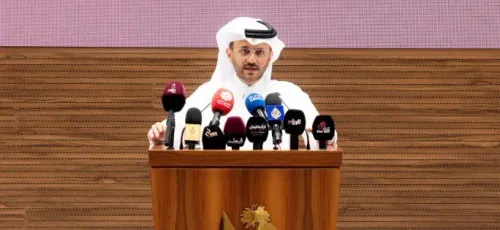
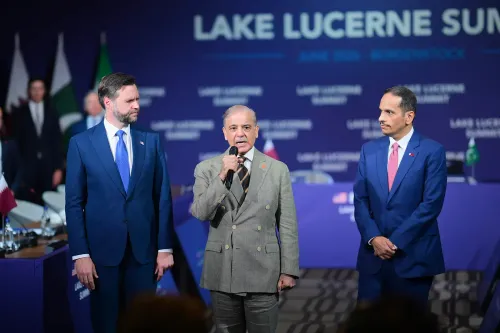
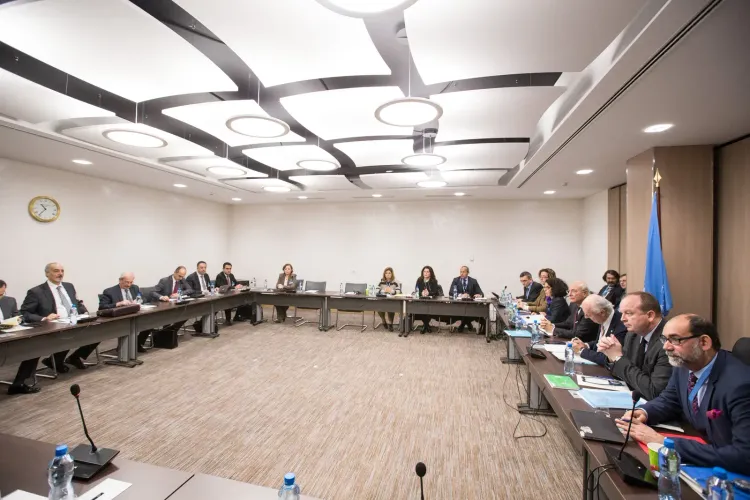
Qatar officially confirmed on Tuesday, 16 June that it 'will be represented at the signing ceremony of the memorandum of understanding between the United States of America and the Islamic Republic of Iran, scheduled to take place in Geneva, Switzerland, on Friday, alongside other regional stakeholders and the Pakistani mediators.' The confirmation placed Doha's contribution squarely on record, distinguishing its sustained facilitation role from Pakistan's more publicly claimed credit.
Qatari diplomats reportedly helped draft confidence-building measures and the logistical frameworks that cleared the path for the final accord, building on earlier backchannel communications they had facilitated between Tehran and Washington.
How Qatar Built Its Diplomatic Capital
The Gulf state's credibility as a neutral broker has been decades in the making. A defining moment came with the Doha Agreement of 2020, when the Trump administration negotiated directly with the Taliban under Qatari mediation — a deal that set the stage for the US withdrawal from Afghanistan. That accord established Doha as Washington's preferred regional interlocutor.
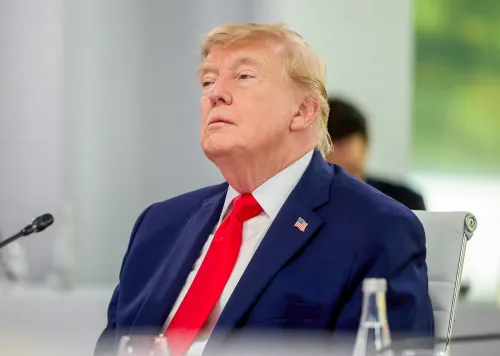
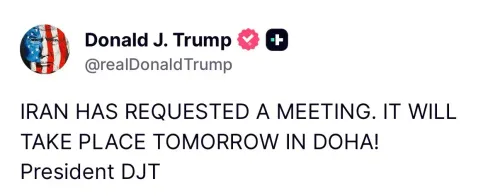
US President Donald Trump's relationship with Qatar has since evolved from early scepticism — he sided with Saudi Arabia during the 2017 Gulf blockade — to a deepened strategic partnership. The Al Udeid Air Base, described as the largest US military facility in the Middle East, anchors that defence relationship. Beyond military ties, Doha has served as a diplomatic hub for sensitive negotiations reportedly spanning prisoner exchanges with Iran and counterterrorism coordination.
A Wider Regional Stabilisation Role
Qatar is also said to have been a central player in mediation efforts between Hamas and Israel, particularly during recurring Gaza crises. Separately, Doha has directed mediation efforts toward brokering a ceasefire between Pakistan and Afghanistan, hosting informal meetings on border management, trade, and refugee issues. Progress on those fronts remains incremental, according to reports, but Qatar's engagement has helped prevent diplomatic breakdowns and fostered limited humanitarian cooperation.
Qatar's diplomatic model rests on a distinctive combination: sovereign wealth, declared neutrality, and a willingness to host negotiations that other capitals find too politically costly. That formula has allowed Doha to maintain open channels simultaneously with actors as varied as Hamas, the Taliban, Islamabad, Washington, and Tehran.
India-Qatar Ties and the Geneva Moment
India and Qatar share close bilateral relations anchored in historical commercial ties and people-to-people contacts spanning more than half a century. Bilateral cooperation has grown steadily across diverse sectors through engagements at the highest levels of both governments, giving New Delhi a stake in Doha's continued diplomatic relevance.
With the Geneva signing imminent, Qatar's diplomats are expected to help monitor implementation of the accord and ensure that humanitarian commitments are upheld — a role that positions Doha as a long-term guarantor, not merely a one-time convener, of the US-Iran framework.
Point of View
Hamas ceasefires, prisoner exchanges — reflects a deliberate foreign policy built on indispensability rather than ideology. What mainstream coverage underplays is that Qatar's leverage derives not from neutrality alone but from the US military footprint at Al Udeid, which gives Washington an incentive to keep Doha useful. The Geneva accord, if it holds, will further entrench Qatar as the region's preferred diplomatic clearing house — a role that small states rarely sustain but that Doha has systematically cultivated over two decades.
NationPress
19 Sept 2026
Frequently Asked Questions
What is Qatar's role in the US-Iran Geneva peace accord?
Qatar served as a behind-the-scenes mediator, facilitating backchannel communications between the US and Iran and reportedly helping draft confidence-building measures that paved the way for the accord. Doha confirmed on 16 June that its diplomats will attend the Geneva signing ceremony as observers and facilitators.
When and where is the US-Iran peace accord being signed?
The memorandum of understanding between the United States and Iran is scheduled to be signed in Geneva, Switzerland, on Friday, 20 June. Qatar, Pakistan, and other regional stakeholders are expected to be present.
How did Qatar build its reputation as a diplomatic broker?
Qatar's credibility was cemented by the Doha Agreement of 2020, in which it mediated US-Taliban negotiations that set the stage for the American withdrawal from Afghanistan. It has since facilitated Hamas-Israel ceasefire talks and Pakistan-Afghanistan dialogue, establishing Doha as a trusted neutral venue for high-stakes negotiations.
Why did Pakistan's claim to sole mediator status face scrutiny?
Qatar's official confirmation of its own facilitation role — including drafting confidence-building measures and logistical frameworks — indicated that Pakistan was not the sole driver of the accord. Qatar's deeper backchannel history with both Washington and Tehran gave Doha a structural role that predated Pakistan's more publicly stated involvement.
What is the significance of Qatar's relationship with the United States?
The US-Qatar relationship has grown into a strategic partnership underpinned by the Al Udeid Air Base, described as the largest American military facility in the Middle East. President Donald Trump's administration has also used Doha as a hub for sensitive diplomacy, reportedly including prisoner exchanges with Iran and counterterrorism coordination.