Baloch, Pashtun activists protest outside UN over Pakistan killings, disappearances
Synopsis
As Pakistan's PM Shehbaz Sharif addressed the UN General Assembly, Baloch and Pashtun activists protested outside — simultaneously staging demonstrations in New York and Geneva. The coordinated push targets the UN Human Rights Council and signals a scaled-up international advocacy strategy over alleged extrajudicial killings and forced disappearances in Balochistan.
Key Takeaways
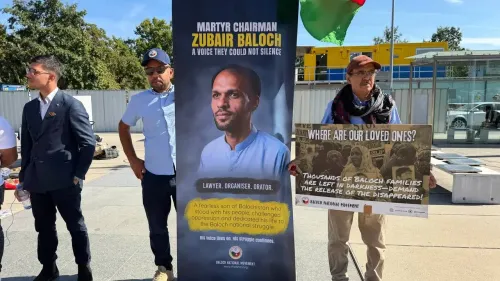
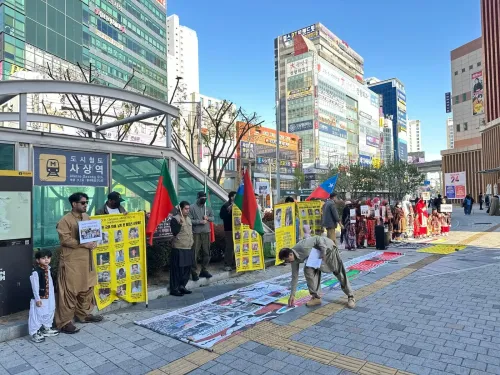
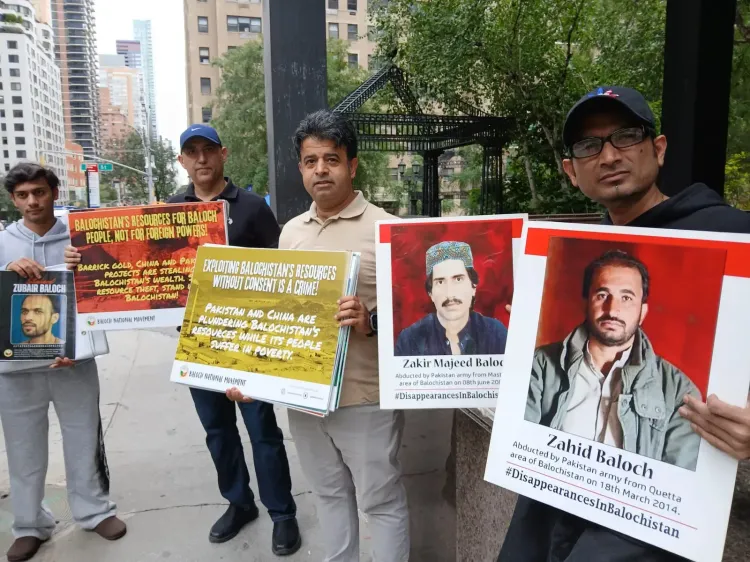
Baloch National Movement (BNM) and Pashtun Tahafuz Movement (PTM) held separate protests outside the UN complex in New York on 26 September 2026 .
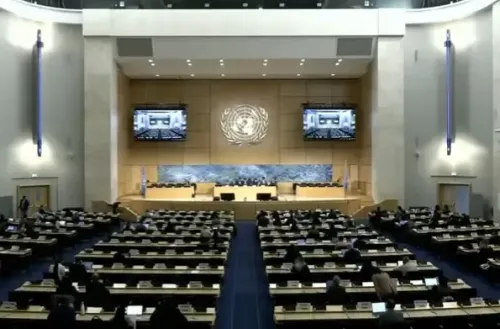
The demonstrations coincided with PM Shehbaz Sharif's address to the UN General Assembly .
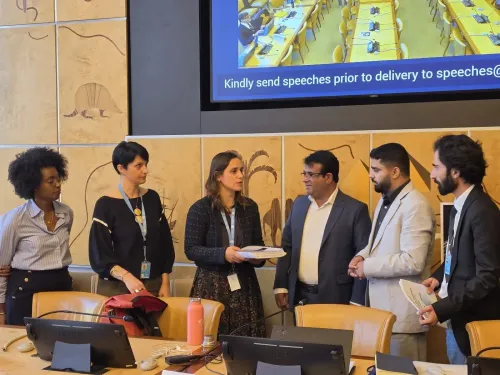
The BNM simultaneously held a three-day conference and rally in Geneva during the 63rd Session of the UN Human Rights Council .
PTM called for an independent investigation into Pakistan's alleged support for 'armed groups', past and present, and condemned Pakistani strikes into Pashtun areas inside Afghanistan .
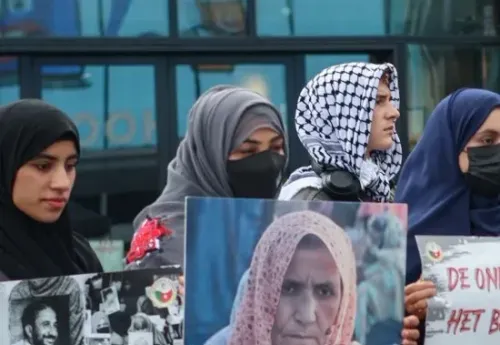
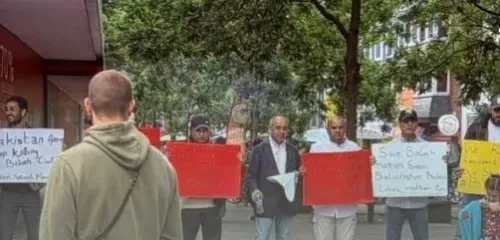
Protesters raised placards citing collective punishment, enforced disappearances, and extrajudicial killings in Balochistan .
Baloch and Pashtun activists staged separate protests outside the United Nations complex in New York on 26 September 2026, demanding international action over alleged killings, forced disappearances, and the suppression of their communities — even as Pakistan's Prime Minister Shehbaz Sharif addressed the UN General Assembly inside. The demonstrations brought together supporters of two distinct but parallel movements, both challenging Islamabad's conduct in frontier regions.
Two Movements, One Message
The Baloch National Movement (BNM) and the Pashtun Tahafuz Movement (PTM) held simultaneous protests, each pressing separate but overlapping grievances against the Pakistani state. Demonstrators carried placards that read: 'They were civilians, not targets; UN act now to end collective punishment in Balochistan', 'End Enforced Disappearance', and 'Balochistan was occupied by Pakistan.'
The BNM protest in New York coincided with the movement's three-day conference in Geneva, focused on the 'human rights situation in Balochistan, enforced disappearances, extrajudicial killings, collective punishment, restrictions on political freedoms.' A rally and a photo exhibition were also held at Geneva's Broken Chair monument during the 63rd Session of the UN Human Rights Council, drawing attention to what organisers described as escalating abuses by Pakistani authorities.
PTM's Broader Concerns
The PTM, which represents Pashtuns living across the Durand Line separating Afghanistan and Pakistan, read a resolution at its protest expressing it was 'deeply concerned by credible allegations of extra-judicial killings, enforced disappearances' and the presence of unexploded ordnance scattered in Pashtun areas. The movement also condemned reported Pakistani military strikes — by land and by air — into Pashtun-inhabited regions inside Afghanistan.
Notably, the PTM called for an independent international investigation into Pakistan's past and present support for 'armed groups', referencing Islamabad's historical ties with the Taliban. The movement additionally condemned the Taliban regime's denial of education and the right to work for women, asserting its own independence from any armed faction.
The Timing: A Direct Rebuttal
The choice to protest during Sharif's General Assembly address was deliberate. Activists sought to counter Pakistan's diplomatic positioning at the world's most visible multilateral forum, drawing the attention of member-state delegations and international media to accusations that rarely surface in official UN sessions. This is not the first time Baloch and Pashtun groups have organised protests on the sidelines of UN General Assembly week — the tactic has become a recurring feature of their international advocacy.
What Happens Next
With the BNM's Geneva conference continuing alongside the UN Human Rights Council session, the movements are attempting to build a formal evidentiary record for potential review mechanisms. Whether member states or UN special rapporteurs take up these concerns formally remains to be seen, but the coordinated protests across New York and Geneva on the same day represent a deliberately scaled-up advocacy push.
Point of View
Its dissenters now show up at the same address. What is missing from most coverage is the PTM dimension — the movement's condemnation of both Pakistani military strikes into Afghanistan and Taliban restrictions on women complicates any simple framing of the conflict as a bilateral Pakistan-India narrative. The international community's response, however, remains largely ceremonial; no formal UN mechanism has yet been triggered by these recurring protests, which raises the question of whether visibility without institutional follow-through can produce accountability.
NationPress
26 Sept 2026
Frequently Asked Questions
Why did Baloch and Pashtun activists protest outside the UN on 26 September 2026?
Activists from the Baloch National Movement and Pashtun Tahafuz Movement protested outside the UN complex in New York to draw international attention to alleged extrajudicial killings, forced disappearances, and collective punishment in Balochistan and Pashtun areas. The protests were timed to coincide with Pakistani PM Shehbaz Sharif's address to the UN General Assembly.
What is the Baloch National Movement (BNM)?
The BNM is an organisation advocating for the rights of the Baloch people in Balochistan, a province of Pakistan. It has been raising concerns at international forums — including the UN Human Rights Council — about enforced disappearances, extrajudicial killings, and political repression by Pakistani authorities.
What did the Pashtun Tahafuz Movement demand at its protest?
The PTM demanded an end to alleged extrajudicial killings and enforced disappearances of Pashtuns, called for the removal of unexploded ordnance from Pashtun areas, and urged an independent investigation into Pakistan's alleged past and present support for armed groups. It also condemned Pakistani military strikes into Pashtun-inhabited areas inside Afghanistan.
What happened in Geneva alongside the New York protest?
The BNM held a three-day conference in Geneva focused on the human rights situation in Balochistan, alongside a rally and photo exhibition at the Broken Chair monument. These events coincided with the 63rd Session of the UN Human Rights Council.
Has Pakistan responded to these protest allegations?
No formal Pakistani government response to the specific protest allegations is available from current reports. Pakistan has historically denied systematic human rights abuses in Balochistan, attributing security operations to counter-terrorism efforts.