Bangladesh Betar dress code row: activists demand accountability after directive withdrawn
Synopsis
Bangladesh's state broadcaster issued a dress code for female presenters — and then withdrew it. But activists say that's not enough. With a new study showing women journalists face harassment at nearly six times the rate of men, the Bangladesh Betar row has become a flashpoint for a much deeper institutional failure.
Key Takeaways
Bangladesh Betar issued a 4 May directive prescribing dress codes for female news presenters, including approved attire and restrictions on styling choices.
The directive was withdrawn following public backlash, but civil society signatories argued that cancellation alone was insufficient without accountability.
An open letter was addressed to Information and Broadcasting Minister Zahir Uddin Swapan demanding institutional reform and non-discriminatory workplace policies.
A multi-country study by WAN-IFRA Women in News , City, St George's, University of London , and BBC Media Action found female journalists in Bangladesh are nearly 6 times more likely than male colleagues to face sexual harassment.
52 per cent of harassed female media professionals in Bangladesh did not report incidents; employers took no action in 43 per cent of reported cases.
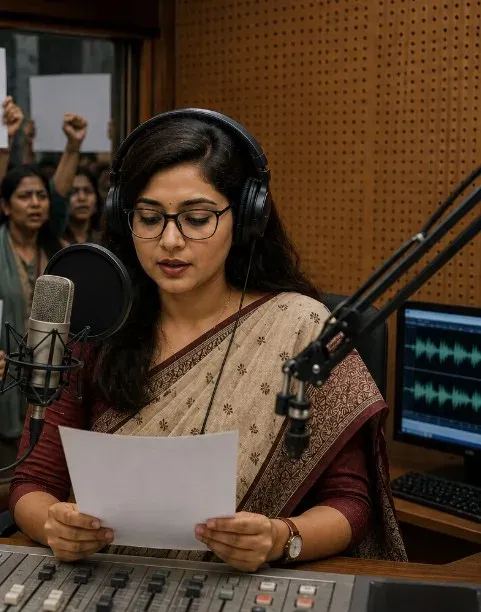
A directive by state-owned broadcaster Bangladesh Betar prescribing a dress code for female news presenters has drawn sharp condemnation from women's rights activists, academics, artists, and civil society members across Bangladesh, even after the order was withdrawn. The controversy centres on a 4 May circular that instructed presenters to wear sarees or salwar-kameez with dupattas, discouraged 'large bindis', and prohibited draping the dupatta on one side.
What the Directive Said
The guidelines, issued by Bangladesh Betar, specified approved attire for female presenters while flagging certain styling choices as unacceptable. Critics described the circular as culturally insensitive and argued it reduced professional women to their appearance rather than their journalistic competence. The directive was eventually withdrawn, but its very existence has triggered a broader reckoning.
Civil Society's Open Letter
In an open letter addressed to Bangladesh's Information and Broadcasting Minister Zahir Uddin Swapan, signatories stated that simply cancelling the directive was insufficient. They argued that the 'regressive mindset' behind such instructions required critical assessment and institutional accountability. The letter called for formal action against those responsible for drafting and issuing the circular, and urged authorities to replace such policies with inclusive, respectful, and non-discriminatory workplace guidelines.
The signatories contended that the directive violated women's dignity and ran contrary to constitutional guarantees of equality, individual freedom, and cultural diversity. They further warned that such restrictions entrench controlling attitudes toward women in professional settings and perpetuate harmful social norms.
A Broader Crisis for Women in Bangladesh Media
The controversy over the dress code directive arrives against a deeply troubling backdrop. A recent international study found that female journalists in Bangladesh are nearly six times more likely than their male counterparts to experience sexual harassment in the workplace — with the vast majority of incidents going unreported due to fears of career repercussions.
The survey, which covered 339 media professionals in Bangladesh, found that 60 per cent of female respondents reported experiencing verbal sexual harassment, compared to just 9 per cent of male respondents. The findings form part of a multi-country study conducted by WAN-IFRA Women in News, City, St George's, University of London, and BBC Media Action, which surveyed more than 2,800 media professionals across 21 countries.
Underreporting and Institutional Inaction
According to the report, 52 per cent of female media professionals who experienced verbal harassment in Bangladesh did not report the abuse, citing concern over career consequences. Among those who did report, employers took no action in 43 per cent of cases — a figure that underscores systemic institutional failure.
Lindsey Blumell of City, St George's, University of London, said: 'Sexual harassment has a deeply negative impact on those who experience it and the general working atmosphere in newsrooms. Research shows that no matter the type of harassment, experiencing it decreases job satisfaction and increases the risk of leaving the industry.'
What Happens Next
Activists are pressing for structural reform rather than symbolic gestures. The demand for accountability — not merely the rollback of a single circular — signals a growing insistence that Bangladesh's media institutions confront entrenched gender discrimination head-on. Whether the government responds with policy reform or allows the moment to pass will be closely watched by press freedom and gender rights organisations.
Point of View
But the speed of its drafting and issuance reveals how normalised institutional policing of women's bodies remains in South Asian media. The civil society letter is right to insist that accountability — not just rollback — is the minimum standard. More troubling is the timing: the directive lands in a media environment where, according to fresh multi-country data, over half of harassed female journalists in Bangladesh stay silent out of career fear. When the broadcaster itself signals that women's appearance is a legitimate regulatory concern, it reinforces precisely the culture that keeps harassment underreported. The government's response to the accountability demand will be the real test.
NationPress
15 Sept 2026
Frequently Asked Questions
What was the Bangladesh Betar dress code directive?
Bangladesh Betar, the state-owned radio broadcaster, issued a directive on 4 May instructing female news presenters to wear sarees or salwar-kameez with dupattas, discouraging 'large bindis' and prohibiting certain dupatta draping styles. The directive was subsequently withdrawn following public backlash.
Why are activists still demanding action even after the directive was withdrawn?
Civil society signatories, in an open letter to Information and Broadcasting Minister Zahir Uddin Swapan, argued that merely cancelling the directive was not enough. They called for accountability for those who drafted and issued the circular, and for systemic reform toward non-discriminatory workplace policies.
What does the international study say about women journalists in Bangladesh?
A multi-country study by WAN-IFRA Women in News, City, St George's, University of London, and BBC Media Action found that female journalists in Bangladesh are nearly six times more likely than male journalists to face sexual harassment. The survey covered 339 media professionals in Bangladesh and over 2,800 across 21 countries.
How much of the harassment goes unreported in Bangladesh newsrooms?
According to the study, 52 per cent of female media professionals who experienced verbal harassment in Bangladesh did not report it, primarily due to fears of career repercussions. In cases that were reported, employers took no action 43 per cent of the time.
Who is affected by the Bangladesh Betar controversy?
The directive directly affected female news presenters at Bangladesh Betar, but the wider controversy implicates all women working in Bangladesh's media industry, where structural gender discrimination and harassment remain pervasive, according to recent research.