Bangladesh Jamaat-e-Islami yet to apologise for opposing 1971 Liberation War
Synopsis
A posthumous memoir by former Jamaat-e-Islami leader Abdur Razzaq reveals that multiple formal apology drafts for the party's opposition to Bangladesh's 1971 Liberation War were prepared and suppressed over more than two decades. One senior party figure explicitly said an apology would displease Pakistan — a candid admission that the party's external loyalties weighed heavier than national reconciliation.
Key Takeaways
Jamaat-e-Islami has never issued a formal apology for opposing Bangladesh's 1971 Liberation War against Pakistan.
Former Assistant Secretary General Abdur Razzaq , who died in May 2025 , documents the repeated failures in his posthumous memoir 'Bangladesh Jamaat-e-Islami: Its History and Politics.' The apology question was first raised internally in 1994 and resurfaced multiple times through 2016 , each time blocked by influential party figures.
A draft apology reached Jamaat's Working Committee in October 2005 but was shelved without action.
One former Jamaat lawmaker cited fear that an apology would 'displease Pakistan' as a reason to oppose it.
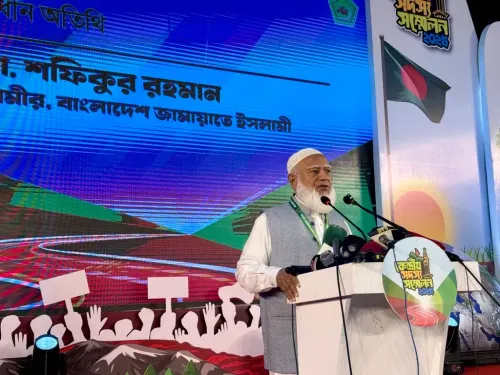
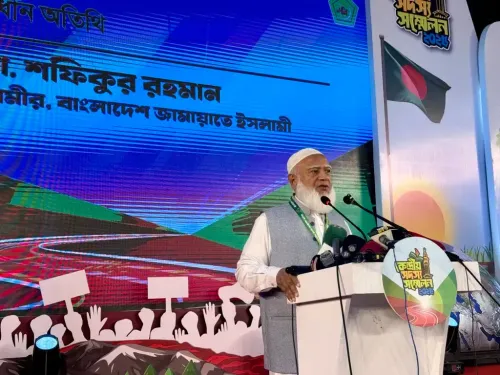
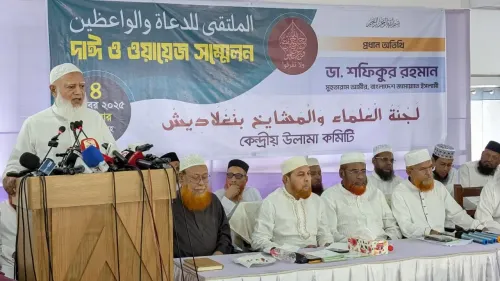
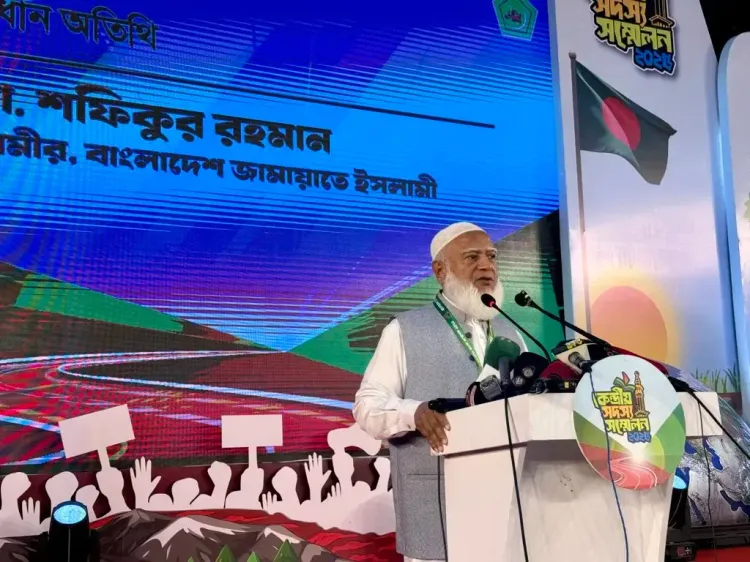
Current Jamaat chief Shafiqur Rahman's credibility on the issue remains compromised, Razzaq argued, without a clear position on the party's 1971 role.
Bangladesh's radical Islamist party Jamaat-e-Islami has never issued a formal apology for opposing the country's independence from Pakistan in 1971 — and a posthumous memoir by a former senior party figure reveals why every internal attempt to do so collapsed. The memoir, authored by former Jamaat leader Abdur Razzaq, who died in May 2025, lays bare decades of internal resistance, political calculation, and deliberate inaction at the highest levels of the party.
The Memoir That Breaks the Silence
Razzaq, who served as Jamaat's Assistant Secretary General from 2003 to 2019 before resigning from the party, details the internal rifts in his book 'Bangladesh Jamaat-e-Islami: Its History and Politics,' set to be formally launched on 19 September 2026. According to The Daily Star, Bangladesh's leading English daily, the memoir reconstructs how the apology question surfaced repeatedly over more than two decades — complete with arguments for and against it, and drafts prepared at different stages — yet never moved forward.
Key Moments of Failure: 1994 to 2016
The matter was reportedly first raised in 1994, ahead of a public speech by then Jamaat chief Ghulam Azam — a central figure in opposing the 1971 Bangladesh Liberation War — following the Supreme Court's restoration of his Bangladeshi citizenship. Further attempts followed between 2001 and 2016. Each time, according to Razzaq, powerful internal figures intervened and blocked any forward movement.
A draft apology was eventually placed before Jamaat's Working Committee in October 2005, four years after its initial preparation. Yet even that effort was derailed. Razzaq recalled being particularly unsettled by remarks from two senior party members at the time.
One former Jamaat lawmaker was quoted as saying: 'If we apologise, Pakistan will become displeased with us.' Another, the former head of Jamaat's Education wing, argued: 'In Bangladeshi politics, this is not an issue at all. Twice a year, in March (the month of independence) and December (the month of victory), this issue comes up for public discussion only to die out soon after. To discuss this issue in the Working Committee would be a waste of the committee's (valuable) time.'
Razzaq's account is unsparing: 'Each time an attempt was made, certain powerful figures within the Jamaat establishment intervened and held the party back. In the end, the new Ameer did not address the issue. As in the past, the matter was once again relegated to cold storage.'
The 2024 Uprising and Jamaat's Continuing Ambiguity
Razzaq also reflected on the July–August 2024 uprising as a turning point in Bangladesh's political landscape. He noted that current Jamaat chief Shafiqur Rahman had navigated recent media interviews with composure and confidence. However, Razzaq argued that without a clear and unambiguous position from the present leadership on the actions of its predecessors more than five decades ago, those responses would remain inherently unconvincing to critics and the public alike.
'Jamaat's role in 1971 remains its Achilles heel,' Razzaq wrote — a line that distils the party's fundamental credibility problem in a country where the Liberation War is the founding national narrative.
Why This Matters Now
The memoir's release comes at a politically charged moment. Jamaat has historically positioned itself as a mainstream political force while carrying the weight of allegations of collaboration with Pakistani forces during the 1971 war, in which an estimated three million people were killed. Several top Jamaat leaders were convicted and executed by Bangladesh's International Crimes Tribunal between 2013 and 2016 for war crimes — convictions the party contested. The refusal to issue an apology has long been cited by critics as evidence that the party has not genuinely reckoned with that period. Razzaq's insider account adds documentary weight to that critique, revealing that the failure was not one of omission but of active suppression.
Point of View
Not transformational. With Jamaat now politically resurgent after the 2024 uprising, the memoir's timing is pointed — and its implications for Bangladesh's fragile post-uprising political settlement deserve far more scrutiny than a book launch headline.
NationPress
18 Sept 2026
Frequently Asked Questions
Why has Jamaat-e-Islami not apologised for its role in the 1971 Bangladesh Liberation War?
According to the posthumous memoir of former Jamaat leader Abdur Razzaq, multiple internal attempts to draft and issue a formal apology were blocked by powerful figures within the party over more than two decades. One senior member cited fear of displeasing Pakistan, while another dismissed the issue as politically irrelevant.
Who is Abdur Razzaq and what is his memoir about?
Abdur Razzaq served as Jamaat-e-Islami's Assistant Secretary General from 2003 to 2019 before quitting the party. His posthumous memoir, 'Bangladesh Jamaat-e-Islami: Its History and Politics,' published after his death in May 2025, details the party's internal debates over whether to apologise for opposing Bangladesh's 1971 independence.
When was the apology issue first raised inside Jamaat?
The matter was first raised in 1994, ahead of a public speech by then Jamaat chief Ghulam Azam, following the Supreme Court's restoration of his Bangladeshi citizenship. A formal draft apology later reached the party's Working Committee in October 2005 but was shelved without action.
What did Jamaat members say against issuing an apology?
According to Razzaq's memoir, one former Jamaat lawmaker argued that an apology would displease Pakistan. Another senior member, the former head of Jamaat's Education wing, said discussing the issue in the Working Committee would be a waste of time, as public attention on the matter faded quickly each year.
What is the significance of this memoir now?
The memoir's release comes as Jamaat is politically resurgent following Bangladesh's July–August 2024 uprising. It provides documented insider evidence that the party's failure to address its 1971 legacy was a result of active internal suppression, not oversight — directly challenging the party's claim to be a reformed, mainstream political force.