Bangladesh to compile verified freedom fighter list, confronting 1971 political legacy
Synopsis
Bangladesh PM Tarique Rahman's pledge to compile a verified list of 1971 martyrs is more than an administrative move — it is a direct challenge to decades of contested political narratives. With Jamaat-e-Islami's wartime role back in focus and BNP leaders publicly calling out historical revisionism, the list could reshape how Bangladesh's founding story is told to a generation that never witnessed it.
Key Takeaways
Bangladesh PM Tarique Rahman pledged in Parliament to prepare a verified list of 1971 Liberation War martyrs and freedom fighters.
Rahman acknowledged that the identification process had been 'politicised after independence.' The International Crimes Tribunal had convicted senior Jamaat-e-Islami leaders — including Motiur Rahman Nizami and Ali Ahsan Mohammad Mujahid — for crimes against humanity during 1971 .
BNP leaders Mirza Fakrul Islam Alamgir and Salahuddin Ahmed have accused Jamaat of attempting to recast itself as pro-Liberation.
The Daily Sun report argues the list will protect Bangladesh's history from distortion and give future generations facts over competing political narratives.
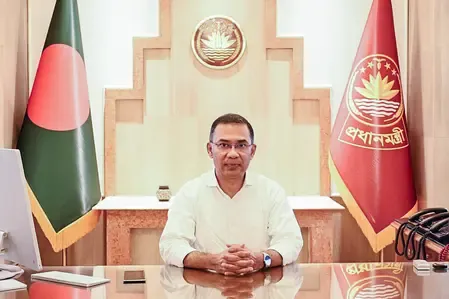
Bangladesh Prime Minister Tarique Rahman has pledged in Parliament to prepare a verified and comprehensive list of martyrs and freedom fighters from the 1971 Liberation War, framing the exercise as a matter of preserving the nation's collective memory and establishing historical truth, according to a report in the Bangladeshi newspaper Daily Sun. The commitment signals a direct engagement with decades of disputed narratives around who fought for Bangladesh's independence.
What Rahman Said in Parliament
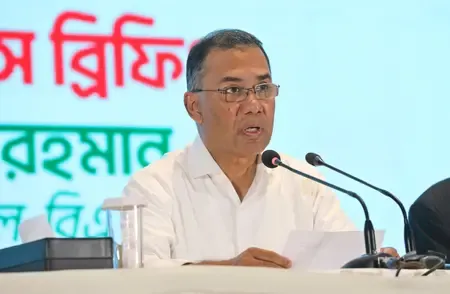
Responding to a parliamentary question, Prime Minister Rahman acknowledged that the process of identifying genuine martyrs and freedom fighters had been 'politicised after independence'. He reportedly reaffirmed the government's commitment to producing a verified record of those who sacrificed their lives and those who actively fought for the country's freedom. For a generation born long after 1971, Rahman's framing positions this list not merely as an administrative exercise but as a pursuit of documented historical fact.
Jamaat-e-Islami's Role Under Scrutiny
The Daily Sun report draws pointed attention to Jamaat-e-Islami, noting that the party's leaders have repeatedly attempted to redefine its institutional role during the Liberation War. According to the report, the party 'opposed Bangladesh's struggle for independence and supported the preservation of a united Pakistan.' Critics argue the party has yet to fully reckon with that history.
The International Crimes Tribunal had earlier convicted several senior Jamaat leaders — including former ameer Motiur Rahman Nizami and secretary general Ali Ahsan Mohammad Mujahid — for crimes against humanity and genocide committed during the Liberation War. The report notes that while those convictions addressed individual criminal responsibility, they also reinforced the established historical record regarding sections of the party's leadership in 1971.
BNP Leaders Weigh In
Bangladesh Nationalist Party (BNP) leaders, including Mirza Fakrul Islam Alamgir and Salahuddin Ahmed, have reportedly accused Jamaat of attempting to recast itself as pro-Liberation despite its documented historical opposition to Bangladesh's independence. The report quotes them as flagging this reframing as a threat to historical accountability.
Why an Accurate List Matters
Beyond administrative record-keeping, the Daily Sun report argues that an accurate list of martyrs and freedom fighters serves a protective function — shielding Bangladesh's foundational history from political distortion. 'Historical accountability is not about perpetual punishment; it is about acknowledging documented facts,' the report states. It advises younger voters — who did not witness the atrocities of 1971 — to evaluate political parties on their policies, competence, and vision, while also holding them accountable to their institutional histories. Any party that struggles to acknowledge well-documented historical facts, the report contends, 'inevitably invites questions about its commitment to transparency and accountability.'
What Comes Next
No timeline for completing the verified list has been publicly specified. The initiative, however, is likely to intensify scrutiny of parties whose wartime roles remain contested. With Bangladesh's political landscape shaped by competing historical claims, the list's credibility will depend heavily on the methodology and independence of the verification process.
Point of View
And the timing is not incidental. Tarique Rahman's government faces the challenge of producing a list credible enough to withstand partisan challenge — a high bar given that the politicisation he acknowledges was carried out by successive governments, including those aligned with his own party's history. The deeper tension is this: if historical accountability is the stated goal, the verification process itself must be insulated from the very political pressures Rahman has identified. Without an independent methodology, the list risks becoming another instrument of contested memory rather than a resolution of it.
NationPress
19 Oct 2026
Frequently Asked Questions
What has Bangladesh PM Tarique Rahman pledged regarding freedom fighters?
Prime Minister Tarique Rahman has committed in Parliament to preparing a verified and comprehensive list of martyrs and freedom fighters from Bangladesh's 1971 Liberation War. He acknowledged that the identification process had been politicised after independence and reaffirmed the government's pledge to correct that record.
Why is Jamaat-e-Islami's role in 1971 being highlighted?
Jamaat-e-Islami reportedly opposed Bangladesh's independence struggle and supported the preservation of a united Pakistan in 1971. The International Crimes Tribunal subsequently convicted senior Jamaat leaders, including former ameer Motiur Rahman Nizami and secretary general Ali Ahsan Mohammad Mujahid, for crimes against humanity and genocide committed during the Liberation War.
What did the International Crimes Tribunal find?
The tribunal convicted several senior Jamaat-e-Islami leaders for crimes against humanity and genocide during the 1971 Liberation War. Those convictions addressed individual criminal responsibility and, according to reports, reinforced the established historical record regarding the role of sections of the party's leadership during that period.
How does this affect younger Bangladeshis?
Most of today's generation in Bangladesh did not witness the events of 1971. The Daily Sun report advises younger voters to judge political parties on their policies, competence, and vision for the future, while also holding them accountable to their documented institutional histories.
What is the broader significance of compiling this list?
Beyond administrative record-keeping, an accurate list of martyrs and freedom fighters is seen as a safeguard against historical distortion. It aims to ensure that future generations inherit verified facts rather than competing political narratives shaped by successive governments.