Bangladesh economy at critical juncture: inequality, banking woes threaten growth
Synopsis
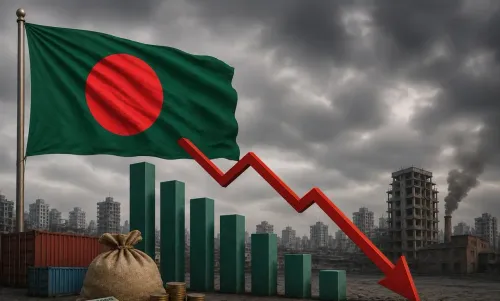
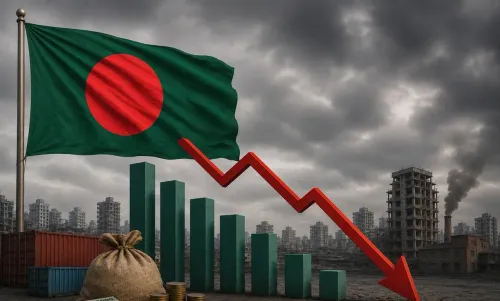
A new India Narrative report lays bare Bangladesh's structural fault lines: the top 10% of households pocket over 40% of national income, inflation has exceeded 9% for three consecutive years, and the World Bank now projects GDP growth of just 3.4% in FY2026 — a sobering reset for an economy long celebrated as a development success story.
Key Takeaways
The World Bank projects Bangladesh's real GDP growth at 3.4 per cent in fiscal 2026 , a sharp slowdown from its historical trajectory.
Inflation stood at 8.3 per cent in September 2026 , having remained above 9 per cent since 2022–23 and reaching 10 per cent in 2024–25 .
Foreign exchange reserves were $31.2 billion , covering approximately 4.8 months of imports.
The richest 10 per cent of households earned 40.92 per cent of national income in 2022 ; the poorest 5 per cent received just 0.37 per cent .
1.94 million people aged 15–29 were unemployed as of the 2023 survey, with 79 per cent of all unemployed falling in this age group.
The India Narrative report calls for diversification beyond garments, stronger banking institutions, and more equitable growth distribution.
Bangladesh's economy is confronting a set of deep-rooted structural vulnerabilities — including widening inequality, a fragile banking sector, persistently high inflation, a narrow tax base, and an overdependence on garment exports — that risk undermining the country's long-term growth model, according to a new report by India Narrative released on 14 November.
Slowdown Signals
The World Bank has projected real GDP growth of just 3.4 per cent for fiscal year 2026, a marked deceleration from the strong expansion Bangladesh sustained over the past decade. Inflation remained elevated at 8.3 per cent in September 2026, and has stayed above 9 per cent since 2022–23, peaking at 10 per cent in 2024–25. Foreign exchange reserves stood at $31.2 billion, equivalent to roughly 4.8 months of import cover — a buffer that analysts consider adequate but not comfortable given the current macroeconomic pressures.
The Inequality Divide
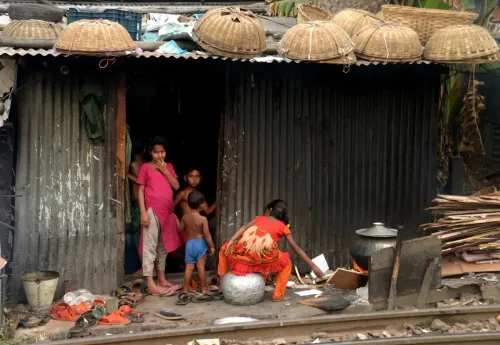
Between 2010 and 2022, Bangladesh's export-oriented growth lifted 34 million people out of poverty — a widely cited development success. Yet the report cautions that the gains have been sharply uneven. The richest 5 per cent of households captured 30.04 per cent of national income in 2022, while the top 10 per cent accounted for 40.92 per cent of household income. At the other end, the poorest 5 per cent received a mere 0.37 per cent. Such concentration, the report notes, reflects successive governments' failure to build redistributive institutions alongside headline growth.
Youth Unemployment and a Restless Labour Market
The government's own Labour Force Survey 2024 found the national unemployment rate climbed to 3.66 per cent in 2024, up from 3.53 per cent in 2022. Urban unemployment, at 4.4 per cent, significantly outpaced the rural rate of 3.4 per cent. A 2023 survey estimated that 1.94 million people aged 15–29 were unemployed, with 79 per cent of all unemployed individuals falling within this age bracket. Notably, nearly 31.5 per cent of unemployed young people with labour-market availability had completed tertiary education — pointing to a structural mismatch between the education system and the economy's absorptive capacity.
Banking Sector and Investment Climate
The report identifies the banking sector as a particular pressure point, citing politically influenced lending practices and weak institutional oversight as factors eroding investor confidence. It calls for urgent steps to rebuild trust in the financial system alongside measures to boost energy supply and stimulate private investment. 'The immediate goal should be to rebuild trust in banking, control inflation, increase energy supplies, and stimulate private investment,' the report stated.
The Path Forward
India Narrative's analysis urges Bangladesh to pivot away from its current model — heavily reliant on low-cost garment exports, remittance inflows, and politically directed finance — toward a more diversified, productivity-driven, and institutionally grounded development framework. The report argues that meaningful economic transformation will require improvements in manufacturing diversity, stronger governance institutions, and a more equitable distribution of growth. This comes amid a broader regional conversation about whether South Asia's export-led growth models can sustain momentum in a more fragmented global trade environment. How swiftly Dhaka acts on these structural reforms will likely determine whether the current slowdown is a temporary correction or the beginning of a more prolonged stagnation.
Point of View
Once a competitive advantage, now looks like a single point of failure in a world of shifting trade patterns and automation risk. Most critically, the banking sector's political capture — lending decisions shaped by connections rather than creditworthiness — is the kind of institutional rot that compounds quietly until it doesn't. Dhaka's reform window may be narrower than the growth numbers suggest.
NationPress
14 Nov 2026
Frequently Asked Questions
What structural challenges is Bangladesh's economy facing?
According to an India Narrative report, Bangladesh faces rising income inequality, a fragile and politically influenced banking sector, persistently high inflation, a narrow tax base, and an overreliance on garment exports. These factors are collectively threatening the sustainability of the country's long-term growth model.
What is Bangladesh's projected GDP growth for 2026?
The World Bank has projected real GDP growth of 3.4 per cent for Bangladesh in fiscal year 2026, a significant deceleration from the strong growth rates the country recorded over the past decade.
How severe is income inequality in Bangladesh?
In 2022, the richest 5 per cent of Bangladeshi households earned 30.04 per cent of national income, while the top 10 per cent accounted for 40.92 per cent. At the other extreme, the poorest 5 per cent received just 0.37 per cent of household income.
What does the data show about youth unemployment in Bangladesh?
A 2023 government survey estimated 1.94 million people aged 15–29 were unemployed, representing 79 per cent of all unemployed individuals in the country. Nearly 31.5 per cent of these young unemployed people had completed tertiary education, indicating a significant skills-to-jobs mismatch.
What reforms does the report recommend for Bangladesh?
The India Narrative report urges Bangladesh to rebuild trust in its banking system, bring inflation under control, expand energy supplies, and stimulate private investment. Over the longer term, it calls for diversification away from garment exports and remittances toward a more productive, institutionally sound, and equitable development model.