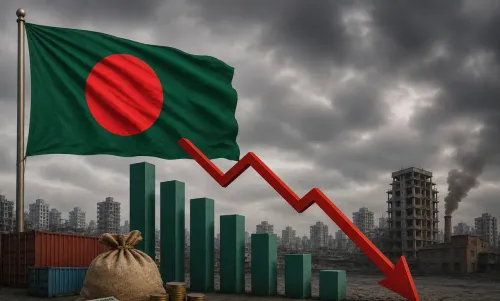
IMF cuts Bangladesh GDP forecast 25% to 3.2% for FY27, inflation at 10.9%
Synopsis
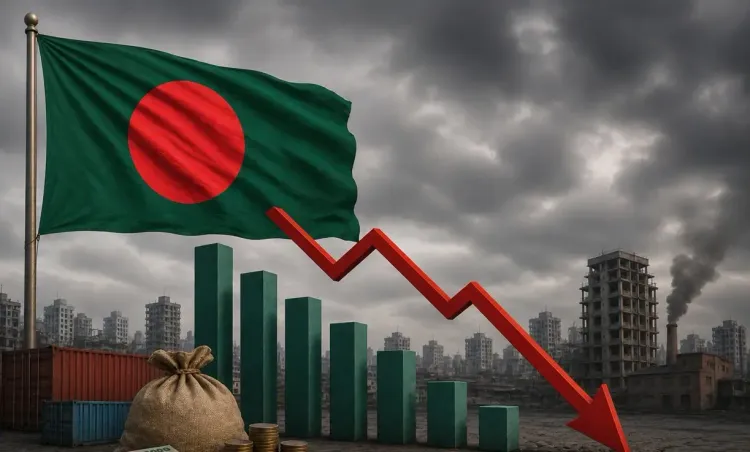
The IMF has slashed Bangladesh's FY27 growth forecast by over a quarter — to just 3.2% — while projecting inflation to jump back to 10.9%, reversing last year's easing. With the World Bank and ADB also cutting their outlooks, this would be Bangladesh's fourth straight year of slowing growth, driven by energy shortfalls, a fragile banking sector, and fiscal tightening. India, meanwhile, is forecast to grow at 7% in both FY27 and FY28.
Key Takeaways
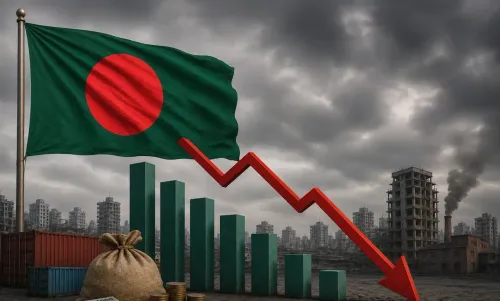
The IMF cut Bangladesh's FY27 growth forecast by 25.58% to 3.2% , down from 4.3% projected in April 2026 .
Average inflation in Bangladesh is projected to rise to 10.9% in FY27, reversing the drop to 8.7% in FY26.
The World Bank and ADB have also downgraded Bangladesh's outlook to 3.4% and 4% respectively.
FY27 would mark the fourth consecutive year of slowing growth, driven by energy shortages, banking vulnerabilities, and tight fiscal conditions.
India is projected to grow at 7% in both FY27 and FY28 , among the fastest in South Asia.
The IMF sees global growth slowing to 3.1% in 2026, with 47% of economies having their forecasts cut.
The International Monetary Fund (IMF) has slashed its economic growth forecast for Bangladesh by 25.58% to 3.2% for FY 2026-27, down sharply from the 4.3% it had projected in April 2026, according to an analysis by The Daily Star. The revision makes Bangladesh one of the most significantly downgraded economies in South Asia this cycle.
Growth Downgrade and What Drives It
The IMF's latest assessment flags a confluence of structural headwinds pressing on Bangladesh's economy. According to The Daily Star analysis, energy shortages, banking sector vulnerabilities, subdued credit growth, and tight fiscal constraints are the primary drags. If the forecast holds, FY27 would mark the fourth consecutive year of slowing economic growth for the country — a streak that underlines the depth of the challenge facing Dhaka's policymakers.
Both the World Bank and the Asian Development Bank (ADB) have also revised down their Bangladesh outlooks. The World Bank recently trimmed its projection to 3.4%, while the ADB cut its forecast to 4% in September 2026. The convergence of downgrades across three major multilateral lenders lends weight to concerns that Bangladesh's slowdown is broad-based, not a statistical artefact.
Inflation Outlook Worsens
The IMF projects average inflation in Bangladesh to climb to 10.9% in the current fiscal year — a reversal of the modest easing seen in FY26, when average consumer price inflation fell to 8.7%. The Fund's inflation call is notably higher than the World Bank's forecast of 8.6% for FY27, made earlier this month, signalling that the IMF sees more persistent price pressures than its Bretton Woods counterpart. Elevated inflation alongside slowing growth raises the spectre of stagflationary conditions for Bangladesh's households and businesses.
India Stands Apart in South Asia
Against this backdrop, India emerges as a regional outlier on the upside. The IMF projects India to grow at 7% in both FY27 and FY28, which the report describes as 'among the fastest rates in the region.' The contrast with Bangladesh — whose growth forecast is less than half of India's — illustrates the widening divergence within South Asia's economic landscape.
Global Slowdown and Growing Disparities
The Bangladesh downgrade sits within a broader global deceleration narrative. The IMF expects global growth to slow to 3.1% in 2026, down from 3.5% the previous year. Competing forces — the ongoing conflict in the Middle East and a surge in artificial intelligence-related investment — are pulling economies in opposite directions, the Fund noted. Advanced economies are projected to grow at 2.1% this year, while emerging and developing economies are forecast at 3.7%.
The IMF also flagged a concentration of growth: just 32 economies are expected to account for 95% of global expansion in 2026, down from 54 economies in April's projections. Approximately 47% of all economies have had their growth forecasts downgraded, pointing to a widening disparity in global economic fortunes. Bangladesh, with its multi-lender downgrade, is firmly in the latter camp.
Whether Dhaka can stabilise its banking sector and ease energy constraints in time to arrest the growth slide will be closely watched ahead of the IMF's next review cycle.
Point of View
World Bank, and ADB downgrades for Bangladesh is not a forecasting quirk — it is a signal that the country's structural vulnerabilities are deepening rather than resolving. Four consecutive years of slowing growth, with inflation heading back toward double digits, squeezes both the government's fiscal space and household purchasing power simultaneously. The gap between Bangladesh and India — 3.2% versus 7% growth — is a regional divergence story that will shape investment flows and trade dynamics across South Asia. Dhaka's ability to stabilise its banking sector and resolve energy shortfalls, not just manage IMF programme benchmarks, will determine whether this is a cyclical trough or a more entrenched structural slowdown.
NationPress
14 Oct 2026
Frequently Asked Questions
What is the IMF's new growth forecast for Bangladesh in FY27?
The IMF has cut Bangladesh's GDP growth forecast to 3.2% for FY 2026-27, down from 4.3% projected in April 2026 — a reduction of 25.58%. The downgrade reflects energy shortages, banking sector vulnerabilities, subdued credit growth, and tight fiscal conditions.
Why is Bangladesh's economic growth slowing?
According to The Daily Star's analysis of the IMF report, Bangladesh's slowdown is driven by energy shortages, vulnerabilities in the banking sector, subdued credit growth, and tight fiscal constraints. FY27 would mark the fourth consecutive year of declining growth if the forecast holds.
How does the IMF's inflation forecast for Bangladesh compare with the World Bank's?
The IMF projects Bangladesh's average inflation at 10.9% for FY27, which is significantly higher than the World Bank's forecast of 8.6% for the same period. Both projections, however, reflect a reversal of the easing seen in FY26, when inflation fell to 8.7%.
What is India's growth forecast according to the IMF?
The IMF projects India to grow at 7% in both FY27 and FY28, describing it as among the fastest growth rates in South Asia. This contrasts sharply with Bangladesh's 3.2% forecast for FY27.
What is the IMF's global growth outlook for 2026?
The IMF expects global growth to slow to 3.1% in 2026, down from 3.5% the previous year. It also noted that approximately 47% of economies have had their growth forecasts downgraded, with just 32 economies expected to account for 95% of global expansion.