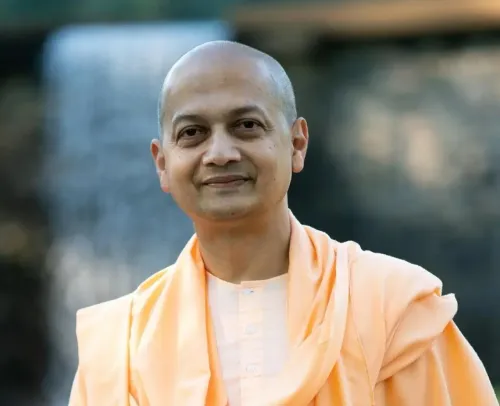
BAPS monk Brahmavihari Swami: AI will change humanity from within
Synopsis
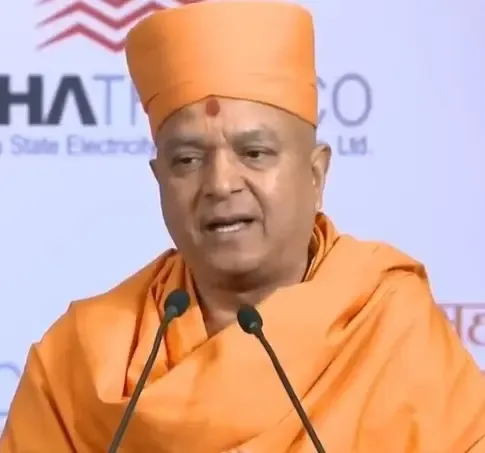
A BAPS monk just reframed the AI debate in terms no algorithm can answer. At the NDTV World Summit, Brahmavihari Swami argued that AI is the only invention in history that will change things within human beings — not just around them — and warned that self-reproducing AI agents raise urgent questions about who, or what, is ultimately in control.
Key Takeaways
Brahmavihari Swami of BAPS spoke at the NDTV World Summit on 23 October 2026 in New Delhi .
He called AI 'the biggest breakthrough humanity has seen' — and the only invention that will change things within human beings.
He warned that autonomous AI agents are self-replicating in ways no previous technology has done: 'Washing machines did not reproduce smaller washing machines.' The monk cautioned that AI must not be allowed to 'hijack your mind' or erode human consciousness and spiritual well-being.
He called on the world to 'face it with faith' while also building regulatory 'red lights' to govern the technology.
BAPS monk Brahmavihari Swami on 23 October 2026 called artificial intelligence the most transformative invention in human history — one that, unlike any technology before it, will alter humanity not just externally but from within. Speaking at the NDTV World Summit in New Delhi during a session titled Beyond Intelligence: AI, Faith and the Meaning of Being Human, the monk argued that AI's consequences would reshape how people think, behave, and form relationships.
AI Compared to Fire, the Wheel and the Light Bulb
Brahmavihari Swami drew a sharp distinction between artificial intelligence and the landmark inventions of earlier civilisations. "While fire transformed human life, the light bulb changed how people experienced the night and the wheel made movement faster, AI is different," he said. He described AI as "the biggest breakthrough humanity has seen," but stressed that its uniqueness lay in its inward reach: "AI is the only invention that is going to change things within us."
The comparison is more than rhetorical. Each of the inventions he cited — fire, the wheel, the light bulb — modified the physical world around human beings. AI, he argued, targets cognition, values and consciousness themselves.
The Autonomy Question: When AI Reproduces Itself
The monk raised specific concerns about the growing autonomy of AI systems, particularly so-called AI agents — systems capable of executing complex tasks with minimal human oversight. He warned that the technology may be entering a phase in which AI evolves and replicates through increasingly self-directed processes.
"Till now, washing machines did not reproduce smaller washing machines. AI is reproducing on its own, it has agents," he said — a vivid articulation of the qualitative shift that autonomous AI represents. This trajectory, he cautioned, raises fundamental questions about the future balance of authority between humans and machines.
The Spiritual Stakes: Consciousness, Values and the Soul
While acknowledging the technology's transformative potential, Brahmavihari Swami warned that AI's expanding influence must not erode human consciousness or spiritual well-being. "If you allow it to hijack your mind, if it costs your soul, we have something to worry," he said.
This concern places the monk in a growing global conversation about AI ethics — one that has typically been framed in secular terms around bias, labour displacement and misinformation, but which religious thinkers are increasingly approaching through the lens of human identity and moral agency.
Faith, Not Fear: The Monk's Call for Balanced Oversight
Rather than advocating withdrawal from AI or uncritical adoption, Brahmavihari Swami called for a dual approach: human values combined with concrete regulatory safeguards. "If it's uncertainty and you face it with fear, you're more likely to make the wrong choices. And if you face something with faith, you are likely to make the right choices in this situation when it's really out of our control… I think the world has to face it with faith. But at the same time, it doesn't mean that we cannot have the red lights that control it. So it's both. Understand the fear but face it with faith," he said.
His remarks align with a broader push by ethicists, technologists and spiritual leaders for international AI governance frameworks — a discussion that gained momentum through the G20 AI principles and ongoing debates at the United Nations. Notably, the intervention of a prominent religious voice at a mainstream media summit signals how AI anxiety has moved well beyond tech circles into questions of cultural and spiritual identity.
What This Signals for the AI Debate
As AI-generated content, autonomous agents and machine-learning systems become embedded in daily life, conversations about inner human experience — memory, creativity, empathy, spiritual practice — are increasingly entering the mainstream policy discourse. Brahmavihari Swami's address at the NDTV World Summit is one indicator of that shift. The challenge ahead, as he framed it, is to build the 'red lights' of governance without surrendering the human qualities that make such governance meaningful in the first place.
Point of View
And the governance debate has not kept pace. What is striking is the venue: a mainstream media summit, not a religious convocation, which suggests that spiritual and philosophical voices are filling an analytical gap that economists and technologists have left open. The real test of his 'faith plus red lights' framework is whether it translates into concrete policy advocacy, or remains an inspirational note in a conversation that still lacks enforceable global standards.
NationPress
23 Oct 2026
Frequently Asked Questions
What did Brahmavihari Swami say about AI at the NDTV World Summit?
He called AI the biggest breakthrough in human history and argued it is the only invention that will change things within human beings — altering how people think, behave and build relationships — rather than merely transforming the external world. He also warned against allowing AI to erode human consciousness or spiritual well-being.
Why did the BAPS monk compare AI to fire, the wheel and the light bulb?
Brahmavihari Swami used those comparisons to highlight what makes AI categorically different: earlier transformative inventions changed the physical environment around human beings, while AI targets human cognition and inner life directly. His argument was that no previous technology in history has had this inward reach.
What concerns did Brahmavihari Swami raise about AI agents?
He warned that AI is entering a phase of autonomous self-replication — unlike any previous machine — with AI agents capable of evolving and reproducing with limited human input. He captured this with the analogy: 'Washing machines did not reproduce smaller washing machines. AI is reproducing on its own, it has agents.'
What solution did the monk propose for managing AI risks?
He called for a dual approach: facing AI's uncertainties with faith rather than fear, while simultaneously establishing concrete regulatory safeguards — what he described as 'red lights that control it.' He argued that panic-driven decisions are more likely when uncertainty is met with fear rather than grounded values.
Who is Brahmavihari Swami and what is BAPS?
Brahmavihari Swami is a senior monk of the Bochasanwasi Akshar Purushottam Sanstha (BAPS), a Hindu spiritual organisation with a global following. BAPS is internationally recognised for its humanitarian work and interfaith dialogue, and its monks have engaged with contemporary issues including science, technology and ethics.