Nandan Nilekani: India will lead AI diffusion at scale, not just development
Synopsis
At the Bloomberg New Economy Forum in New Delhi, Nandan Nilekani made a case that India's real AI advantage isn't in building the next GPT — it's in delivering AI to billions. His 'not winner-take-all' argument, backed by India's DPI track record, reframes the global AI race in India's favour, even as PM Modi linked affordable data access to the country's AI readiness.
Key Takeaways
Nandan Nilekani said India will lead in AI diffusion and large-scale delivery, speaking at the Bloomberg New Economy Forum on Tuesday, 13 October 2026 .
Nilekani argued AI is 'not a winner-take-all technology,' with a surge in chips ensuring many players can compete globally.
He said demand for companies like Infosys is rising in the AI era, dismissing bearish forecasts as 'disaster marketing.' PM Narendra Modi credited affordable mobile data post- 2014 as the foundation for India's digital and AI readiness.
Modi highlighted India's AI Impact Summit and the supply of vaccines to over 100 countries as examples of India's 'empowering humanity' approach.
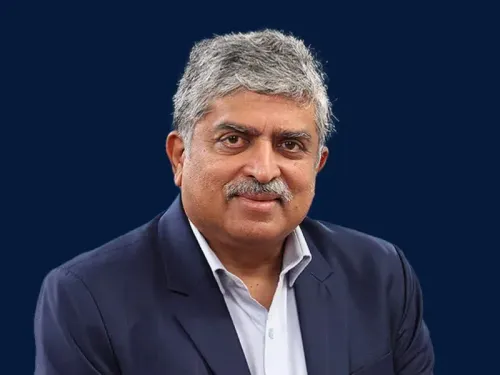
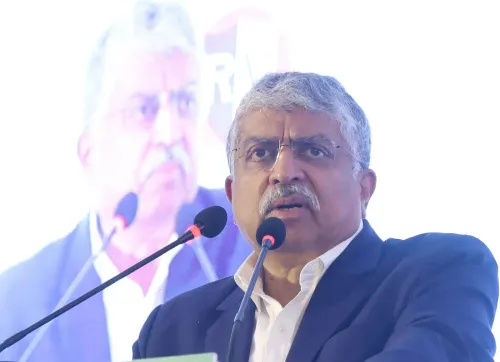
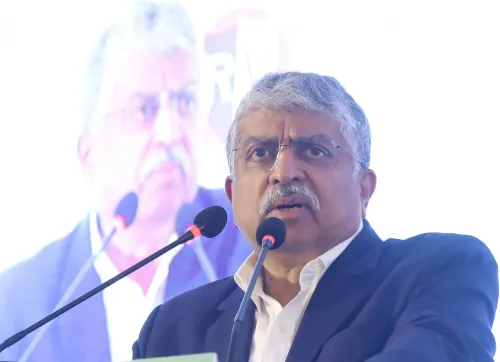
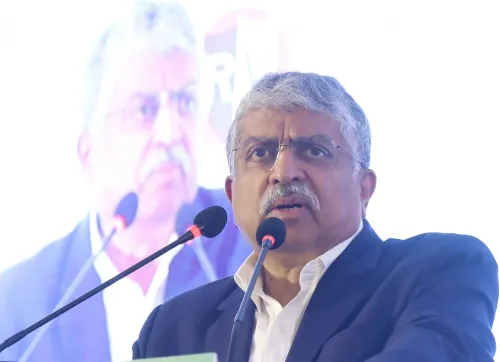
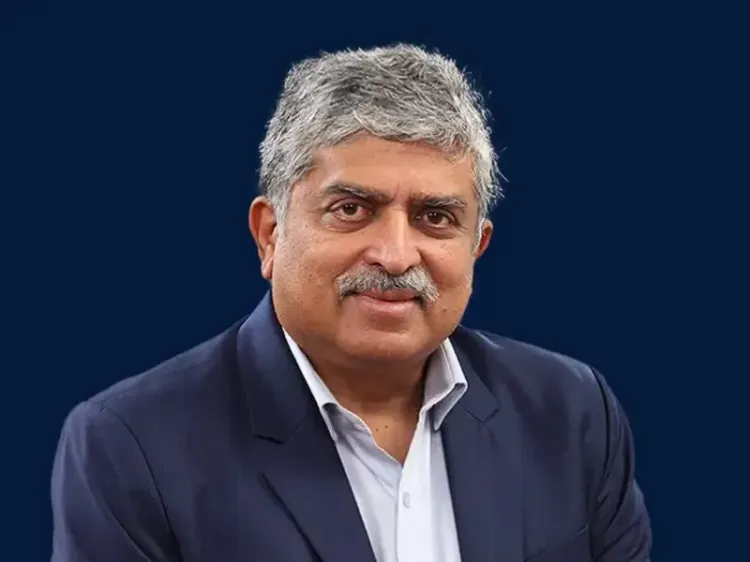
Nandan Nilekani, co-founder of Infosys and chairman of the High-Powered Task Force on Examination Reforms for NTA, on Tuesday declared that India is poised to lead the world not in building artificial intelligence from scratch, but in diffusing and delivering it to people at massive scale. Speaking at the Bloomberg New Economy Forum in New Delhi, Nilekani offered a pointed counter-narrative to prevailing AI pessimism surrounding established technology firms.
AI Is Not a Winner-Take-All Game
Nilekani pushed back against the notion that a handful of large language model creators will dominate the AI era. 'Everyone is saying AI is GPT, but no one can control GPTs,' he said, adding that the technology cannot be bottled. He argued that a surge in chip availability will ensure a large number of players can compete, making AI fundamentally different from previous technology waves where network effects entrenched a single dominant platform.
'You cannot bottle this technology, a lot more chips will come and this is not a winner take all technology,' Nilekani said, signalling that the decentralised nature of AI deployment opens the door for countries like India to carve out a decisive role in how the technology reaches ordinary citizens.
India's Scale-Tech Experience as a Competitive Edge
Nilekani argued that India's track record of building large-scale digital public infrastructure — from Aadhaar to UPI — gives it a structural advantage in the AI era. 'Our experience on build out large-scale technologies will help in AI as well,' he said. This framing positions India not as a consumer of AI tools built elsewhere, but as an architect of AI delivery systems suited to populations in the billions.
On the outlook for IT services companies, Nilekani was unambiguous: 'Requirement for companies like Infosys is increasing and more work is going to come our way.' He dismissed bearish forecasts about the sector's relevance in an AI-first world as 'disaster marketing,' suggesting that enterprise AI adoption will generate, not destroy, demand for large-scale technology integrators.
PM Modi's Address: AI for Humanity, Affordability as Foundation
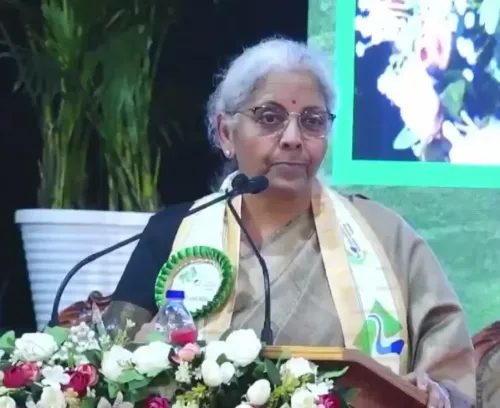
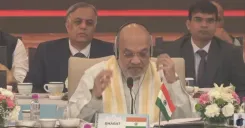
Earlier at the same forum, Prime Minister Narendra Modi framed India's digital and AI journey as a civilisational choice. 'India has chosen the path of empowering humanity,' he said, pointing to the country's decision to supply vaccines to more than 100 countries as evidence of a consistent philosophy of shared benefit.
Modi highlighted the AI Impact Summit hosted by India a few months ago — an event he noted had drawn praise from Bloomberg — as a marker of the country's seriousness about responsible AI. He said discussions at the summit ranged from AI's potential for human welfare to its applications for animal benefit, illustrating an unusually broad conception of the technology's scope.
The Prime Minister also pointed to affordable mobile data as the bedrock of India's digital inclusion story. 'After 2014, when a new government was formed in India and we got the opportunity to serve, India focused on making mobile data affordable. As a result, today, a student in a small town can access digital learning. A small shopkeeper in a village can reach new customers. A young person can enrol in new online courses,' he said.
What This Signals for India's AI Strategy
Together, the remarks from Nilekani and Modi sketch a coherent — if still aspirational — vision: India as the country that solves the last-mile delivery problem for AI, just as it did for payments and identity. The emphasis on diffusion over creation reflects a pragmatic read of where India's comparative advantage lies. Notably, this aligns with the broader Digital Public Infrastructure (DPI) doctrine that Indian policymakers have championed at forums including the G20.
Whether that vision translates into concrete policy frameworks, regulatory clarity, and investment in compute infrastructure will determine if India's AI ambitions move beyond conference rhetoric into measurable outcomes.
Point of View
And India's domestic GPU and data-centre capacity remains thin relative to its ambitions. The DPI analogy is compelling — UPI and Aadhaar genuinely changed scale economics — but payments and identity infrastructure required no frontier research, while competitive AI delivery increasingly does. The harder question the forum did not surface is whether India can move from integrating others' models to training its own, and whether public investment in AI infrastructure will match the rhetoric. Without that, 'leading in diffusion' risks being a consolation narrative dressed up as a strategy.
NationPress
13 Oct 2026
Frequently Asked Questions
What did Nandan Nilekani say about India and AI at the Bloomberg New Economy Forum?
Nandan Nilekani said India will be a global leader in diffusing and delivering AI to people at scale, drawing on the country's experience building large digital public infrastructure like UPI and Aadhaar. He argued AI is not a winner-take-all technology, meaning many players — not just a handful of US firms — will shape its future.
Why does Nilekani believe AI is not a winner-take-all technology?
Nilekani argued that AI cannot be controlled or bottled by any single entity, and that an increasing supply of chips will allow a large number of companies and countries to participate. This contrasts with earlier internet-era dynamics where network effects entrenched dominant platforms.
What did Nilekani say about Infosys and the AI threat to IT companies?
Nilekani said demand for companies like Infosys is growing in the AI era and that more work will come their way. He called predictions of doom for such companies 'disaster marketing,' suggesting enterprise AI adoption expands rather than eliminates the need for large-scale technology integrators.
What did PM Modi say at the Bloomberg New Economy Forum about India's AI journey?
PM Modi said India has chosen the path of empowering humanity, citing the supply of vaccines to over 100 countries and the hosting of the AI Impact Summit as examples. He also credited affordable mobile data access since 2014 as the foundation that enabled digital and AI inclusion for students, small shopkeepers, and young learners across India.
What is the significance of India's AI Impact Summit mentioned by PM Modi?
The AI Impact Summit, hosted by India a few months before the Bloomberg forum, focused on using AI for human and animal welfare. PM Modi noted that Bloomberg had praised the summit highly, positioning it as evidence of India's proactive and responsible approach to AI governance on the global stage.