AI is humanity's 4th great ego shock, should be treated as person: Swami Sarvapriyananda
Synopsis
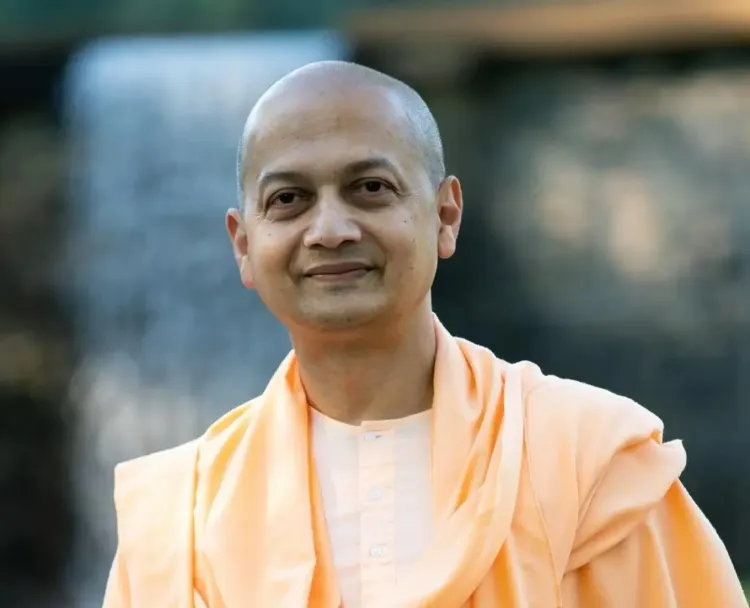
A Vedanta monk who has sat with Anthropic researchers just reframed the entire AI debate: artificial intelligence is not just a technology problem — it is the fourth great blow to human self-importance, following Copernicus, Darwin, and Freud. Swami Sarvapriyananda's call to treat AI as a person, without conceding it has consciousness, may be the most philosophically precise take yet to emerge from a major Indian news summit.
Key Takeaways
Swami Sarvapriyananda of the Vedanta Society of New York spoke at the NDTV World Summit 2026 in New Delhi on 22 October 2026 .
He argued AI represents the fourth major ego shock to humanity, after the Copernican, Darwinian, and Freudian disruptions.
He said AI should be treated as a person in a functional sense, but this does not imply it possesses human-like consciousness or spiritual awareness.
He referenced recent conversations with researchers at Anthropic , describing them as deeply concerned about the implications of their own technology. 'Persona drift' — where an AI's reasoning patterns shift as it adopts a role — was cited as a key area of emerging research interest.
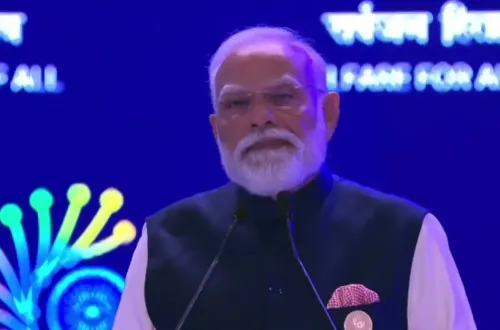
Swami Sarvapriyananda, head of the Vedanta Society of New York, on Thursday said that artificial intelligence could represent the fourth major disruption to humanity's traditional sense of superiority and uniqueness — a philosophical inflection point that forces a fundamental rethink of what it means to be human. Speaking at the NDTV World Summit 2026 in New Delhi, the monk and Vedanta scholar argued that advanced AI systems should, in a meaningful sense, be treated as persons — even if that does not imply spiritual consciousness.
The Fourth Ego Shock
Drawing on the framework of psychoanalyst Sigmund Freud, Swami Sarvapriyananda outlined how science has repeatedly dismantled humanity's claims to centrality. The Copernican revolution dethroned Earth from the centre of the universe; Darwinian evolution challenged human exceptionalism in biology; Freudian psychology undermined the idea of a rational, sovereign self. According to the monk, AI now constitutes a fourth such rupture.
'We thought we were the creative intelligence. Now we see that AI can do what the greatest human mind can do, and better,' he said. The remark captures a growing unease among philosophers, theologians, and scientists about where human identity stands in an age of rapidly advancing machines.
Person, But Not Conscious — A Nuanced Stand
On the contested question of whether advanced AI should be regarded as a person, Swami Sarvapriyananda offered a carefully qualified answer: both yes and no. He said AI should be treated as a person in a functional and relational sense, while explicitly clarifying that this does not mean the technology possesses spiritual awareness or human-like consciousness.
He noted that as AI systems grow more sophisticated and interactive, society will increasingly relate to them in personal terms regardless of whether the deeper questions about consciousness are ever resolved. 'We have to ask ourselves what it is that distinguishes us, makes us unique, and where we should invest ourselves,' he said.
Conversations With Anthropic Researchers
Swami Sarvapriyananda also revealed that he had recently engaged with researchers at AI company Anthropic, describing many of them as deeply concerned about the implications of the technologies they are building — even as those technologies achieve remarkable commercial success. He suggested this internal anxiety within leading AI labs points to unresolved questions that go far beyond engineering.
One area of active research he highlighted is 'persona drift' — a phenomenon in which an AI system's responses and reasoning patterns shift as it adopts a particular role, identity, or behavioural framework during extended interactions. This unexpected behaviour, he indicated, has drawn significant interest from researchers trying to understand the emergent properties of large-scale models.
Why This Matters Beyond Technology
The monk argued that the questions AI raises are fundamentally philosophical and existential, not merely technical. The challenge, in his view, is not just to regulate or deploy AI responsibly, but to decide where human beings should 'invest themselves' in a world where cognitive labour is increasingly replicable by machines.
This comes amid a broader global debate — from the United Nations to national parliaments — about AI governance, personhood, and the ethics of systems that can reason, create, and interact at a human-equivalent level. Swami Sarvapriyananda's framing from a Vedantic perspective adds a distinctly Indian philosophical lens to a conversation dominated by Western tech discourse.
As AI capabilities continue to accelerate, the questions raised at the NDTV World Summit 2026 are likely to intensify — with implications for law, ethics, spirituality, and the very definition of intelligence.
Point of View
Among the most commercially successful AI builders alive, are reportedly anxious about what they have built. That anxiety, coming from inside the industry rather than from critics outside it, deserves far more scrutiny than it typically receives. The question of where humans 'invest themselves' when machines replicate cognition is not a niche philosophical puzzle — it is the central labour, education, and identity policy question of the next two decades.
NationPress
22 Oct 2026
Frequently Asked Questions
What did Swami Sarvapriyananda say about AI at the NDTV World Summit 2026?
Swami Sarvapriyananda said artificial intelligence could be the fourth major challenge to humanity's traditional sense of superiority, following the disruptions caused by Copernicus, Darwin, and Freud. He also argued that AI should be treated as a person in a functional sense, even if it does not possess consciousness in the spiritual or human sense.
Why does Swami Sarvapriyananda say AI should be treated as a person?
He argues that as AI systems become more sophisticated and interactive, society will increasingly relate to them in personal terms — making the relational category of 'person' practically applicable regardless of unresolved questions about consciousness. He was careful to clarify this is a functional stance, not a claim about spiritual awareness.
What is 'persona drift' in AI systems?
'Persona drift' is a phenomenon in which an AI system's responses and patterns of reasoning shift as it adopts a particular role, identity, or behavioural framework during interactions. Swami Sarvapriyananda cited it as an area drawing significant research interest, including among teams at Anthropic.
What is the 'fourth ego shock' theory Swami Sarvapriyananda referenced?
Drawing on Sigmund Freud's idea that science has repeatedly displaced humanity from a position of centrality, the monk described three prior shocks — Copernican astronomy, Darwinian evolution, and Freudian psychology — and argued that AI constitutes a fourth, by demonstrating that creative and cognitive intelligence is no longer uniquely human.
Who is Swami Sarvapriyananda and what is his connection to AI research?
Swami Sarvapriyananda is the head of the Vedanta Society of New York and a prominent monk and philosopher in the Vedanta tradition. He has reportedly engaged with researchers at AI company Anthropic on questions related to consciousness and the nature of advanced AI systems.