BNP workers storm Bangladesh court, vandalise judge's chamber in Chapainawabganj
Synopsis
BNP workers allegedly stormed and vandalised a district court in Chapainawabganj after a judge deferred bail for a Jubo Dal leader — and a Paris-based rights body says it is part of a deepening pattern of political mob pressure on Bangladesh's judiciary that began under the Yunus interim government and has continued since.
Key Takeaways
Alleged BNP workers vandalised the District and Sessions Judge Court in Chapainawabganj on 10 August 2025 .
The attack was reportedly triggered by Judge Md Uzzal Mahmud 's deferral of bail for Tufan Ali , a Jubo Dal leader arrested over a cocktail explosion linked to the 2024 elections .
Justice Makers Bangladesh in France (JMBF) condemned the incident as a 'direct attack on judicial independence and the rule of law.' JMBF Founder President Shahanur Islam alleged mob pressure on courts has persisted from the Muhammad Yunus -led interim government through to the current BNP administration.
The organisation has called for an impartial investigation and prosecution of all individuals involved, regardless of political affiliation.
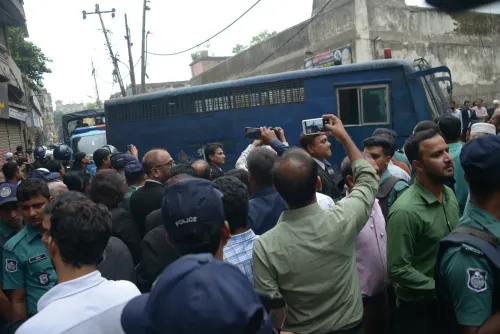
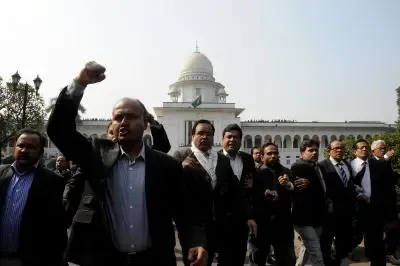
A leading international human rights organisation has strongly condemned a mob attack on the District and Sessions Judge Court in Chapainawabganj, Bangladesh, in which workers allegedly affiliated with the ruling Bangladesh Nationalist Party (BNP) vandalised a courtroom and the private chamber of a sitting judge. The incident, which reportedly took place on Sunday, 10 August 2025, has drawn sharp international censure and renewed fears over the erosion of judicial independence in the country.
What Happened at the Chapainawabganj Court
According to reports citing court sources, BNP workers grew agitated after Joint District Judge Md Uzzal Mahmud granted bail to four accused in a case but deferred a decision on a fifth accused, Tufan Ali — a leader of the BNP's youth wing Jubo Dal.
Ali had been arrested on the night of 8 August in connection with a case involving a cocktail explosion at the wall of the district election office, allegedly ahead of the 2024 parliamentary elections. Several BNP workers also claimed the judge had repeatedly deferred bail decisions on Ali's application and had made critical remarks about the government's handling of the ongoing electricity crisis.
Rights Body Condemns 'Direct Attack on Judicial Independence'
Justice Makers Bangladesh in France (JMBF), a human rights organisation based in Paris, issued a strong condemnation of the incident, describing the mob's actions as a 'direct attack on judicial independence, the rule of law, and the constitutional framework of a democratic state.'
JMBF Founder President and human rights lawyer Shahanur Islam said: 'Courts are not the offices of any political party, and judges are not accountable to any political group. If anyone is aggrieved by a judge's remarks or decision, the law provides appropriate avenues for seeking redress. Forming a mob in front of a court, surrounding a judge's chamber, or attempting to exert pressure through vandalism constitutes a grave attack on the independence of the judiciary.'
A Pattern of Pressure on Courts, Critics Say
Shahanur Islam further alleged that the practice of exerting pressure on the judiciary through mob violence — which, he claimed, began during the former Muhammad Yunus-led interim government — has continued under the current BNP administration since the ouster of the Awami League government.
'If mob gatherings and vandalism at courts are allowed to go unpunished because of political affiliation today, judges may be afraid to make independent decisions tomorrow. Ultimately, ordinary people seeking justice will pay the price,' he added, calling for an impartial investigation to identify and prosecute all individuals involved, regardless of political affiliation.
Call for United Stand to Protect Rule of Law
The JMBF has urged all political parties, civil society organisations, lawyers' associations, and state institutions across Bangladesh to take a clear and united stand in defence of the dignity of courts, the independence of judges, and the rule of law. This incident comes amid what observers describe as a broader pattern of rising mob violence across the country since the political transition of 2024.
Notably, this is not an isolated episode — attacks on judicial premises and pressure campaigns against sitting judges have been reported in multiple districts, raising questions about institutional safeguards for the judiciary under the current political dispensation. How the government responds to calls for accountability will be closely watched by rights groups and the international community alike.
Point of View
And the allegation that this pattern predates the BNP government — stretching back to the Yunus interim period — suggests the problem is structural, not partisan. A judiciary that visibly buckles under street pressure loses its legitimacy regardless of which party benefits. The real test for the BNP government is whether it prosecutes its own workers, something no Bangladeshi administration has done consistently when the perpetrators were political allies.
NationPress
25 Sept 2026
Frequently Asked Questions
What happened at the Chapainawabganj court in Bangladesh?
Alleged workers of the ruling Bangladesh Nationalist Party (BNP) vandalised the courtroom and the private chamber of Joint District Judge Md Uzzal Mahmud at the District and Sessions Judge Court in Chapainawabganj on 10 August 2025. The mob reportedly acted after the judge deferred a bail decision for Tufan Ali, a BNP Jubo Dal leader.
Who is Tufan Ali and why was he arrested?
Tufan Ali is a leader of Jubo Dal, the youth wing of the BNP. He was arrested on the night of 8 August in connection with a case involving a cocktail explosion at the wall of the district election office, allegedly ahead of the 2024 parliamentary elections.
Which organisation condemned the Bangladesh court attack?
Justice Makers Bangladesh in France (JMBF), a Paris-based human rights organisation, condemned the incident. Its Founder President, human rights lawyer Shahanur Islam, called the vandalism a grave attack on judicial independence and demanded an impartial investigation.
Why does this incident matter for Bangladesh's judiciary?
Rights groups argue the attack is part of a broader pattern of mob pressure on courts since Bangladesh's 2024 political transition. If left unpunished, such incidents could deter judges from making independent decisions, ultimately denying ordinary citizens access to impartial justice.
What has JMBF demanded in response to the Chapainawabganj attack?
JMBF has called on all political parties, civil society organisations, lawyers' associations, and state institutions in Bangladesh to defend judicial independence. It has specifically demanded an impartial investigation and prosecution of all individuals involved, regardless of their political affiliation.