Canada-India CEPA talks intensify after fifth round, $70 billion trade target by 2030
Synopsis
Canada and India are racing toward a year-end deadline on a Comprehensive Economic Partnership Agreement, with their ninth ministerial meeting in 18 months signalling unusually sustained political will. The $70 billion trade target by 2030 would more than double current levels — and the 300-strong Canadian business mission to Mumbai and Bengaluru is Canada's biggest commercial push to India in over 30 years, underscoring how much Ottawa now needs the relationship as a hedge against US dependence.
Key Takeaways
Canada and India are intensifying CEPA negotiations with a target to conclude a deal before the end of 2026 .
The fifth round of talks was held in Ottawa from 5 to 9 October 2026 .
Minister Maninder Sidhu and Minister Piyush Goyal have now met nine times since May 2025 .
Canada's Team Canada Trade Mission to India includes nearly 300 delegates — the largest such delegation in more than three decades .
Ottawa is targeting $70 billion in annual two-way trade by 2030 , up from $30.4 billion in 2025 .
Key sectors of interest include energy, critical minerals, aerospace, artificial intelligence, and advanced manufacturing.
Canada and India are pressing ahead with negotiations for a Comprehensive Economic Partnership Agreement (CEPA), stepping up efforts to conclude a deal before the end of 2026 after the fifth round of talks concluded in Ottawa from 5 to 9 October. The push comes as both governments seek to translate improving diplomatic ties into binding commercial commitments.
Ministerial Engagement
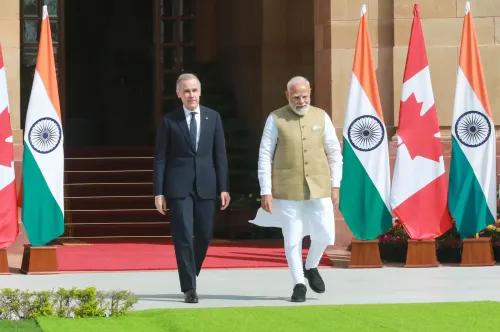
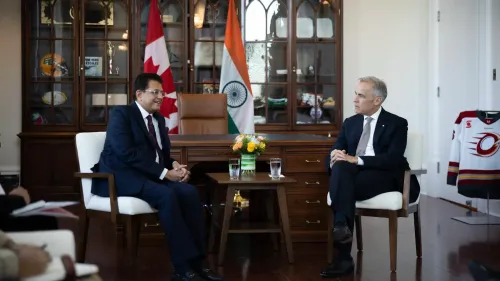
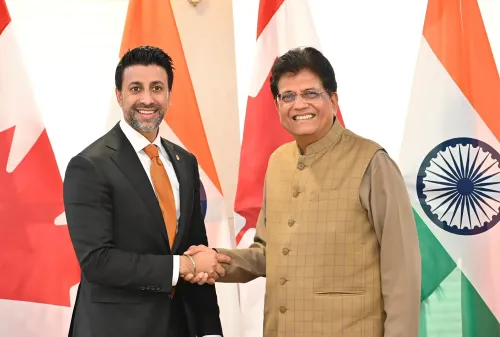
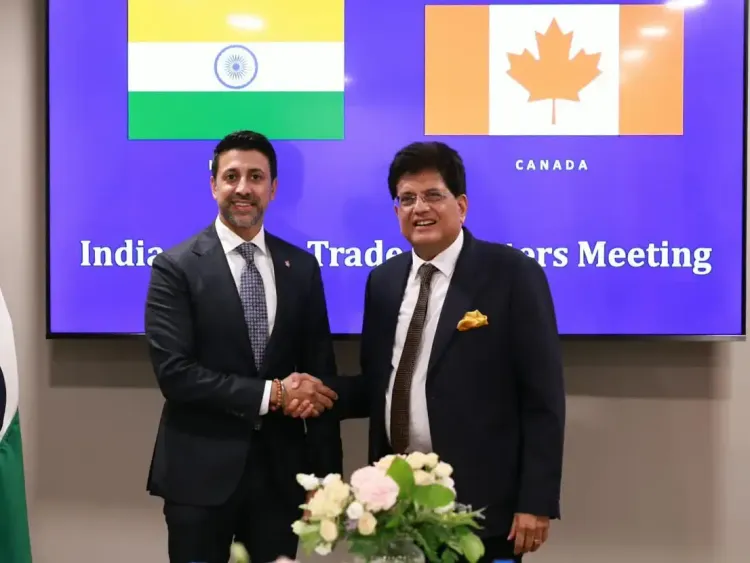
Canadian International Trade Minister Maninder Sidhu met Commerce and Industry Minister Piyush Goyal in New Delhi this week, according to a statement issued by Global Affairs Canada on Tuesday, 14 October. The encounter was the ninth meeting between the two ministers since May 2025, underscoring the sustained pace of engagement at the ministerial level.
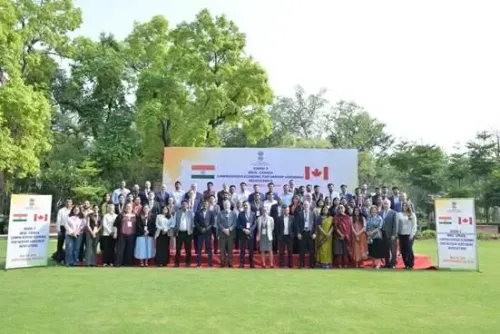
The bilateral discussion took place on the sidelines of the Team Canada Trade Mission to India, which has brought nearly 300 Canadian business delegates to Mumbai and Bengaluru between 12 and 17 October — described by Ottawa as Canada's largest trade delegation to India in more than three decades.
What the Two Sides Said
Global Affairs Canada stated: 'The two countries are intensifying their efforts to conclude a mutually beneficial agreement.' The statement, however, did not disclose the outstanding differences between the two negotiating teams or announce a date for the sixth round of talks.
Minister Sidhu thanked Goyal for supporting the Canadian trade mission, which is designed to connect businesses from both countries and catalyse commercial agreements. The latest ministerial push follows discussions the two ministers held at the G20 Trade Ministers' Meeting in Milwaukee earlier this month.
The $70 Billion Trade Target
Ottawa has set an ambitious goal of increasing annual two-way trade with India to $70 billion by 2030 — more than double the $30.4 billion in goods and services exchanged between the two countries in 2025. Canada's merchandise exports to India stood at $3.9 billion last year, led by vegetables, mineral fuels and oils, and wood pulp. India's exports to Canada reached $9.7 billion, with precious stones and metals, machinery, and pharmaceutical products among the top categories.
Canadian businesses attending the mission are exploring opportunities in sectors including energy, critical minerals, aerospace, artificial intelligence, and advanced manufacturing. Ottawa confirmed that the commercial engagement supports Canada's Indo-Pacific Strategy and its objective of substantially diversifying exports away from the United States.
Diplomatic Context
The intensified trade push is unfolding against a backdrop of careful diplomatic rebuilding. Relations between New Delhi and Ottawa passed through a prolonged period of strain in recent years, and economic cooperation has emerged as a key vehicle for normalisation — with both governments seeking to expand business links alongside parallel discussions on security and law enforcement matters.
For India, a concluded CEPA could widen access to Canadian markets while deepening cooperation in energy, critical minerals, and technology — sectors that align closely with New Delhi's strategic priorities. Notably, this is the fifth such formal round; the previous four were aimed at narrowing differences and establishing a common framework.
What Comes Next
With no date confirmed for the sixth round, the trajectory of negotiations will be watched closely. The year-end deadline both governments appear to be working toward leaves a narrow window, and the absence of detail on unresolved issues suggests the harder bargaining lies ahead. Industry observers in both countries will be tracking whether the ministerial momentum translates into a finalised framework in the coming weeks.
Point of View
A vulnerability that has become impossible to ignore. India, for its part, is a selective dealmaker that has let promising trade frameworks stall for years. The absence of any disclosure on unresolved differences is a quiet warning sign; deals at this stage usually produce at least a partial readout. Whether the year-end deadline is a genuine target or a diplomatic ambition will become clear in the next round — and the pressure is more acutely Canada's than India's.
NationPress
14 Oct 2026
Frequently Asked Questions
What is the Canada-India CEPA?
The Comprehensive Economic Partnership Agreement (CEPA) is a broad trade deal under negotiation between Canada and India aimed at increasing market access, reducing tariffs, and deepening cooperation across sectors including energy, critical minerals, and technology. The fifth formal round of negotiations was held in Ottawa from 5 to 9 October 2026.
What is the trade target Canada has set with India?
Canada has set a target of reaching $70 billion in annual two-way trade with India by 2030, more than double the $30.4 billion in goods and services exchanged in 2025. Canada exported $3.9 billion in merchandise to India in 2025, while imports from India totalled $9.7 billion.
Why is Canada pushing for a trade deal with India now?
Ottawa is seeking to diversify its export base away from heavy dependence on the United States, and India — as one of the world's fastest-growing large economies — is central to Canada's Indo-Pacific Strategy. The Team Canada Trade Mission to India, involving nearly 300 delegates, is Canada's largest such delegation to India in over three decades.
How far along are the Canada-India trade negotiations?
Negotiations have completed five formal rounds, with the most recent held in Ottawa from 5 to 9 October 2026. Both governments say they are working toward a year-end conclusion, though no date for the next round has been announced and outstanding differences have not been publicly disclosed.
What sectors are Canadian businesses exploring in India?
Canadian delegates attending the October 2026 trade mission are focusing on energy, critical minerals, aerospace, artificial intelligence, and advanced manufacturing. These sectors also align with India's strategic priorities under its industrial and energy transition programmes.