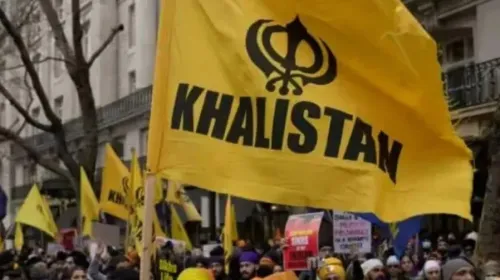
Canada's Bill C-9: A Beacon Against Khalistani Extremism
Synopsis
Canada's Bill C-9 aims to combat rising Khalistani extremism by criminalizing intimidation at religious sites. Former diplomat Sanjay Kumar Verma underscores the law's potential to enhance community safety while navigating the delicate balance of free expression.
Key Takeaways
Bill C-9 criminalizes intimidation and obstruction at cultural spaces.
It addresses the rise of Khalistani extremism affecting the Indian diaspora.
The effectiveness of the law depends on consistent enforcement .
Community safety includes freedom from both physical harm and intimidation .
The legislation raises questions about the balance between free expression and protection from hate.
Ottawa, April 6 (NationPress) - Canada's newly enacted legislation, Bill C-9, known as the 'Combatting Hate Act', directly confronts the troubling activities associated with Khalistani extremists that have alarmed the Indian diaspora. This law criminalizes the intimidation or obstruction faced by individuals attempting to access their cultural or religious venues, as reported on Monday.
In an article for India Narrative, Sanjay Kumar Verma, former High Commissioner of India to Canada, asserted that the success of this law will depend on its rigorous enforcement, the public's trust in its effectiveness, and its ability to bring a sense of normalcy back to the diaspora community.
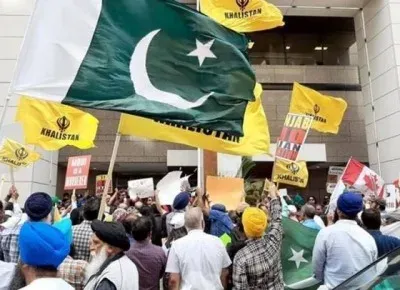
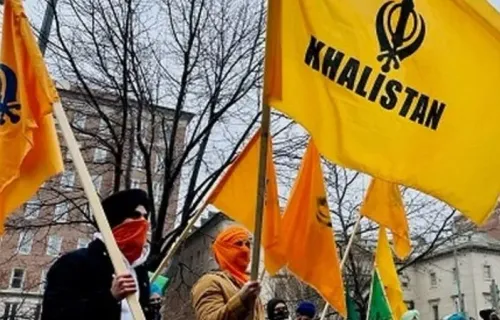
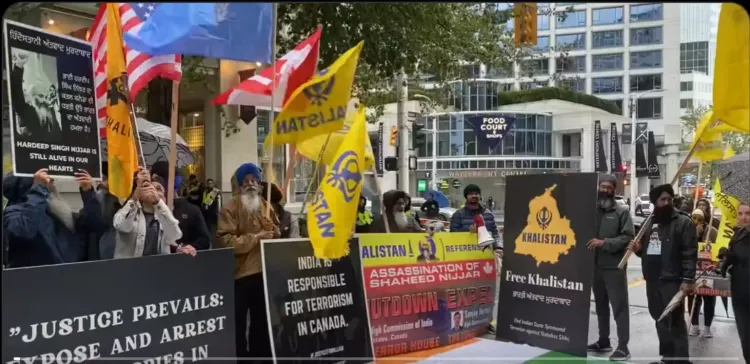
Verma observed that the Indian community in Canada has been grappling with an increasingly tense atmosphere, often marked by hostility driven by Khalistani extremism. What was once perceived as fringe political expression has, in many cases, escalated into intimidation, violence, and hate speech aimed not only at symbols of India but also at individuals representing the Indian government.
He noted that until recently, Canada's legal system faced challenges in effectively addressing such incidents, as it was primarily reactive to clear cases of harm.
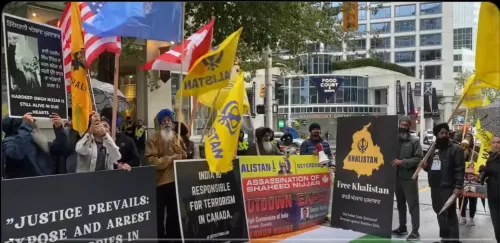
“The challenge, as events since 2022 have highlighted, is that modern intimidation tactics often do not fit neatly into existing legal categories. The use of threatening imagery, organized public demonstrations targeting specific groups or institutions, and obstructing access to places of worship frequently exist in a grey area. These actions create an atmosphere of pressure and discomfort, often without meeting the legal criteria necessary for prosecution,” Verma elaborated.
Verma emphasized the significance of Bill C-9, stating that it not only updates existing regulations but also recognizes the evolving nature of harm, necessitating an adaptable legal framework.
“By criminalizing the obstruction of access to worship spaces and acknowledging the role of symbolic hate in fostering insecurity, this legislation provides legal recognition that these issues are neither trivial nor isolated. It asserts that safety encompasses not just protection from physical violence but also the ability to engage in community life without fear of intimidation,” he remarked.
However, the legislation raises critical questions about the balance between security and freedom of expression. The Indian community, like other groups in Canada, cherishes the nation's tradition of free speech. Canadian authorities face the challenge of ensuring that enforcement is precise, addressing genuine instances of hatred without overreach,” he cautioned.
Verma reflected on his experiences as High Commissioner, witnessing firsthand how acts that once seemed marginal have veered into intimidation and violence. He recounted a troubling scene during a Nagar Kirtan in Toronto, where the violent assassination of former Indian Prime Minister Indira Gandhi was portrayed not as a historical event but as a reenactment. In another instance, posters depicting India’s then High Commissioner with simulated bullet marks served to incite hatred.
“Effigies of Indian leaders displayed in protests, along with incendiary slogans urging violence, have created a pattern that transcends mere dissent,” he stated.
“Threats, both implicit and explicit, have been directed toward India’s High Commissioner and other diplomats. This is not a matter of dissent amplifying its voice; it is dissent pushing the boundaries of intimidation to see how far it can go before legal repercussions occur. When acts of violence are framed as memory and threats are presented as protest, the discourse shifts from freedom of expression to the erosion of its limits,” he added.
According to Verma, the cumulative effect on the Indian diaspora has been an increasing sense of insecurity, where community spaces are not sheltered from this hostile environment. He stressed that these occurrences are not random but rather calculated acts meant to provoke reactions, challenging the boundaries of acceptable public discourse.
“Hindu temples have been defaced with graffiti featuring extremist messages, often intended more to provoke than to persuade. The frequency of such incidents indicates that they are part of a larger strategy to undermine India’s sovereignty and territorial integrity through symbolic aggression,” he wrote in India Narrative.
The vandalism of places of worship exemplifies both the necessity and complexity of addressing these issues. Such acts are seldom random; they are crafted to convey a message, assert dominance, and elicit a response. By extending criminal law to include symbolic actions, Bill C-9 acknowledges their significance. However, the law's credibility hinges on thorough investigations and decisive prosecutions. A law that promises protection but fails to deliver risks exacerbating community anxiety rather than alleviating it.
Point of View
Aiming to foster a safer environment while respecting the values of free speech.
NationPress
15 Oct 2026
Frequently Asked Questions
Why is Bill C-9 important for the Indian diaspora?
The bill addresses the rising incidents of Khalistani extremism, aiming to provide a safer environment for the Indian community in Canada by criminalizing acts of intimidation and hate.
How does Bill C-9 balance free expression and safety?
While the bill aims to protect communities from hate, it also emphasizes the need to maintain robust free expression, ensuring enforcement is precise and targeted.
What challenges does Canada face with Khalistani extremism?
Khalistani extremism has manifested in intimidation, hate speech, and violence against symbols and representatives of India, creating a hostile environment for the Indian diaspora.
How does vandalism of religious sites relate to Bill C-9?
Vandalism of religious sites often serves as a symbolic act intended to provoke and challenge community integrity, making them relevant to the concerns addressed by Bill C-9.