CENTCOM chief visits Strait of Hormuz, declares transit routes clear of Iranian mines
Synopsis
CENTCOM commander Admiral Brad Cooper flew over the Strait of Hormuz on 25 October to personally confirm what the US military is calling a hard-won operational success: the world's most critical oil chokepoint is clear of Iranian IRGC mines, with over 1.5 billion barrels exported and 3,000-plus commercial vessels transited safely in six months — a direct counter to one of Tehran's most disruptive recent gambits.
Key Takeaways
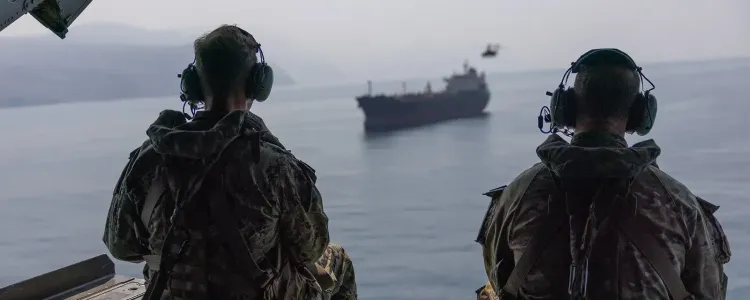
Admiral Brad Cooper , CENTCOM commander, visited the Strait of Hormuz on 25 October 2026 aboard a US Army CH-47 Chinook helicopter.
CENTCOM confirmed that primary transit routes through the strait remain free of Iranian sea mines laid by the IRGC .
US forces have assisted Gulf partners in exporting more than 1.5 billion barrels of crude oil since summer.
More than 3,000 commercial vessels have transited the strait with CENTCOM support over the last six months .
Over 95 per cent of ships have navigated the strait safely in recent months, according to CENTCOM.
Cooper met US service members involved in the mine clearance mission during the visit.
Admiral Brad Cooper, commander of the US Central Command (CENTCOM), visited the Strait of Hormuz on 25 October 2026, with CENTCOM confirming that primary transit routes through the strategically vital waterway remain free of Iranian sea mines. The visit marks a significant milestone: US forces have assisted Gulf partners in exporting more than 1.5 billion barrels of crude oil since summer.
Key Developments
Cooper flew over the international waterway aboard a US Army CH-47 Chinook helicopter to assess the current operational environment. During the visit, he met US service members involved in the mine clearance mission and acknowledged their efforts. More than 3,000 commercial vessels have transited the Strait of Hormuz with CENTCOM support over the last six months, according to the command's statement.
What CENTCOM Said
'Today, primary transit routes in the Strait of Hormuz remain free and clear of Iranian sea mines thanks to incredible efforts by our people,' Cooper said. 'We remain intensely focused on keeping commercial traffic flowing as we work with our teammates in the US interagency, Gulf Cooperation Council (GCC), and shipping industry.' He added that the visit 'underscores our strong commitment to continued freedom of navigation through the Strait of Hormuz.'
Background: Iran's IRGC and Mine Clearance
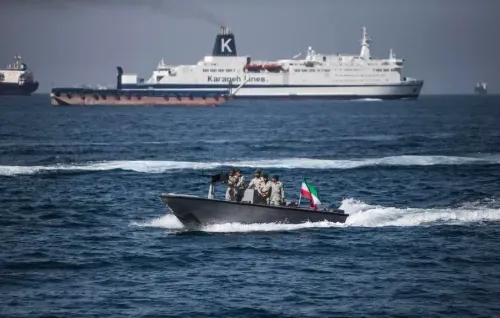
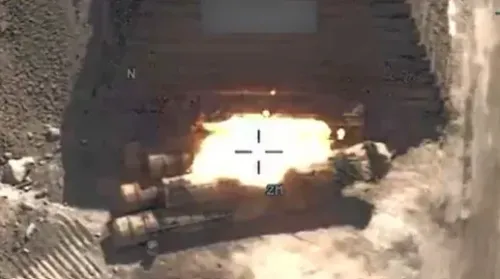
CENTCOM noted that momentum has built in recent months since American forces successfully cleared the strait's international shipping lanes of sea mines laid by Iran's Islamic Revolutionary Guard Corps (IRGC). The statement characterised the IRGC's actions as 'unwarranted aggression.' According to CENTCOM, over 95 per cent of ships navigating the strait have sailed through safely in recent months, a figure the command cited as evidence that the United States and regional partners effectively control the international waterway.
Why It Matters for Global Energy Flows
The Strait of Hormuz is the world's most critical oil chokepoint, through which a significant portion of global crude exports pass daily. Disruption to the waterway — whether through mining, naval confrontation, or blockade — would have immediate consequences for global energy prices and supply chains. The milestone of 1.5 billion barrels exported since summer with US support underscores the scale of the operational commitment required to keep the strait open. This comes amid sustained tensions between Washington and Tehran, with the IRGC's mining campaign representing one of the most direct challenges to freedom of navigation in the region in recent years.
What Happens Next
CENTCOM did not specify a timeline for drawing down its mine clearance operations, suggesting that the US naval and military presence in the strait will continue for the foreseeable future. Shipping industry stakeholders and Gulf energy exporters will be watching closely for any fresh escalation from the IRGC, which has not publicly responded to the claims.
Point of View
Concrete enough to deflect questions about the cost of the operation. What CENTCOM's statement notably omits is any assessment of whether the IRGC's mining capability has been degraded or merely temporarily neutralised; the mines were cleared, but the capacity to re-lay them almost certainly remains. The 95-per-cent safe transit figure also deserves scrutiny — it implies roughly 1-in-20 ships encountered some form of difficulty, a detail the statement buries in a claim of success. With US-Iran tensions unresolved and no diplomatic framework in sight, the Strait of Hormuz remains a pressure valve, not a solved problem.
NationPress
26 Oct 2026
Frequently Asked Questions
Why did the CENTCOM commander visit the Strait of Hormuz?
Admiral Brad Cooper visited the Strait of Hormuz on 25 October to assess the operational environment and mark the milestone of US forces helping Gulf partners export more than 1.5 billion barrels of crude oil since summer. The visit was also intended to reaffirm US commitment to freedom of navigation through the waterway.
Are Iranian sea mines still present in the Strait of Hormuz?
According to CENTCOM, the primary transit routes in the Strait of Hormuz are currently free and clear of Iranian sea mines. US forces reportedly cleared mines laid by Iran's Islamic Revolutionary Guard Corps (IRGC) in recent months, though CENTCOM has not stated that the IRGC's mining capability has been permanently eliminated.
How many ships have safely transited the Strait of Hormuz?
More than 3,000 commercial vessels have transited the Strait of Hormuz with CENTCOM support over the last six months, according to the command's statement. CENTCOM also said over 95 per cent of ships navigating the strait have done so safely in recent months.
Why is the Strait of Hormuz strategically important?
The Strait of Hormuz is the world's most critical oil chokepoint, connecting Gulf energy producers to global markets. Disruption to the waterway directly affects global crude oil supplies and prices, making its security a priority for both regional powers and major oil-consuming nations.
What role has the Gulf Cooperation Council played in Hormuz security?
CENTCOM has highlighted close coordination with the Gulf Cooperation Council (GCC) and the commercial shipping industry in maintaining safe passage through the Strait of Hormuz. Cooper specifically mentioned working 'shoulder to shoulder' with Gulf partners as part of the ongoing freedom-of-navigation mission.